Your cart is empty
Tax included and shipping calculated at checkout

Drawer menu
Tax included and shipping calculated at checkout
A professional account gives you stylist pricing, priority support, early access to new releases, and education developed by working stylists.
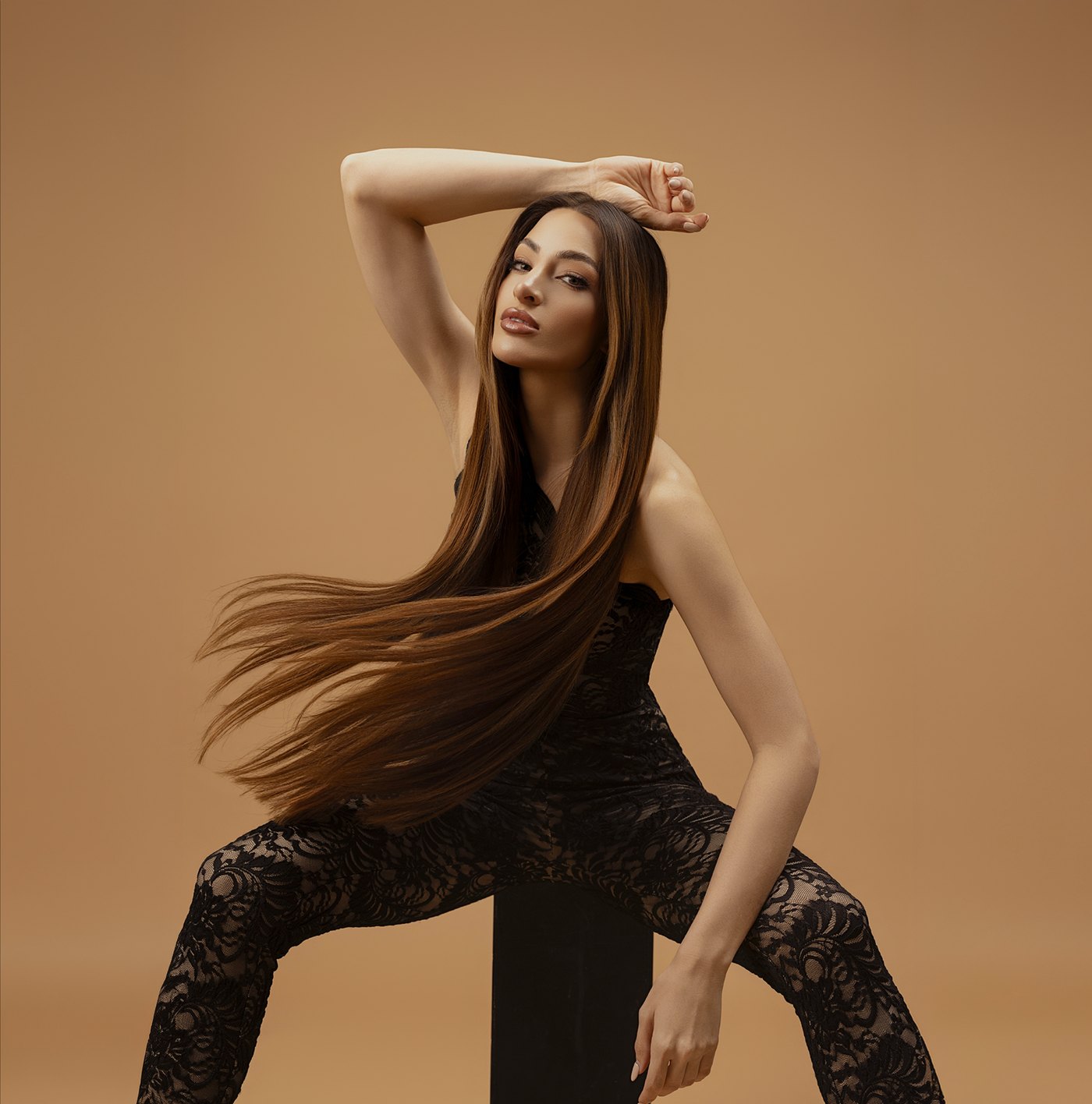

A client sits down for a sleek, event ponytail and shows a reference with length, density, clean lines, and a wrapped base that reveals no hardware. Their natural hair can't support that silhouette on its own. That's where the service either becomes a polished extension build or a frustrating redo.
A strong hair ponytail wrap isn't a beginner finish. It's a technical upstyle built on prep, anchor control, clean concealment, and smart extension selection. The wrapped ponytail also isn't just cosmetic. Even the underlying shape of a ponytail has been studied as a physical system governed by gravity, tension, elasticity, and internal swelling pressure, which is why every added wrap, support point, or extension element changes how the style hangs and moves, as described in the ponytail overview and the foundational Physical Review Letters research milestone.
For stylists, that matters behind the chair. A wrapped ponytail that photographs well, stays tight, and doesn't expose tracks depends on mechanics, not luck. Done well, it becomes a high-value menu item for bridal, red carpet, branding shoots, galas, and clients who want a statement style without a full install.
The wrapped ponytail commands a premium because it solves a specific problem. Clients want length, fullness, symmetry, and a clean base, but they also want the style to hold through photos, dancing, weather shifts, and wardrobe changes. Natural hair rarely delivers all of that without support.
A stylist who can build that support turns a common request into a specialized service. That service sits between event styling and extension work. It draws on both, and the result should look intentional from every angle, especially the side profile and the underside of the base.
A basic ponytail is fast. A salon-level wrapped ponytail isn't. It requires:
Practical rule: If the base looks large before the wrap goes on, it will usually look larger after finishing. Reduce structure before adding concealment.
This is also where extension literacy separates stylists who can replicate a photo from stylists who can engineer the shape. A wrapped ponytail may call for Clip-In hair extensions for same-day speed, Thin Weft for a flatter base, Volume Weft for impact, Tape Weft for a narrow concealment panel, or Bulk hair for a custom wrap strand. The correct method depends on scalp visibility, density at the perimeter, desired movement, and how much polish the client expects.
What works is a ponytail designed around the client's actual hairline, head shape, and support tolerance. What doesn't work is forcing the same social-media wrap method onto every head of hair.
Stylists who treat the wrap as a final decorative step often run into the same failures. The tie shows. The wrap loosens. The extension attachment peeks through in profile. The style pulls too hard at the base and loses refinement after wear. A profitable wrapped ponytail service avoids those problems before the first extension is placed.
Prep eliminates most ponytail failures before the style starts. The foundation has to support concealment, grip, and finish at the same time. If the base is damp, fuzzy, overbuilt, or mismatched in tone, the wrap will tell on it immediately.

Start with scalp exposure, density at the front hairline, breakage through the top panel, and the client's tolerance for tension. A bridal client who wants a high, sleek base with soft perimeter detail needs a different build than a client asking for a mid ponytail with editorial polish.
Shade matching has to account for root, mids, ends, and the wrap strand separately. The visible ponytail body can carry dimension, but the wrap usually needs cleaner control because it sits directly against the base and catches light first. When a stylist is blending Solid, Balayage, or Rooted families, the goal isn't a single flat match. The goal is a believable transition that keeps the anchor invisible. Conde's guide to color matching hair extensions professionally is useful when refining that decision process.
A smart consult also identifies whether the client's own tail will contribute to fullness or only act as the internal anchor. That changes product choice immediately.
A wrap-around ponytail performs best on fully dry, smoothed hair, and the most important control point is the wrap strand size. It should be neither too thick nor too thin, because oversized sections create bulk and undersized sections fail to conceal, as noted in this wrap-around ponytail technique reference.
That principle changes the prep sequence. The base should be dry, directional, and compact before any added hair goes on.
Use this prep order:
A sleek ponytail doesn't start with shine spray. It starts with a stable root pattern and a base that stays compact when tension is applied.
A useful behind-the-chair check is to look at the ponytail from below before adding extensions. If the underside already shows separation, short layers, or weak density, the wrap will need either added concealment support or a lower placement. Stylists who ignore the underside usually end up chasing exposure later.
A second decision point is friction. Hair that's overly soft and slippery often looks beautiful when brushed into place, then shifts once the extension load is added. In those cases, less slip at the base usually gives a cleaner long-wear result than over-pinning after the fact.
For same-day glam, a Clip-In build is often the cleanest route. The key is to approach it like an engineered service, not a retail add-on. The clip should support the shape without creating a bulky ridge or stress point at the anchor.

For extension-based ponytails, a two-anchor build is a practical benchmark. Create a small secured ponytail first, then add the extension around that foundation. The wrap strand should sit immediately adjacent to the base, and a tightly wrapped strand with a stable anchor may need only about one bobby pin, according to this extension ponytail tutorial reference.
That benchmark is what keeps Clip-In work from looking improvised.
A clean salon sequence looks like this:
For stylists offering event styling with removable extension options, Clip-In extension application guidance can support the service menu side of this method.
The wrap section should be selected after the ponytail body has been brushed into its final fall. If the stylist grabs too much hair, the wrap becomes a rope and widens the base. Too little, and the elastic ghosts through under flash photography.
A strong wrap has three qualities:
| Focus point | What to look for |
|---|---|
| Placement | The strand begins right against the base, not lower down the ponytail |
| Tension | The wrap stays firm enough to lie flat, but not so tight that it twists upward |
| Finish | The end tucks into the path of the wrap so the pin disappears into structure |
The pin matters. One well-placed pin usually outperforms several random pins because multiple pins create pressure points and visual clutter under the wrap. Insert it into the end of the wrap path, then feed it inward so the strand locks into the anchor instead of poking down toward the scalp.
The quickest way to make a Clip-In ponytail look expensive is to keep the base narrow.
The first mistake is clipping too far away from the anchor. That leaves a visible gap and makes the wrap carry too much concealment work. The second is overbuilding density before checking how much of the client's natural tail still needs to cover the internal structure.
The third is trying to fix frizz only after the extension is attached. Surface control should happen before the final gather. Once the clip is in and the ponytail body is full, excessive brushing often disturbs the foundation and introduces more flyaways than it removes.
A custom weft ponytail gives the stylist full control over density, silhouette, and seam placement. It's the service for clients who need more than a quick event ponytail. It's also the service that exposes weak technical habits fastest.

The first decision is whether the ponytail needs width, length, or both. A Thin Weft gives a flatter wrap zone and is useful when the client has finer density through the crown or a more visible scalp pattern. A Volume Weft adds body fast and suits fuller ponytail shapes, especially when the goal is movement through the mid-lengths and ends rather than a tiny editorial base.
The second decision is anchor type. For same-day styling, many stylists prefer building around a compact internal ponytail. For clients already wearing extension methods such as beaded row work, microlinks, or fusion bonds, the ponytail may need to be placed around existing structure instead of on a blank canvas. In those cases, the wrap has to conceal not only the elastic but also the logic of the install.
A practical build pattern often includes:
Conde Professional products fit naturally here because the line includes Volume Weft, Thin Weft, Tape Weft, K-Tip, Tape-In, Clip-In, and Bulk options that let a stylist choose flatter or fuller structures depending on the client's density and the finish required.
One of the biggest gaps in public ponytail content is concealment when the style includes added hair, clips, or wefts. Advanced ponytail wrapping has to hide attachment points and keep the wrap close to the base so the finished style still looks natural in photos, as highlighted in this advanced extension ponytail tutorial discussion.
That's why custom weft ponytails should be checked in motion and from multiple angles before finishing spray goes on.
A useful technical habit is to layer the weft around the anchor in a way that follows the intended fall of the ponytail, not just the shortest route around the base. If the added hair is wrapped in opposition to the final direction of movement, the style may look polished standing still and separate once the client turns their head.
A camera-ready ponytail doesn't forgive a lazy underside. Stylists need to finish the back and the bottom as carefully as the front hairline.
Custom ponytail construction crosses into extension engineering. If a stylist is cutting wefts, sealing edges, or building custom bases repeatedly for events, standardized method training saves rework. Weft sealing guidance is especially relevant when customizing pieces for repeated ponytail use, because a clean edge affects longevity, shed control, and how neatly the build sits at the base.
Conde Education resources are also worth using when a salon wants to make custom ponytails a repeatable service rather than a one-off special occasion skill. The strongest teams document their formulas, shade combinations, placement patterns, and photo angles so another stylist in the salon can reproduce the service consistently.
Finishing is where a wrapped ponytail either reads luxury or starts to collapse. This is also where stylists run into the hardest hair types. Fine, slippery, or short hair doesn't fail because the client is a poor candidate. It fails when the stylist applies the same tension, strand size, and pin strategy used on denser hair.

A common gap in tutorials is how to secure a wrapped ponytail on fine or short hair. The core challenge is balancing tension, strand size, and placement so the wrap doesn't unravel while also avoiding scalp irritation, as noted in this tutorial analysis on wrapped ponytail durability tradeoffs.
That tradeoff changes the finishing plan.
For fine, slippery hair, the issue is usually surface glide. The root looks polished, but the wrap won't grip. In that case:
For short hair, the problem is exposure. The shorter internal layers can separate at the underside and reveal the tie. Here, stylists usually do better with a lower or mid placement, a flatter concealment strategy, and a wrap section that covers wide enough to mask fragmentation without turning thick and obvious.
The final wrap doesn't always have to come from the ponytail body itself. A single Tape Weft can provide a flatter, cleaner panel when the stylist needs precision at the base. Bulk hair can be useful for creating a dedicated wrap strand with controlled density and direction. For some clients already wearing Tape-Ins or K-Tips, the stylist may need to isolate a clean top layer and build the wrap from the most polished section rather than the densest one.
That's the larger finishing principle. The best wrap material is the one that conceals with the least bulk.
A quick troubleshooting matrix helps:
| Problem | Likely cause | Better adjustment |
|---|---|---|
| Wrap keeps opening | Strand is too large or too soft | Reduce strand size and increase anchor grip |
| Base looks swollen | Too much hair wrapped for concealment | Swap to flatter wrap material |
| Client feels pulling | Tension is concentrated at one point | Rebuild anchor and redistribute load |
| Tracks show in motion | Wrap sits too far from base | Reset strand immediately adjacent to anchor |
Never drive a bobby pin downward into the scalp to force hold. If the wrap needs that much force, the structure needs rebuilding.
For long-wear event work, aftercare matters too. Clients should understand how to sleep, travel, and move with the style so they don't disturb the base before the event starts. Stylists can fold that into service communication with extension care guidance that reinforces maintenance expectations without overcomplicating the handoff.
A wrapped ponytail should sit on the menu as a technical specialty, not as a dressed-up add-on with vague pricing. The service uses time, extension inventory, color matching skill, and finishing discipline. If pricing doesn't reflect that, the stylist ends up absorbing labor in the name of convenience.
A practical menu separates ponytail services by construction method rather than by vague “simple” and “glam” labels.
For example, salons often structure the service around:
This format protects margins because the labor profile changes dramatically from one version to the next. Product cost should be itemized or clearly built into the service. So should prep time for custom color blending or pre-assembled ponytail units.
The consultation should cover placement, fullness, visible hardware tolerance, and whether the client wants movement or rigid sleekness. Those details prevent disputes later because they tie the finished look to a defined build plan.
A useful client script includes:
Studios that market premium extension work often convert well when they present ponytail services as occasion styling with extension craftsmanship, not as a trendy extra. A polished gallery helps. So does naming the method in captions, especially when using wefts, beaded support, or custom wrap construction.
For salons refining the menu around premium extension services overall, guidance on salon hair extension options can help position ponytail work within a larger extension business instead of treating it as isolated event styling.
Stylists who want a stronger wrapped ponytail service need more than inspiration photos. They need dependable extension options, clean shade matching, and method education that supports real salon work. Conde Professional offers professional extension categories and training support that align with custom ponytail construction, event styling, and extension-led finishing services.


