Your cart is empty
Tax included and shipping calculated at checkout

Drawer menu
Tax included and shipping calculated at checkout
A professional account gives you stylist pricing, priority support, early access to new releases, and education developed by working stylists.
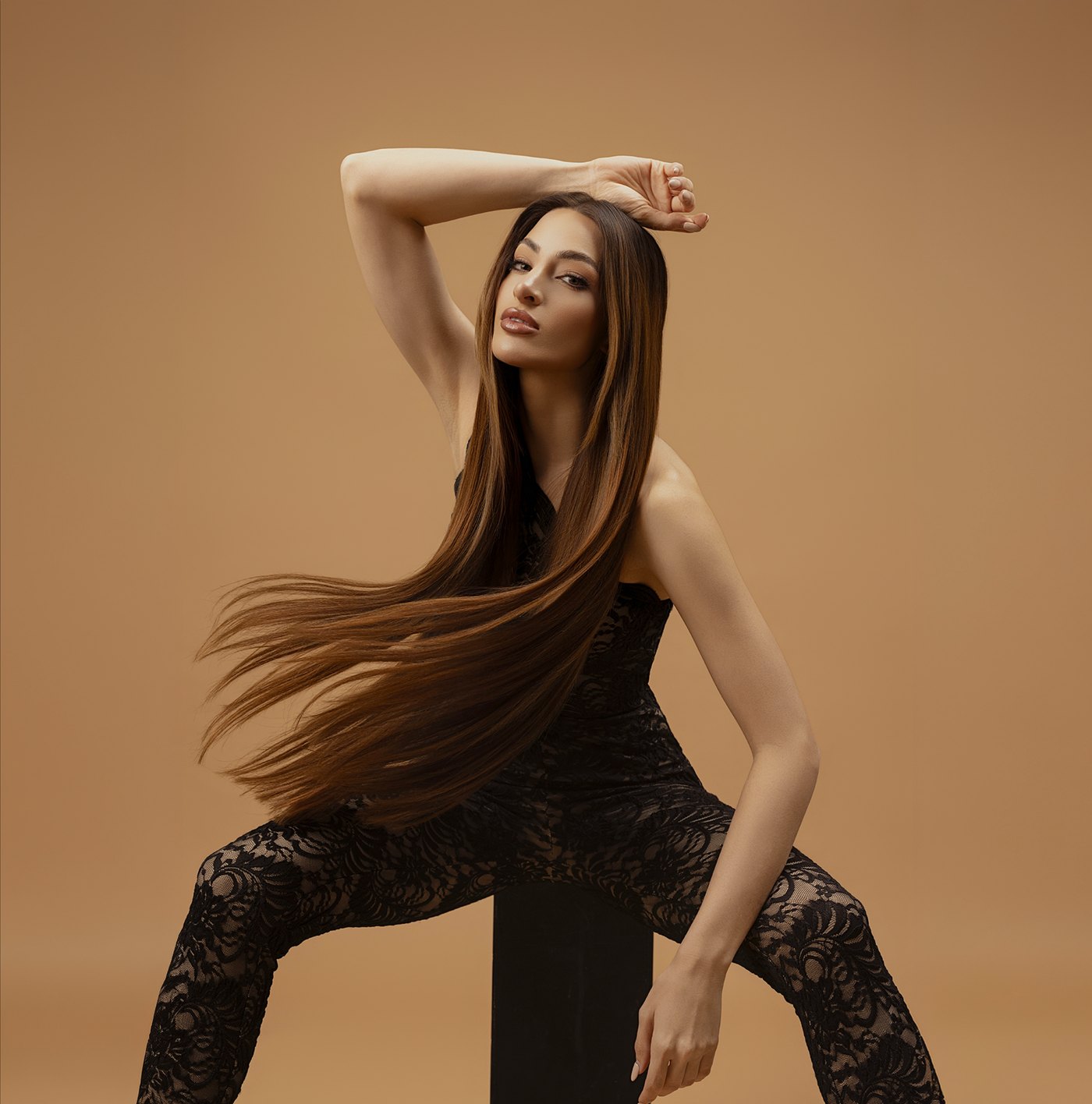

The popular advice says light brown is a safe default. That's sloppy chair-side thinking. Hair extensions light brown only works cleanly when the undertone, depth, and attachment method line up with the client's actual hair, and that's why a true level check matters more than the marketing name on the swatch card.
In professional color systems, light brown sits at level 5 and stays in the brown family, not the blonde family, with visible depth tied to eumelanin rather than high reflection APO Hair. That's the frame that keeps installs honest, especially when a shade needs to disappear in daylight and under salon lighting. For reference, Conde Professional's own extensions color chart is the kind of working tool that helps stylists stop treating “light brown” like one flat color.
The first mistake stylists make is treating light brown like a single shade family with one obvious answer. In practice, it's a level 5 brown that can read warm, neutral, muted, dimensional, or slightly deeper depending on how the pigment sits and how the hair reflects light. That's why level placement is more useful than a marketing name, because the name doesn't tell the whole story.
Light brown belongs to the lighter end of brown, not some mid-blonde hybrid. In salon language, that matters because a client with visible movement in the mids and ends won't accept a flat, opaque brown that sits on top of the hair like a patch. The better match is the one that respects undertone, not just depth.
When the client's hair already has dimension, a plain solid light brown can look too neat, almost costume-like. A rooted or balayage version usually behaves better because it softens the transition from natural hair to extension hair. The goal is not to “make it brown enough.” The goal is to make it disappear.
That's also why brown matching is never just brown. It's brown plus undertone plus dimension, and if one of those three is off, the install shows it. On cool or ash brunettes, a warm light brown can create a mismatch that reads louder than the extension itself.
Practical rule: if the client's mids and ends already carry dimension, start by deciding whether the extension should hold that dimension or flatten it. That choice drives the shade family, not the other way around.
For stylists building a color library, this is the essential filter. Solid light brown has a place, but it's only one answer inside a bigger family of undertone decisions. In brown matching, the label is the starting point, not the finish line.
The quickest way to miss on light brown is to judge it against the root line alone. Pull a small section forward from just below the ear, then compare candidate swatches in natural light, not under salon LEDs Blendspace. That check shows warmth, ash, and neutral drift more clearly than staring at a swatch card on the counter.

Warm browns usually show a golden, caramel, or reddish sheen when the hair moves. Cool browns read more ashy or smoky, especially in bright daylight. Neutral hair doesn't push hard in either direction, which is why it often accepts a wider range of light brown blends if the depth is right.
Client buying habits make this check worth doing with care. In the UK, extension wearers often say colour match is a defining factor, and many choose extensions specifically to change hair color. A large share also buy online, so the consultation has to do the heavy lifting before anything gets ordered Foxy Locks UK hair extension statistics. The same survey reports that many buyers seek salon recommendations, which puts the stylist's undertone call at the center of the sale.
If the mids and ends lean cool, do not let a warm light brown into the order just because the name sounds natural. If the hair leans warm, a cooler shade can read muddy instead of blended. Neutral bases are easier, but they still need the right depth.
Chair-side rule: compare swatch to the hair that will be covered, not the root growth that's making the client anxious. The finish has to match the section the eye sees most.
That same survey also found that many UK buyers spend over £200 at a time Foxy Locks UK hair extension statistics, which is another reason not to guess. A light brown order should be treated like a precision service decision, not a casual shade pick.
The shade family matters because light brown can be dead flat, softly dimensional, or a bridge between levels, and those are different jobs. Solid works when the client's hair is already clean and even. Rooted, balayage, bronde, highlights, and superblend are for the installs that need help hiding a transition line.

A Solid light brown is the cleanest answer for clients with a compact, even base and little visible dimension. It gives a controlled finish and keeps the install visually tidy. The problem is that the same flatness can look artificial on hair with movement, highlights, or faded color.
A Rooted or Balayage light brown is safer when the client's mids and ends already carry depth changes. The darker root area or softened sweep helps break up a visible band, which is especially useful when the natural hair is not one consistent tone. That's the case where the blend needs help, not perfection.
Bronde is the bridge shade for clients whose hair already lives between brown and lighter brown-blonde territory. It's the better answer when the goal is brightness without losing brunette depth. Highlights work when the client needs visible lift and dimension, while Superblend is the quiet fixer for low-contrast, diffuse, previously colored hair where the eye must not land on a hard seam.
A flat solid can look polished on paper and obvious on the head. A rooted or balayage family usually disappears better once the hair moves.
For stylists using Conde Professional's shade system, that decision line matters more than the family name itself. The business logic is simple, too. Hair extensions are part of a market valued at USD 2.87 billion in 2025, projected to reach USD 5.54 billion by 2034 at a 7.74% CAGR Fortune Business Insights. Another estimate places the sector at US$ 8.6 billion in 2026 and US$ 15.4 billion by 2033 at 8.7% CAGR Fortune Business Insights. That scale is exactly why more refined shade families exist.
Color match does not rescue a bad method choice. A clean light brown can still read wrong if the attachment shows through, sits too heavy, or cuts across the color transition at the bond line. For light brown installs, method selection is about visibility first and density second.

Flat, low-profile methods sit better on fine hair and on highlighted bases. That is why tape methods often make sense in light brown work, especially when the bond has to disappear across a tonal shift. Tape-In systems are built for that discreet finish, and Conde Professional's types of hair extension methods show how the flatter attachment styles are meant to sit close to the head.
Heavier weft approaches are useful for density and speed, but they are not always the cleanest choice for concealment. A thicker attachment can give away the install even when the shade is close, especially on finer hair or on clients who wear their hair pulled back. That is the trade-off to respect on the shelf.
Volume Weft and Tape Weft fit clients who need broader coverage and a faster service. Thin Weft is the better pull for fine hair that needs subtle fill without bulk. Tape-In stays the low-profile choice for hair that shows every attachment point, while K-Tip and Bulk work better where segmentation and shaping matter more than flat coverage. Clip-In stays in the temporary category, useful for occasional wear but not a fix for every blend problem.
The right method also depends on how much weight the natural hair can carry and how much of the attachment the client is willing to live with. If the hair is very fine, very transparent, or already fragile from prior coloring, light brown may not be the first shade to force into a heavy method. In that case, choose a lighter profile attachment, or step back and reassess whether the client needs more dimension than a brown match can give.
The cleanest light brown install is usually won with placement, not just shade selection. Start by putting the more visible dimension where the eye expects movement, then bury the heavier line of the install where the natural density helps cover it. That's the perfect melt.

For wefts, the shorter pieces belong higher in the shape, while the longer pieces sit underneath to carry weight and movement. That keeps the visual transition softer through the mid-lengths. On tape-ins, the bond line should break where the client's own hair can interrupt it, not where the stylist wishes it would disappear.
Thin weft is useful on fine-haired clients who need density without bulk. It lays flatter and gives the stylist more room to keep the profile low while still building a believable silhouette. When the hair is fine and the shade is light brown, that balance matters more than raw fullness.
Rooted and Superblend shades do the heavy lifting between move-ups because the darker root shadow extends the transition into the grow-out. That buys the client a softer maintenance window, especially when the natural regrowth line would otherwise create a sharp stop. The install stays believable longer because the eye never gets a hard horizontal break.
The internal logic matches the broader color-matching advice in Conde Professional's balayage extension guidance. A directional blend works better than a blunt one whenever the client's natural hair already contains shade movement.
Keep the eye off the seam. If the seam is the first thing a stylist notices in the mirror, the client will notice it in daylight.
A good melt also respects lighting. Indoor light can forgive a lot, but daylight exposes every flat transition, especially on light brown. That's why rooted or dimensional families usually beat a perfectly flat shade when the install needs to look alive instead of painted on.
Light brown shifts with wear, but not all light brown shifts the same way. Warm-toned versions usually show tonal fatigue sooner, while cooler rooted or superblend options can hold their appearance a little more gracefully because the grow-out reads softer. That difference matters for clients who won't maintain the hair on a tight schedule.

Semi-permanent and beaded-row installs do not age in a straight line. The attachment grows out, the bond starts to sit differently, and product buildup can dull the tone before the hair itself looks tired. If the shade is strongly warm, that dullness can tip into an orange cast faster than a cooler rooted family.
A client with a loose wash routine or heavy product habit can muddy a light brown faster than a disciplined one. Keep oil away from bonds, keep the cleanse sulfate-free, and keep the styling heat controlled. Those are maintenance basics, not luxury extras.
The product card for Tape Weft Mocha Latte #6.8 Solid fits this conversation because it's a solid tape weft in a brown family shade, built for efficient full-head transformations and high-volume salons. Its care guidance is straightforward, avoid oil-based products near bonds, wash with sulfate-free shampoo, and air dry when possible.
For a client who wants a richer, warmer light brown but can't return often, the shade choice has to account for fade, not just finish. A slightly cooler rooted or superblend family is usually the safer service call because it buys more visual time between appointments. That's also where salon education content and business planning intersect, since the aftercare conversation affects retention as much as installation skill.
A useful resource for that conversation is WaveGen.ai salon marketing, especially when the team needs a repeatable way to explain maintenance expectations without overpromising. The client may love the first-day result, but the rebook depends on whether the aftercare fits the client's routine.
The simplest rule is this. Warm light brown gives a brighter first impression, cooler rooted light brown gives a more forgiving maintenance curve. Stylists should choose based on the client who sits in the chair, not the client who says they'll suddenly become more disciplined after the install.
Light brown is a bad choice whenever the client's hair already leans cool, smoky, or low-contrast and the extension would introduce warmth that doesn't exist in the natural base. That's not a minor mismatch. It can make the install look more obvious than leaving the hair alone.
If the mids and ends read ash, violet, or smoky in daylight, a warm light brown will usually fight the existing tone. The same goes for salon-grown-out balayage that has faded cooler than the root area, because the extension can land too golden and call attention to itself. Ask about the last toner, then check the section that will sit next to the extension hair.
One useful visual cue is greenish or violet reflection under daylight. That often points to a cooler or more complex base, and those are the heads where standard light brown is most likely to misbehave. A client can still ask for “light brown,” but the better answer may be a rooted or superblend alternative.
A Rooted or Superblend family is usually the safer move when the base is diffuse or cooler than the label suggests. A more dimensional brunette family can keep the install believable without forcing warmth onto the client's hair. That decision is about protecting the blend, not resisting the request.
If the extension warms the hair more than the client's own color does, the eye will find it.
That's the contrarian truth most retail content skips. Light brown is often presented as the universal natural shade, but professional matching is more exact than that. When the base says cool and the swatch says warm, the stylist should trust the base.
Before anything gets ordered, pull the client's mid-lengths and ends forward in natural light. That section tells the truth about how the extension will blend, and it's the section most likely to expose a mismatch if the shade is too warm, too flat, or too deep.

The business-side move is just as simple. Open a professional account with Conde Professional so the team can access account-level shade support, method guidance, and the full wholesale workflow instead of a consumer checkout path. That keeps the process in the salon lane where it belongs.
The final step is practical, not theoretical. Text or call the Conde Pro team with the client photo and the two candidate shades, then ask for same-day shade guidance before the order goes out. That one check saves time, protects the install, and keeps the brown family choice grounded in what the hair needs.
Conde Professional supplies Volume Weft, Thin Weft, Tape Weft, Tape-In, K-Tip, Bulk, and Clip-In options for licensed pros who need shade precision and method flexibility on real salon clients. Visit Conde Professional to open a professional account, review the light brown shade families, and get the install support needed to make the next brown blend read clean in daylight.


