Your cart is empty
Tax included and shipping calculated at checkout

Drawer menu
Tax included and shipping calculated at checkout
A professional account gives you stylist pricing, priority support, early access to new releases, and education developed by working stylists.


Virgin hair is defined by zero chemical processing, while Remy hair is defined by root-to-tip cuticle alignment, so all virgin hair is generally Remy but not all Remy hair is virgin. Remy sets commonly sit around $150 to $400 per set with a 6 to 12 month lifespan, while virgin sets are often around $200 to $600 per set with a 12 to 18 month lifespan.
That distinction is more useful behind the chair than treating “virgin” and “Remy” as steps on a simple quality ladder. One label describes processing history. The other describes strand handling. A bundle can be Remy and still have been colored, texturized, or otherwise processed, while virgin hair must remain chemically untouched.
For a licensed stylist, the relevant questions are sharper: Are the cuticles intact? Are they aligned? Has the hair been chemically altered? Can the supplier explain the collection and processing history? Those answers predict colorability, combability, shedding, matting, and service suitability more reliably than premium-sounding language.
Virgin hair and Remy hair are distinguished by two different technical standards. Virgin hair has never been chemically treated. Remy hair has strands kept in the same root-to-tip direction, preserving cuticle alignment. The distinction is documented in this technical overview of human hair extensions, which also explains why the two terms are frequently paired in premium extension marketing.
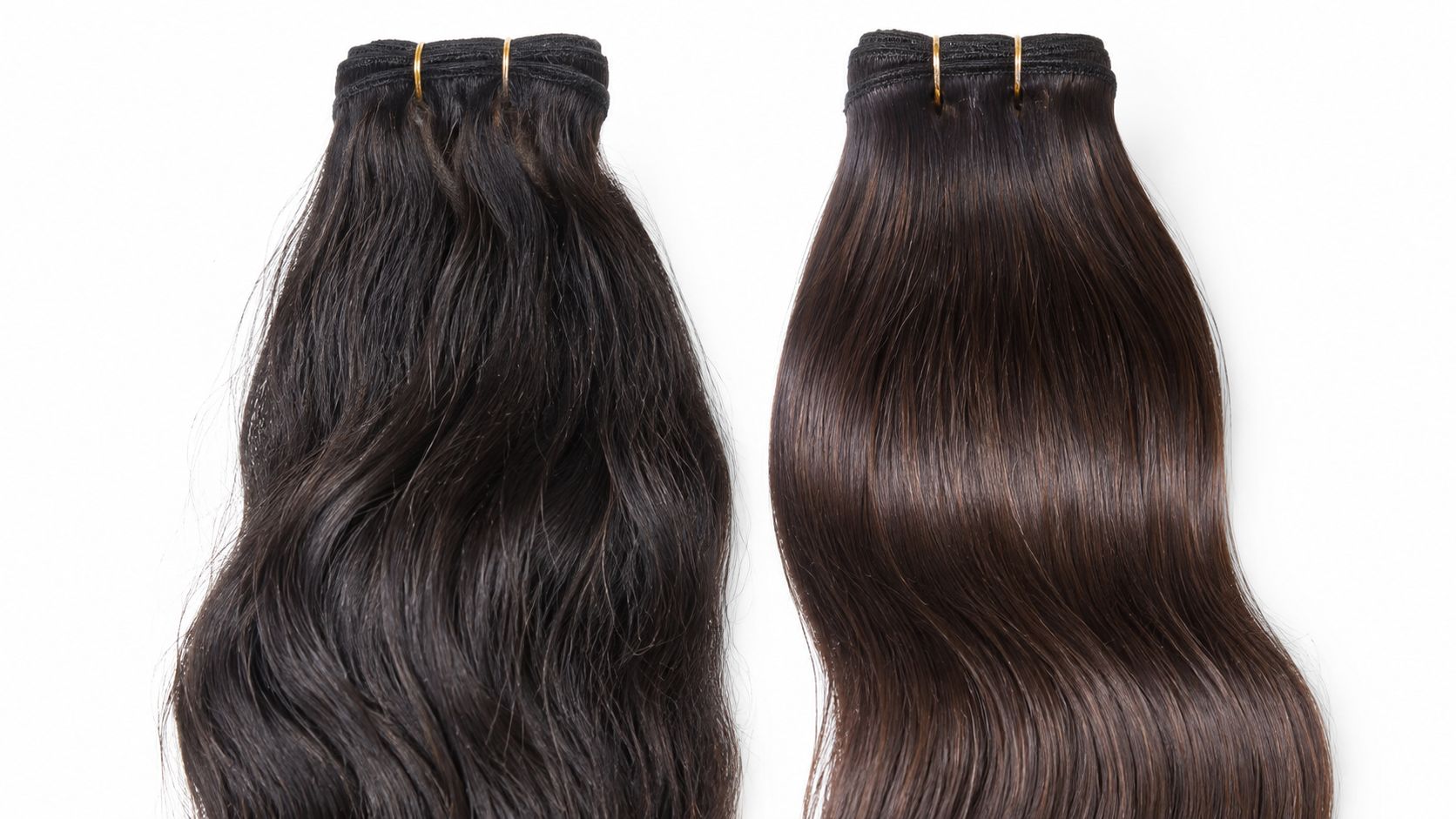
Virgin describes what has not happened to the hair. It hasn't been chemically colored, bleached, permed, or otherwise altered. Its natural cuticle layer remains part of the service equation, and a stylist can evaluate that untouched canvas before considering custom color.
Remy describes how the strands were collected and arranged. The hair can be lightly processed and still qualify as Remy if the cuticles remain intact and aligned in one direction. That makes Remy a handling standard, not a promise that the hair is unprocessed, single-donor, or automatically superior.
Salon consultations often go wrong here. A stylist orders “Remy” expecting virgin performance, then discovers that the hair has a color history or a texture treatment that limits further chemical work. The label wasn't necessarily meaningless, but it answered a different question from the one the service required.
Aligned cuticles generally reduce friction between neighboring strands. That can support easier detangling and less friction-related matting, particularly around a bond, bead, or weft attachment. It doesn't compensate for poor construction, aggressive processing, incompatible maintenance, or incorrect installation tension.
Virgin hair offers the clearest starting point for a custom-color service because its processing history is defined by the absence of chemical treatment. Remy hair may be the more practical inventory choice for a precolored install, provided the supplier can document its condition and the stylist tests the actual hair before committing to the service.
Practical rule: Ask two separate questions. “Has this hair been chemically processed?” assesses virgin status. “Are the cuticles aligned root to tip?” assesses Remy handling.
The useful phrase in a purchasing conversation isn't “premium human hair.” It's cuticle-intact, aligned, and traceable, with processing disclosed. Stylists can also review the difference between Remy and virgin extensions before translating those terms into a service recommendation.
A label such as 5A, 6A, 7A, 8A, 9A, or 10A doesn't give a stylist a universal technical benchmark. There is no governing standards body or international certification that makes one supplier's grade equivalent to another supplier's grade, as explained in this examination of human hair grading.
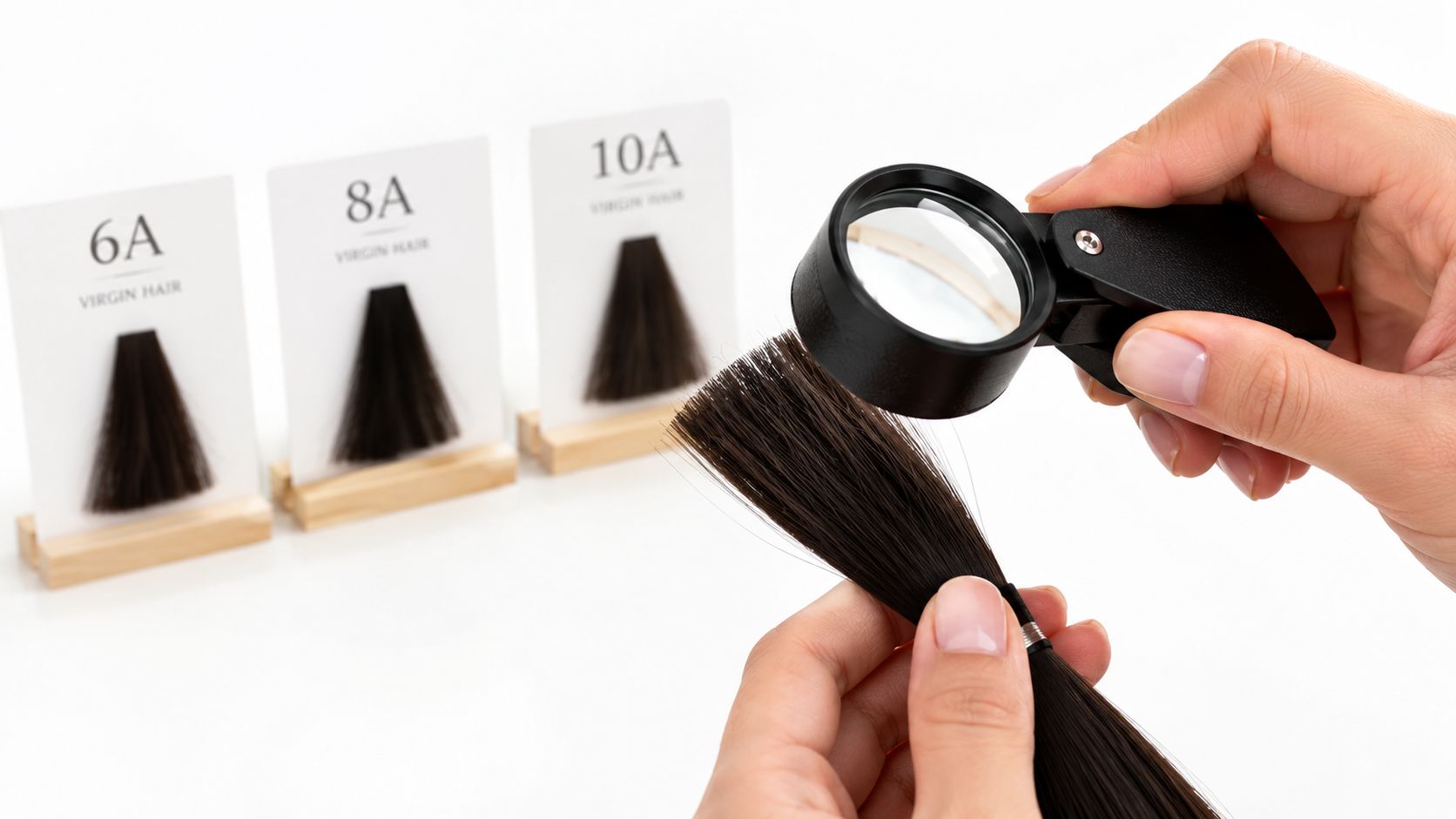
A supplier grade can be used as an internal merchandising label, but it shouldn't be the basis for a technical promise to a client. A higher letter doesn't establish cuticle integrity, consistent alignment, resistance to shedding, or durability through cleansing and styling.
A professional buyer should ask for observable criteria instead:
These checks describe how inventory will behave during a real service. They also reveal why a nominally lower grade can outperform a higher grade from another source. A clear inspection record beats an alphabetical claim because it gives the salon something it can verify, repeat, and discuss with a supplier.
Double-drawn hair can present a fuller, more uniform perimeter, but the term alone doesn't certify aligned cuticles or a stable chemical history. The stylist still needs to inspect the lengths, ends, weft construction, and response to combing.
The same principle applies to hand-tied, machine-made, and bulk inventory. Construction affects installation behavior, but construction doesn't turn processed, compromised strands into virgin hair. Quality is multidimensional, and the service plan should account for each dimension separately.
A letter grade is a merchandising description. Combability, shedding, alignment, and wash behavior are salon evidence.
A wholesale partner that can't answer basic questions about those properties leaves the stylist to discover the specification during a client appointment. That transfers quality control from the supply chain to the salon chair, where the cost of failure is higher.
Virgin hair gives a colorist the cleanest chemical starting point because it has never been chemically processed. Remy hair may still perform very well, but its suitability for lightening or texture alteration depends on what happened before it reached the salon, not on the word Remy alone. The professional distinction between processing history and cuticle direction makes that separation explicit.
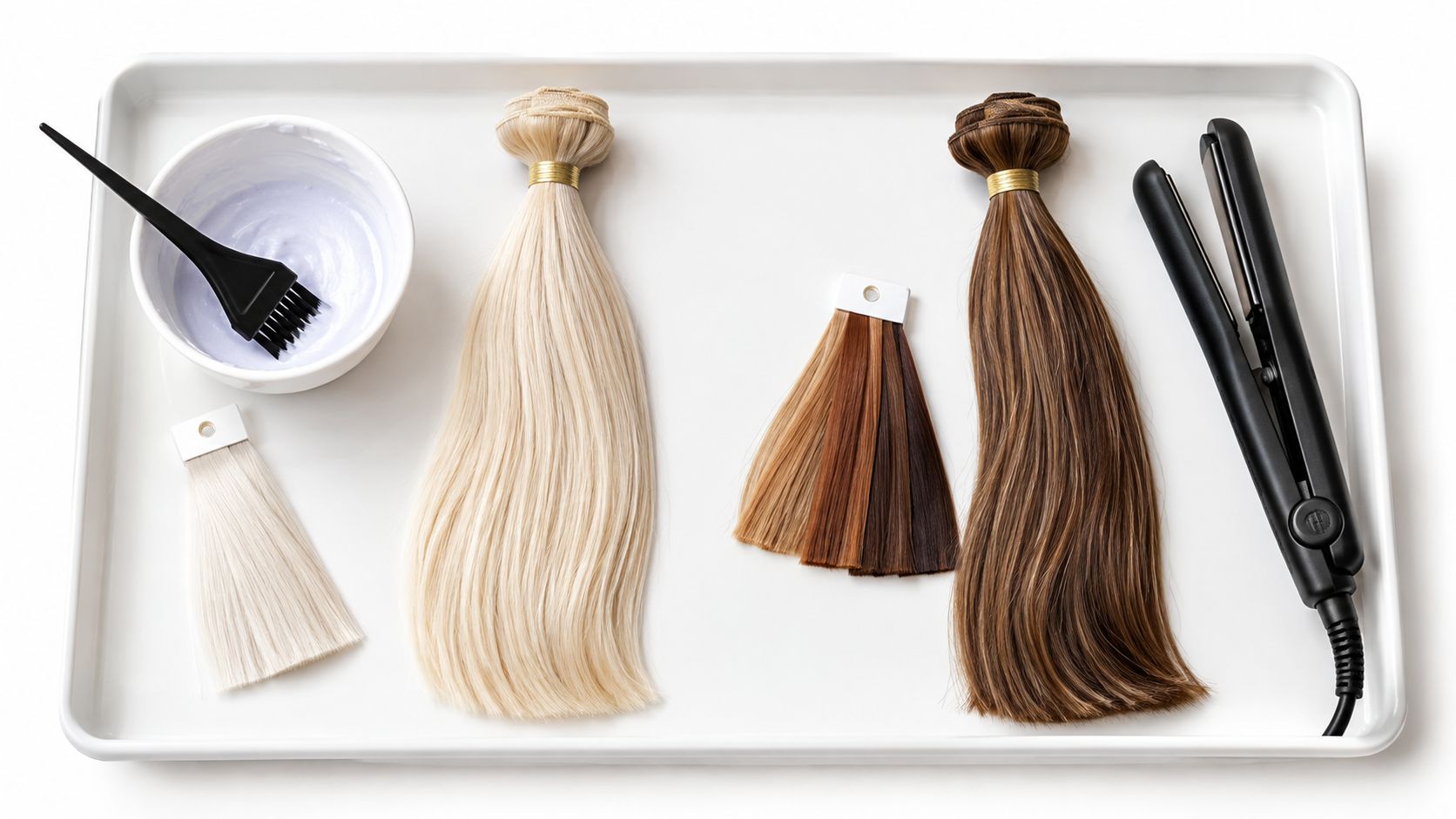
A client requesting a substantial lift, especially toward platinum, needs hair with a known chemical history. Virgin hair is the more defensible category for that conversation because the stylist isn't starting over an undisclosed dye or texture service. Even then, a strand test remains necessary. “Virgin” describes the starting condition, not a guarantee of a particular lift result.
Processed Remy hair can be appropriate for deposit-only color matching, toning within a compatible range, or selecting an existing shade that already works with the client's base. It becomes a risky choice for aggressive lightening when the supplier can't disclose previous treatment. Aligned cuticles don't reverse oxidative damage or reveal how much chemical stress the fiber has already absorbed.
The most common mistake is to read Remy as “safe to bleach.” It isn't. A strand can be cuticle-aligned and still be chemically altered enough that further lightening creates dryness, roughness, breakage, or an inconsistent result.
Both categories may be styled with heat, but the stylist should assess the actual fiber rather than rely on the category name. A smooth surface at intake can change after repeated cleansing and heat exposure if the hair has already been processed or coated.
For a custom blend, color swatches and a test strand are more reliable than a verbal shade promise. The test should assess:
A stylist who needs a natural texture preserved may choose virgin hair for its untouched starting point. A stylist matching a preselected shade may choose processed Remy hair and avoid unnecessary chemical work. The correct choice is the one that matches the service, not the one with the more impressive label.
The professional guide to dyeing hair extensions should be used alongside the supplier's processing disclosure and the salon's own strand-test protocol. No category eliminates the need for controlled color work.
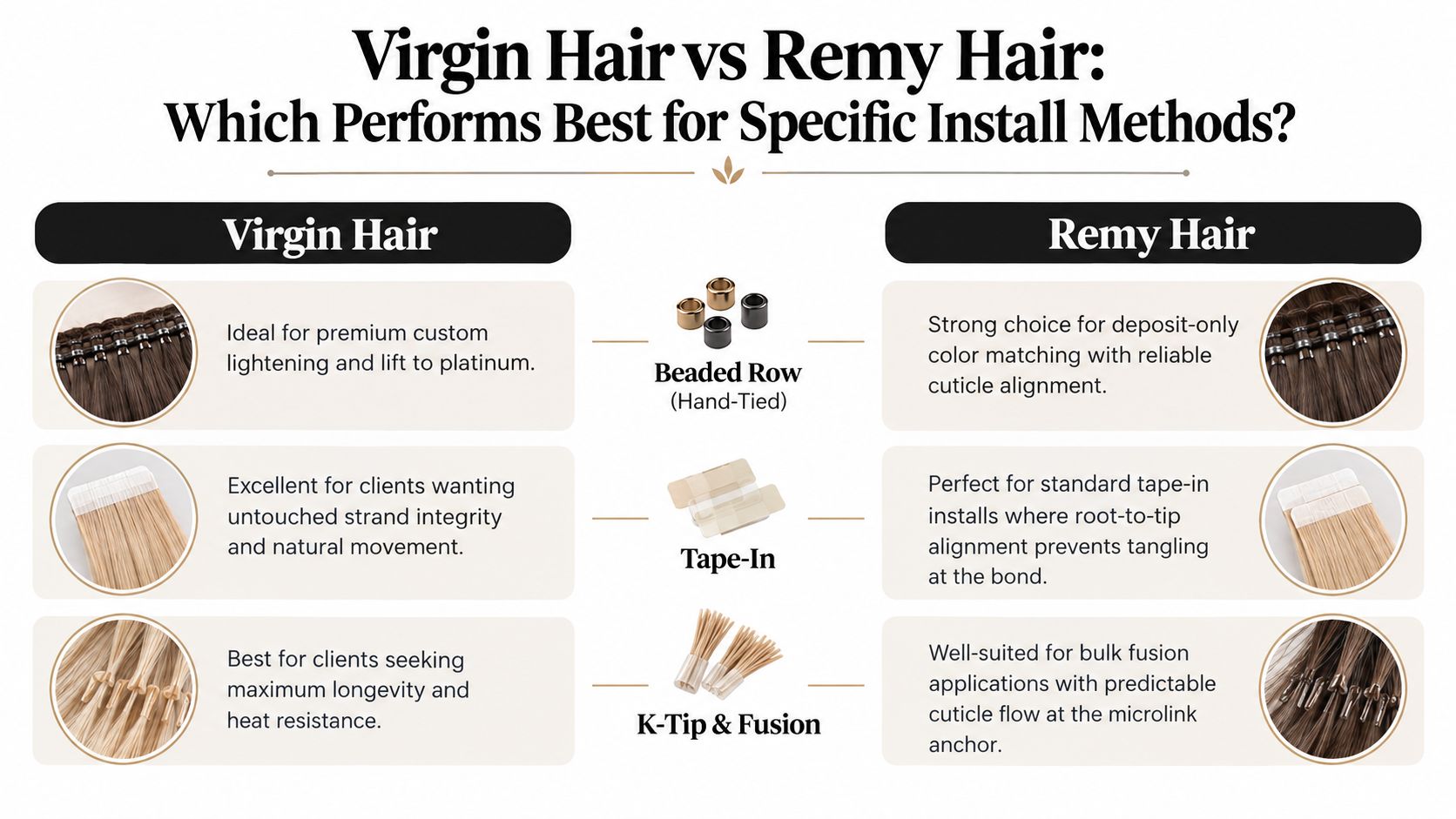
Installation method should follow the hair's condition, construction, and planned service, not just the category printed on the packaging. Virgin hair suits services that depend on an untouched canvas and custom chemical work. Remy hair can be a strong choice for standard installs when aligned cuticles and disclosed processing support the intended wear pattern.
The different hair extension methods used in professional services show why one inventory format can't cover every installation.
Volume Weft and Thin Weft are selected according to the client's density goals, the row design, and the amount of hair the natural base can support. Virgin inventory makes sense when the stylist expects custom lightening or wants the least altered fiber available. Remy inventory can work for a finished shade and a conventional beaded row, as long as the weft and strands pass inspection.
Tape Weft and Tape-In require particular attention to the bond area. The hair should lie cleanly through the attachment, and inconsistent strand direction can increase friction near the adhesive or tape. Aligned Remy hair is practical for a standard tape service, while virgin hair is useful for a client who prioritizes untouched strand integrity and expects a custom color plan.
K-Tip and Bulk serve different application needs. K-Tip is selected for strand-by-strand fusion work and requires careful sectioning, controlled heat, and an attachment that suits the client's density and lifestyle. Bulk hair supports custom applications, including fusion preparation and other techniques, but the stylist still needs to verify alignment and chemical history before processing.
A method can be technically sound and still be wrong for the client. Tape-based work may not suit a client who repeatedly applies heavy oils at the attachment area. A beaded row may be a poor fit for insufficient density, fragile sections, or a client unwilling to return for professional maintenance. Fusion can be inappropriate when the client expects a low-commitment service or frequent, rapid changes.
Clip-In offers temporary styling flexibility, but it isn't a substitute for a permanent install plan. It may suit event work, occasional volume, or a client who doesn't want attachment points worn continuously. Conversely, a client seeking daily, integrated movement may need a different method and a consultation that accounts for maintenance behavior.
Conde Professional's Volume Weft, Thin Weft, Tape Weft, K-Tip, Tape-In, Clip-In, and Bulk collections can be assessed by method, but the stylist remains responsible for matching the hair and attachment to the client's service requirements.
The best recommendation depends on the planned service, not on the assumption that virgin always outranks Remy. A client requesting substantial custom lightening needs a different inventory conversation from a client who wants a ready-to-install shade for a standard tape or row service.
Remy hair is often the practical choice when the target shade is already available, the service is deposit-only or involves limited customization, and the hair's processing history is disclosed. Virgin hair carries more value for a client who wants an untouched canvas, a custom lightening plan, or the wear expectations associated with unprocessed hair. The cited industry guidance places Remy sets around $150 to $400 per set with a 6 to 12 month lifespan, and virgin sets around $200 to $600 per set with a 12 to 18 month lifespan. Those are market ranges, not a promise for every supplier or install, and care and service conditions still affect the result. The BBC's comparison of the categories provides the source for those ranges.
| Client Goal | Recommended Category | Ideal Install Method |
|---|---|---|
| Custom lightening or a carefully controlled lift | Virgin hair, subject to strand testing | Volume Weft, Thin Weft, or a suitable strand method |
| A finished shade with deposit-only matching | Remy hair with disclosed processing history | Tape-In, Tape Weft, or beaded row |
| Untouched movement and a natural texture plan | Virgin hair | Hand-tied row, weft, or a suitable temporary format |
| A standard install with aligned cuticles | Remy hair that passes inspection | Tape-In, K-Tip, or beaded row |
| Occasional volume for events | Either category, selected for condition and shade | Clip-In |
Start with the chemical plan. If the client wants to lighten the extension hair, assess virgin inventory first and explain that a strand test controls the recommendation. If the client wants a precolored blend, prioritize shade accuracy, alignment, and maintenance compatibility.
Then assess the wear plan. A client seeking extended use may justify a higher initial investment, while a client changing color or method frequently may prefer inventory that meets the immediate service without paying for unused processing potential. The consultation should describe wear expectations qualitatively unless the supplier has documented service-specific guidance.
Finally, assess maintenance behavior. Frequent heat styling, friction, swimming, aggressive brushing, and delayed move-ups can undermine either category. The hair recommendation can't compensate for an install that conflicts with the client's habits.
Use this professional hair extension consultation guide to structure the conversation around goals, color, density, attachment, and maintenance rather than letting a grade label make the decision.
“Remy” is widely used in the premium market and is sometimes applied inconsistently, so professional buyers need a physical intake process rather than blind trust in the label. This industry explanation of human hair extensions reinforces why the technical distinction matters for predictable salon performance.
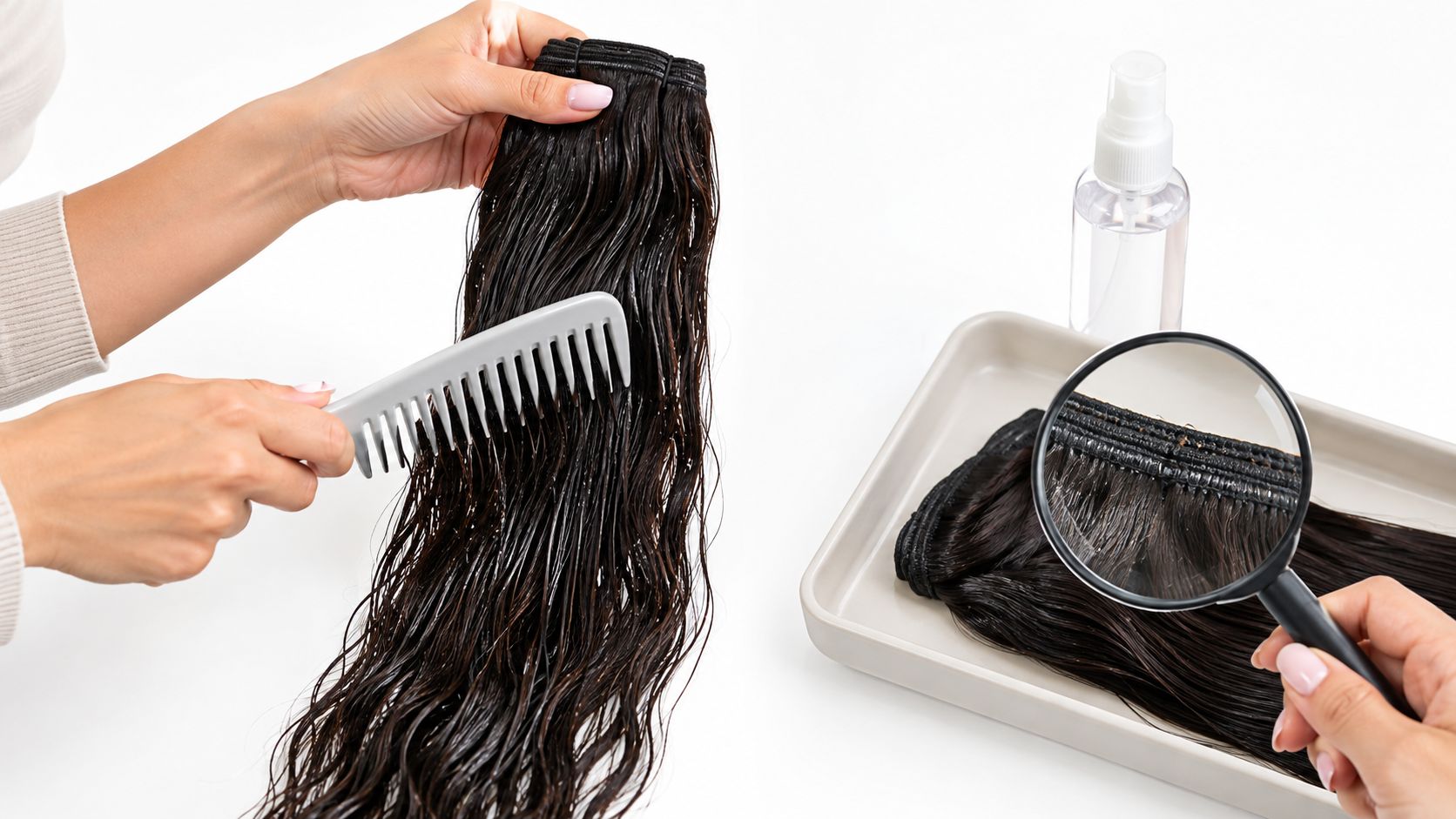
Open the package before the hair is assigned to a client. Record the product description, shade, texture, category, and any processing information supplied with the order. Keep the hair separated from accepted inventory until it passes the salon's checks.
Run a clean comb through the lengths from ends upward, supporting the attachment with the other hand. Note snagging, uneven resistance, excessive short fibers, and areas that feel coated or unusually rough. A single snag doesn't prove failure, but repeated resistance across the length deserves investigation.
Inspect the top of the weft or attachment closely. Look for loose stitching, uneven edges, gaps, unsecured return hair, and shedding during gentle handling. For K-Tip, Tape-In, and Bulk, examine strand consistency and direction rather than applying weft-specific criteria.
Wet a small, representative section with clean water and apply the salon's normal detangling approach. Comb gently from the ends upward, observing whether the hair stays coherent or develops clumping, matting, and repeated catches.
The test should be controlled, not abusive. The purpose is to identify behavior that could create problems during cleansing and maintenance, not to force the hair through unnecessary tension. Compare the result with the supplier's stated category and with the standard the salon accepts for the same service.
Double-drawn hair should be evaluated for fullness and end consistency, but those visual qualities don't replace a cuticle and shedding assessment. Single-drawn hair may show more natural variation through the ends, so the stylist should judge it against the planned cut, blend, and density rather than reject it solely for that appearance.
Keep notes on what was inspected, including photos of any irregularity and the lot or order reference. If the hair fails the salon's standard, pause installation and contact the supplier before altering, coloring, cutting, or attaching it. Once the hair has been chemically processed or installed, it becomes harder to distinguish an inventory issue from a service issue.
Intake standard: If the salon can't explain how the hair behaves dry, wet, and under gentle combing, it isn't ready for a client install.
This protocol also helps salon owners train staff consistently. The goal isn't to prove that one category is always superior. The goal is to verify that the actual inventory matches the service the stylist intends to perform.
The next step is a backbar audit, not another search for a higher letter grade. Pull representative pieces from each category and method currently used in the salon. Document the stated processing history, cuticle alignment, shade accuracy, attachment construction, dry combability, wet combability, shedding, and post-wash condition.
Then ask each wholesale supplier precise questions:
The better question is whether the hair is chemically processed, cuticle-aligned, and traceable to a single donor. Marketing often blurs those distinctions, which leaves the stylist to discover real-world performance during an install. This supplier FAQ on Remy hair makes that performance-focused framing central.
A professional account can also keep purchasing aligned with licensing and salon workflow. Conde Professional supplies method-specific human hair collections and professional extension accessories for licensed professionals, but the salon should still apply its own acceptance protocol to every order.
Open a professional account only after reviewing the available method categories, shade support, and supplier quality documentation. The immediate objective is simple: remove any backbar inventory whose processing history and physical behavior can't be verified, then replace it with hair that matches a documented service plan.
Conde Professional offers Volume Weft, Thin Weft, Tape Weft, K-Tip, Tape-In, Clip-In, and Bulk collections for licensed professionals, along with tools and education for method selection and color matching. Review the professional range and visit Conde Professional to open a professional account and evaluate your extension inventory against salon-ready technical criteria.


