Your cart is empty
Tax included and shipping calculated at checkout

Drawer menu
Tax included and shipping calculated at checkout
A professional account gives you stylist pricing, priority support, early access to new releases, and education developed by working stylists.
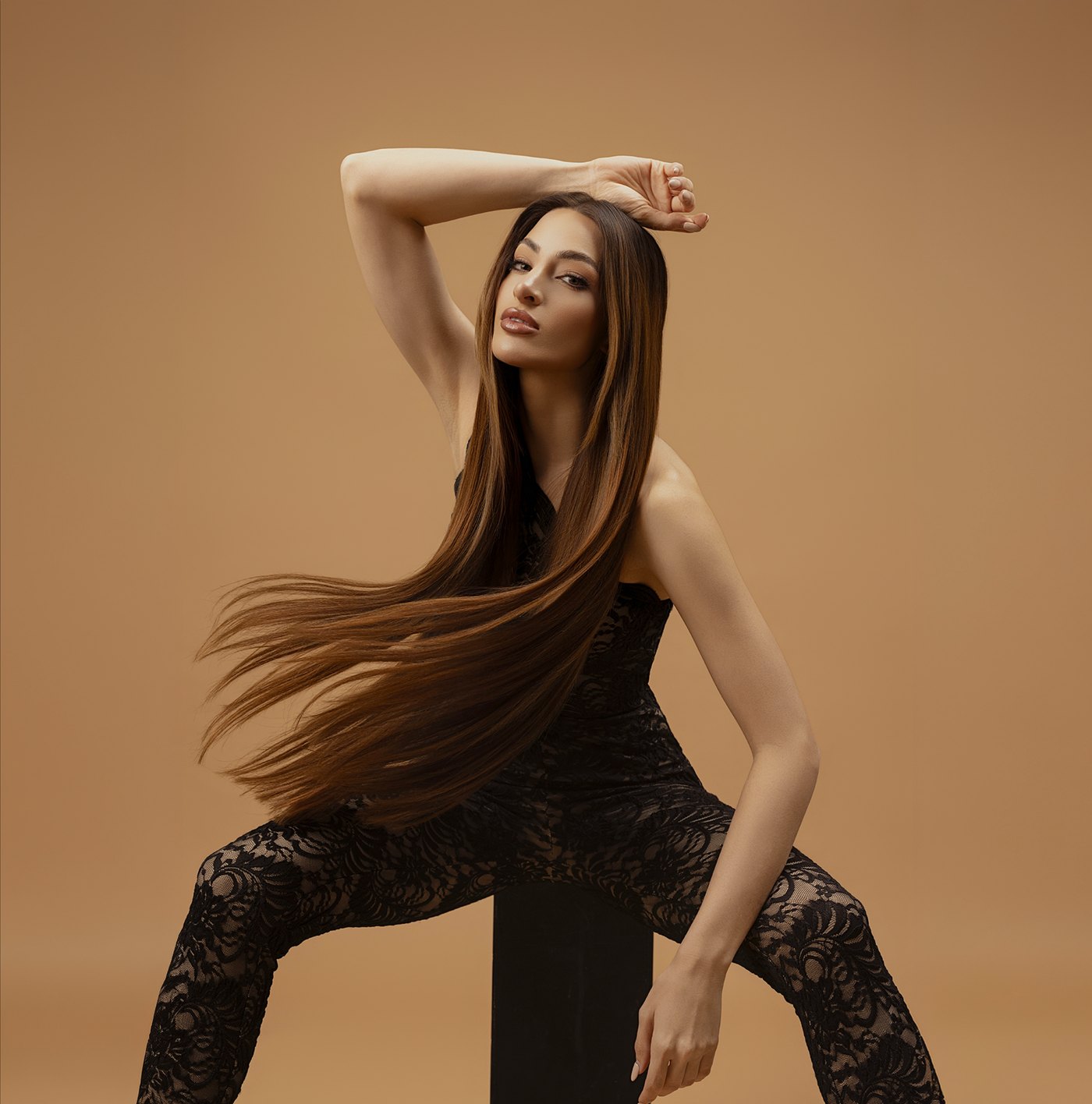

A client sits in the chair asking for “the natural sun thing,” while the extension consultation already points toward a hand-tied row or a tape-in install. The working answer to what is balayage hair is precise: balayage is a freehand surface application of lightener that creates a soft, lower-contrast regrowth than traditional foiled highlights, with saturation and lift concentrated through the mid-lengths and ends.
That distinction matters for a colorist and an extension specialist. Balayage isn't a shade, a toner, or a single finished look. It's a placement method, and the placement has to agree with the client's hair history, desired lift, maintenance tolerance, and eventual extension plan.
Balayage means painting lightener onto selected surface sections without foils. The brush deposits less product near the root and more through the mid-lengths and ends, creating root diffusion, a saturation gradient, and a visual transition rather than a uniform highlight pattern. The method is documented as a freehand application that produces softer diffusion at the root and greater saturation toward the ends in this technical explanation of balayage and foiling.

A stylist can read the result through three connected ideas:
The brush angle, subsection width, and pressure control how quickly saturation builds. A lighter surface application can create a quiet veil of brightness, while denser painting through the mids and ends produces a stronger blonde presence. The section underneath also matters. Hair that's lifted, curved, or diffused across a board won't receive product in the same way as a compact, heavily saturated subsection.
Practical rule: A balayage formula can be correct and still produce the wrong result if the placement pattern creates too much root density.
Balayage often suits a lived-in color plan because the eye doesn't encounter a repeated line at the scalp. That doesn't mean every balayage should be subtle. A stylist can design strong face framing, brighter ends, or a more visible contrast while retaining the freehand transition.
The hair's structure still sets the boundaries. A review of hair structure and its relevance to professional services helps frame why cuticle condition, porosity, and previous chemical work influence both lightener behavior and the finished surface. Balayage is therefore best evaluated as a technical decision, not as a promise of effortless color.
Balayage is widely traced to Paris in the early 1970s, when stylists at the Carita salon developed a hand-painted highlighting method intended to create softer, sun-kissed dimension than traditional foil techniques. The French term comes from a verb meaning “to sweep,” a direct reference to the sweeping motion used to place color, as described in this history of balayage and its Parisian origins.

The timeline is useful in education because it shows a change in color philosophy:
The significance isn't historical trivia. Foil work is highly structured, and that structure can be valuable when a client needs consistent brightness from a defined start point. Balayage shifted attention toward customized placement, lower-contrast regrowth, and a lived-in finish. The stylist became responsible for designing where brightness appeared, how it moved through the haircut, and how the result would age.
That shift also explains the method's value in premium color services. Clients often associate the service with artistry, customized placement, and a longer interval between major appointments, although the actual maintenance still depends on the base, growth pattern, aftercare, and desired brightness.
The technique's journey from a French salon innovation to a global salon staple also parallels the extension market. A market report estimates the global balayage hair extension market at $1.2 billion in 2025, with a projection of $2.3 billion by 2034 and a projected 7.8% compound annual growth rate. The same report estimates that Asia Pacific held 38.5% of global revenue in 2025. Those figures describe the balayage extension category, not balayage coloring alone, but they show the commercial reach of the aesthetic in adjacent professional services. The figures appear in this balayage hair extension market report.
A successful balayage is built through controlled inconsistency. The stylist varies saturation, section density, and placement so the finished lightness looks intentional rather than mechanically repeated.
Sectioning should follow the haircut, density, and client's parting habits. A center part, heavy fringe, crown whorl, or strong face frame changes where brightness will be seen first. The stylist should identify the areas that need visual emphasis before mixing, because the same painted pattern won't serve every head shape or haircut.
Selected subsections are usually kept clean enough to control the brushstroke. The lightener is painted onto the surface, then feathered upward so the root area receives less saturation. The mid-lengths and ends receive more product, which allows the eye to read a gradual transition instead of a root-to-end block.
A dry, porous end may absorb product rapidly, while a cuticle-intact virgin area can resist or lift more slowly. Previously colored lengths introduce another variable. The stylist has to assess the existing pigment, porosity, elasticity, and prior lightening before deciding whether the planned result is realistic.
Developer selection isn't just a lift decision. It also affects the warmth exposed during lift and the toner demand afterward. Independent research on balayage applied to virgin hair found that the balance between hydrogen peroxide and bleaching material affects the resulting yellow undercoat, which means formula strength directly influences underlying warmth. The findings are available in this research on balayage lift and undercoat.
That relationship creates a practical tradeoff:
The formula doesn't work in isolation. Saturation, developer, processing time, hair history, and porosity all determine the lift a stylist actually sees.
The painter's pressure matters too. A heavy, loaded stroke near the root can create a visible shelf. A dry brush with insufficient saturation can leave broken lift through the mids. The stylist should watch the transition while painting, not wait until the rinse to discover that the gradient never connected.
Toner refines the exposed undercoat, but toner can't rebuild missing saturation or erase a poorly placed line. The cleanest result comes from controlling the application before toning becomes necessary.
The right technique depends on the client's starting canvas and the visual behavior required at the root. Balayage offers a diffused transition, while foiled highlights offer more structured brightness. Ombré makes the root-to-end shift more deliberate, and foilyage combines freehand placement with foil-assisted lift.
| Technique | Root Contrast | Processing Time | Best For |
|---|---|---|---|
| Balayage | Soft, diffused transition | Variable, based on placement and lift | Customized dimension and a lived-in grow-out |
| Traditional highlights | Defined, more uniform brightness | Variable, based on foil count and lift target | Consistent brightness and structured dimension |
| Ombré | Deliberate root-to-end contrast | Variable, based on the length of the transition | A visible gradient with stronger end emphasis |
| Foilyage | Diffused placement with stronger lift potential | Variable, with foil-assisted processing | Hand-painted placement that needs additional luminosity |
Traditional highlights can be the better choice when the client wants brightness distributed consistently through the head or needs a more predictable lift pattern. Foils also give the stylist a controlled environment for sections that need stronger lightening than open-air painting can provide.
Ombré is different from balayage in intention. The transition typically reads as a more obvious root-to-end shift, whereas balayage usually distributes brightness through selected sections and varies the saturation within those sections. A stylist planning extension color should understand that an ombré pattern may require stronger end alignment than a softer balayage blend. The guide to ombré hair extensions is useful when the extension design needs to support a clear gradient.
Foilyage sits between the methods. The stylist paints the section first, then wraps it in foil to add heat and increase lightening action compared with open-air balayage. That can help with resistant hair, a higher lift target, or a client who wants more luminosity than an open-air process can reasonably deliver.
A heavily tinted or previously lightened head may need a more controlled approach than a virgin canvas. A dense, dark base may require strategic foils in selected areas. A fragile end may be better served by restrained placement and tonal refinement than by chasing maximum brightness.
Balayage isn't automatically the superior choice. It's the correct choice only when the desired contrast, lift, regrowth behavior, and fiber condition agree.
The appointment starts with an expectation conversation, not a brush. The stylist should establish the desired brightness, visible contrast, face-framing intensity, previous color, home maintenance, and extension plans before choosing the placement pattern. A professional hair extensions consultation guide can support that conversation when color and installation are being planned together.

The stylist should map the head according to movement and visibility. The parting pattern, crown, temples, perimeter, and face frame determine where a client will perceive brightness in daily styling. A full painted plan may be unnecessary if the client wears a consistent part and only needs visible lightness through the top and front.
Sectioning also controls the rhythm of the finished result. Narrower selections can create more visible dimension, while broader surface sections can read as a softer veil. The stylist should keep the back and front balanced, but not mechanically identical.
The first painted sections establish the visual language for the rest of the head. The root should be feathered rather than loaded, and saturation should build where the intended lightness begins. Product needs to remain consistent through the mids and ends without compressing the section into a solid panel.
Open-air balayage is appropriate when the desired lift and hair condition allow controlled processing without additional heat. If a section needs more lift or luminosity, the stylist can use foilyage. Education for professionals notes that painted sections can be wrapped in foil after placement, increasing lightening action compared with open-air processing, as outlined in this foilyage education guide.
Processing should be assessed by the actual lift and condition, not by impatience or a fixed visual expectation. Once the desired canvas is reached, rinsing removes the chemistry, and toning refines warmth, depth, and connection between zones.
A memorable balayage usually has restraint at the root, deliberate brightness through the visible planes, and enough tonal variation to support the haircut. The mirror should confirm the placement, but the chemistry and fiber response have the final say.
Balayage and extensions have to be designed as one color system. A painted natural head may be darker near the root, brighter around the face, and lighter through selected ends. An extension row, tape panel, or bond placed into that design must continue the gradient rather than introduce a disconnected block.
A shade family labeled Balayage or Bronde may integrate well with a lived-in color plan when the extension's depth and undertone align with the client's mid-lengths and ends. Highlights can support a brighter face frame, while Rooted shades may help bridge a deeper base into lighter lengths. Solid hair can be the more controlled choice when the client needs a single tonal family, and Fantasy belongs to creative color plans rather than a conventional natural melt.
A double-drawn weft from a balayage collection can appear blended through the ends when its tonal movement agrees with the painted canvas. It can also fight the result if the weft carries a stronger, more uniform contrast than the natural hair. The issue isn't the label. It's the relationship between the extension's visual density and the client's existing placement.

Conde Professional's balayage human hair extension collection includes professional extension formats and balayage color blends for matching an installation to a hand-painted plan. The supplier's range includes Volume Weft, Thin Weft, Tape Weft, Tape-In, K-Tip, Clip-In, and Bulk formats, so method selection can follow density, placement, and maintenance requirements rather than forcing every client into one system.
The most honest recommendation may be a Thin Weft in one tonal family instead of a complicated balayage extension bolted onto a natural melt it doesn't match. A simpler install often looks more intentional than a multi-shade system with the wrong undertone.
Balayage looks low-maintenance because the root transition is diffused. It isn't maintenance-free. Published salon guidance says balayage can last about 3–4 months, depending on root color, growth rate, and aftercare, while appointments can still take 45 minutes to 3 hours and can be performed over existing color. Those figures and conditions are outlined in this balayage trend and maintenance guidance.

The full-service interval is only one part of the plan. A stylist should explain that lightened hair can experience tonal drift, altered porosity, and changes in surface texture between major appointments. The client may not need a complete repaint, but the color can still need refinement.
Extension clients also need method-specific guidance for brushing, drying, sleeping, and product placement. The professional extension care guide can support the handoff after a color and install appointment.
The stylist should sell maintenance as a sequence of decisions: major balayage service, tonal refinement when needed, extension care, and reassessment of the canvas before the next lightening appointment.
Balayage errors often begin with a wrong reading of the canvas. “Natural” describes the finish, not an informal application. Every painted section still needs a plan for saturation, diffusion, and visual weight.
Symptom: A visible band or muddy transition appears near the scalp.
Cause: Too much lightener reaches the root, or the feathering ends abruptly. The result resembles a hard border rather than a gradual change in density.
Correction: Keep root saturation controlled, blur the upper edge, and place greater product density through the mids and ends. A useful salon scenario is a client whose first sections look bright at the root but whose lower lengths remain dark. Adding more product to the scalp will usually intensify the band. Rework the distribution instead: leave the root lighter in saturation, stretch the blend through the mid-length, and concentrate the lift where the finished design needs brightness. The balayage placement explanation reinforces why placement and density shape the final result.
Previously colored hair may lift unevenly across zones with different porosity. A strand test shows likely lift, warmth, elasticity, and processing behavior before the full application commits the head to one formula and timing plan.
Virgin root, porous mid-length, and previously lightened ends can require different saturation and processing behavior. One formula across every zone may leave warmth uneven or push fragile ends past their workable condition.
Extensions can match the apparent depth of the natural hair while carrying a different undertone. Around a hand-tied row, Tape-In panel, or K-Tip placement, that difference becomes more visible because the added hair forms a concentrated color mass. Match the tonal direction as well as the level.
Soft grow-out reduces pressure for a root touch-up, but the color still needs professional assessment. Tonal shifts, porosity changes, and extension care affect the next service, so clients need a realistic schedule rather than a promise of permanent sameness.
Balayage is a craft decision, not merely a label. A controlled color melt begins with the first brushstroke and the saturation choices made before processing starts.
Conde Professional supplies licensed professionals with Volume Weft, Thin Weft, Tape Weft, K-Tip, Tape-In, Clip-In, and Bulk hair, including shade families for tonal matching across balayage and extension services. Stylists and salon owners can review the collection and open a wholesale account through Conde Professional.


