Your cart is empty
Tax included and shipping calculated at checkout

Drawer menu
Tax included and shipping calculated at checkout
A professional account gives you stylist pricing, priority support, early access to new releases, and education developed by working stylists.


613 is an industry shorthand for a level 10–12 ultra-light platinum blonde base, not a standardized natural pigment shade. In extension work, it usually identifies hair lifted close to white and prepared for tonal finishing, custom coloring, wigs, weaves, or blonde extension blends.
The popular advice that “613 means blonde” is too vague for professional work. A stylist needs to know whether the label describes depth, reflect, or a wholesale shade family, because those are different things. In salon colorimetry, a level communicates lightness and tone communicates reflect. In the extension market, 613 functions more like a cross-product shorthand for a pre-lightened canvas.
That distinction affects ordering, consultation language, toning, installation, and maintenance. A bundle labeled 613 may look neutral, creamy, icy, or slightly golden depending on how it was lifted, finished, photographed, and presented by the supplier. The right question isn't only “what hair color is 613?” It's “what level and undertone is this particular 613, and how will it behave in the client's finished look?”
613 is a wholesale code, not a universal salon swatch. Across extension suppliers, it usually identifies an ultra-light blonde at the palest end of the available range, commonly described as platinum blonde or level 10–12. The number signals a commercial shade family, but it does not guarantee that every bundle will show the same level, reflect, or undertone.
In professional colorimetry, stylists separate depth from tone. Extension catalogs often compress those details into a short product code, so “613” should be translated into observable characteristics before ordering or installing. It generally describes hair lifted close to white, then left ready for tonal finishing. That pale base can be worn as blonde, cooled with a toner, blended into another shade, or customized with deposited color.
The code does not identify the final visual result. One supplier's 613 may read as neutral platinum, while another may appear creamy, softly golden, or icy after finishing. Ecommerce lighting can further obscure the difference between residual yellow and an intentional warm reflect.
Pre-toning is another variable. A bundle may arrive clean and neutral, while a similar-looking product still carries enough yellow to need toning before installation. Texture also changes perception. Straight hair reflects light directly; wavy or tightly textured hair scatters light across the surface, making a comparable base appear softer or slightly deeper.
Practical rule: Treat 613 as a starting point for consultation, never as proof of an exact finished salon match.
Check a physical swatch in daylight whenever possible. A color ring and the client's actual hair are more dependable than a product photograph. Use the professional extensions color chart to sort shade families before ordering, then compare the extension against the client's root, mid-lengths, ends, and intended tonal finish.
The commercial role of 613 becomes clearer in blended shades. Color charts show combinations such as 18/613, 22/613, 27/613, 16/613, and 4/613, where 613 serves as the light-blonde component rather than the complete finished look. Those combinations are useful for rooted, dimensional, and highlighted systems. A stylist who treats 613 as a fixed color can order the wrong base, overlook warmth, and create a visible disconnect between the extension and the client's own blonde.
Before installation, record three observations: apparent level, visible reflect, and remaining undertone. That translation turns a wholesale label into a salon decision.
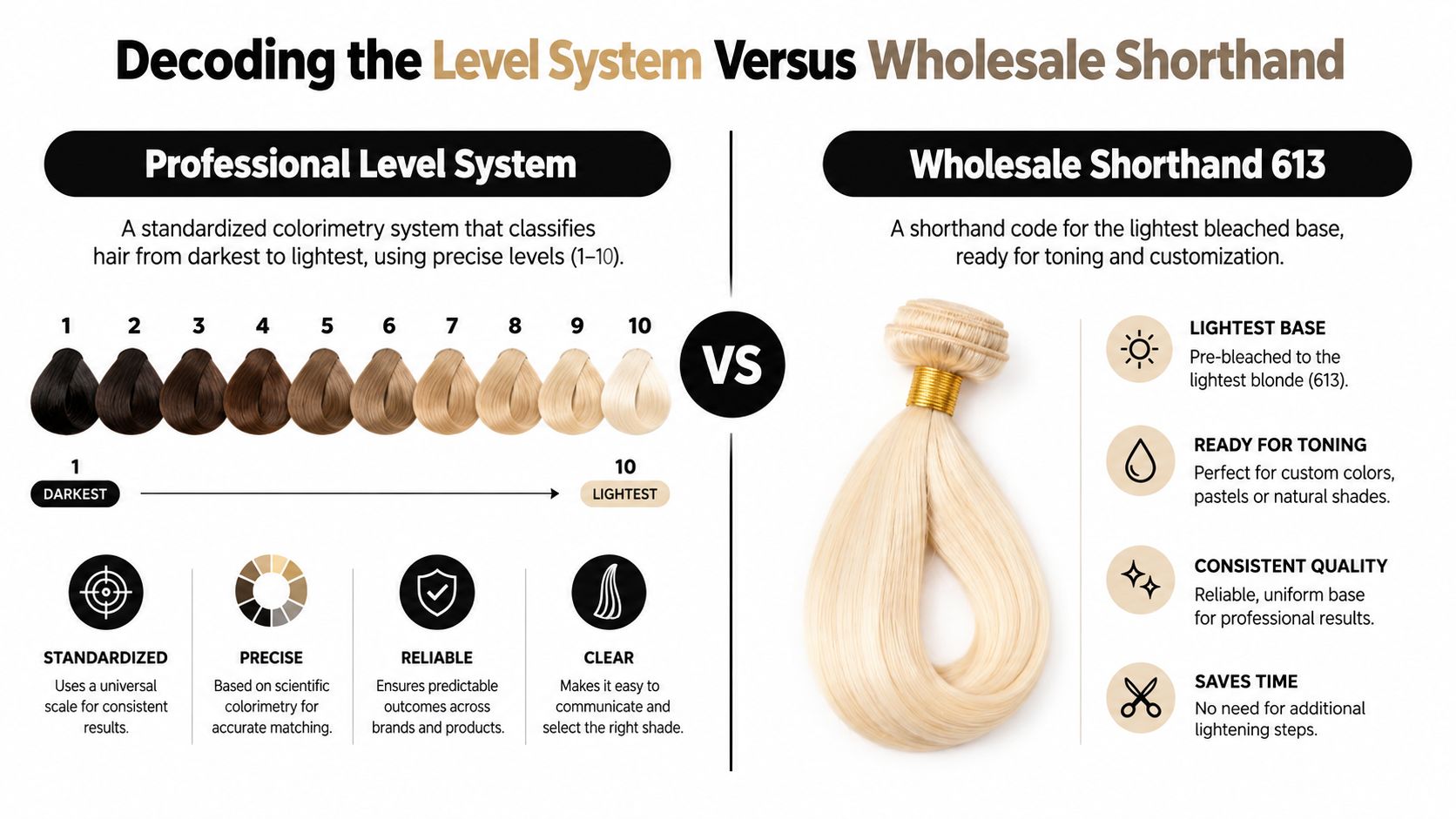
“613” looks like a professional color code, but it does not follow salon numbering logic. Professional systems separate depth from reflect, commonly running from 1 to 10, with 1 as black and 10 as the lightest blonde. In that framework, level 6 is dark blonde and level 7 is blonde, so 613 should not be read as level 6 plus a tonal suffix. Review this professional color-numbering guidance when teaching assistants or clients how salon codes work.
A salon formula such as 6.13 is different. The 6 identifies depth, while 13 identifies the reflect combination, with ash primary and gold secondary, as explained in this level and reflect explanation. Wholesale 613 is a commercial shorthand for an ultra-light, pre-lightened blonde base. The digits do not carry the same decimal meaning.
At the chair, translate the label into three observations:
The practical importance of 613 becomes clearer during ordering. A stylist who reads the first digit as level 6 may search for dark blonde hair and select a completely unsuitable base. Evaluate 613 as a very light blonde canvas, then decide whether its tone and undertone suit the planned install.
A professional level chart describes a controlled color system. Wholesale shorthand identifies a commercial category used across product types. A 613 label may appear on a hand-tied weft, tape panel, wig, or bulk hair, while the tonal finish varies between products.
Ask suppliers precise questions: “Is the 613 neutral or warm?” “Has it been pre-toned?” “Can you provide a physical swatch?” “Does it sit closer to level 10 or the palest end of the chart?” For broader wholesale human hair extensions overview, review the product specifications, then confirm the shade against a color ring before committing to the install.
A 613 install rarely matches a dimensional salon blonde without adjustment. The number identifies a commercial shade category, not the client's finished color. Even an “all blonde” result usually contains differences between the root, mid-lengths, and ends. Place a pale extension under a shadowed root and the attachment area can form a visible shelf. A rooted, highlighted, or mixed-shade plan usually creates a smoother transition.
Start with the client's finished target, not the extension code. Assess the hair in neutral daylight, isolate the root from the lengths, and decide whether the extension should disappear into the existing color or deliberately add brightness.
613 is most useful as the lightest point in a mixed-color system. It can pair with shades such as 18, 22, 27, 16, and 4 to support rooted blondes, dimensional blondes, and deeper transitions. Use these combinations as planning references, not fixed formulas. Place 613 where the client needs the palest visual movement, then choose the transition shade according to the root and mid-lengths. A hair color-matching guide for extensions can help structure that consultation.
A darker rooted shade softens the first break near the scalp. A mid-level blonde bridges the distance between a natural-looking root and a pale end. A highlight blend maintains brightness without making every strand appear uniformly platinum.
Behind-the-chair observation: A smooth blend depends more on the transition between shades than on finding one perfect blonde.
Texture changes the result as well. Wavy hair distributes light and dark areas differently from straight hair, while a highly reflective straight extension can appear brighter than a similar shade in a textured pattern. Evaluate the physical hair under the lighting used for the service, and compare the swatch with the client's movement pattern before finalizing the order.
613 requires a deposit-focused chemical approach because it has already been lifted to an extremely pale blonde base. Additional high-level bleaching is usually the wrong first move. It adds processing to hair that may already have a compromised cuticle and can increase the risk of dryness, breakage, tangling, or uneven porosity.
The useful advantage is that 613 can accept tonal refinement without another major lift. It can serve as a clean canvas for a beige, icy, neutral, golden, pastel, or direct-dye finish, provided the stylist controls the formula and checks how the hair responds.
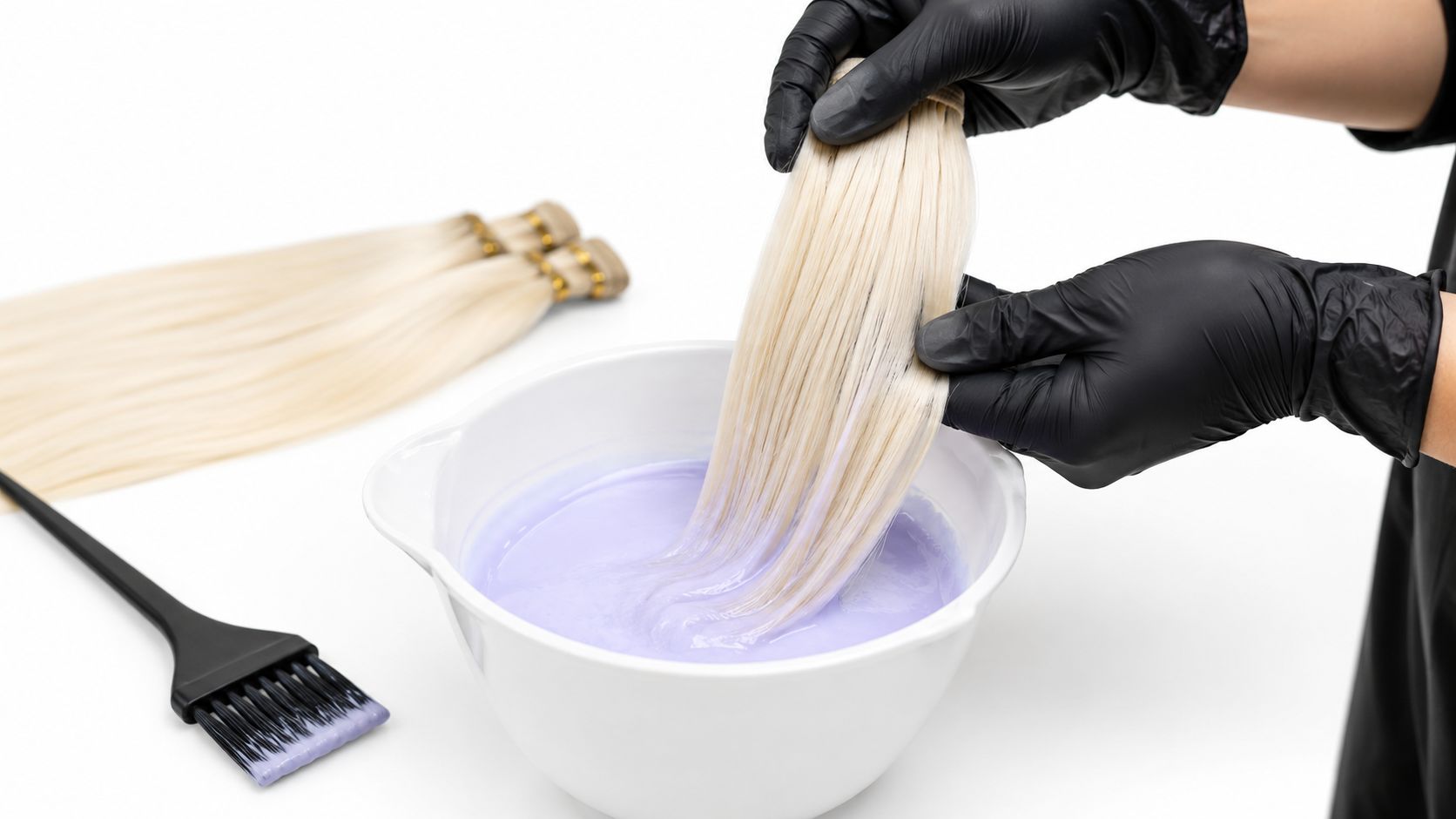
A strand test is essential. Test a representative piece from the same hair order, because extension hair can absorb color differently from the client's natural hair. Watch for uneven deposit, excessive dulling, gray cast, or a result that grabs too strongly at the ends.
For a cooler result, the stylist is managing residual yellow rather than trying to create lightness. A violet-based deposit may help counter yellow, while a beige or neutral approach can preserve softness. A golden platinum finish may require restraint so the final result doesn't become visibly brassy.
Low-volume developers or direct dyes are generally more appropriate for deposit work than aggressive lifting. The formula should be applied evenly, monitored closely, and rinsed according to the product's professional directions. A stylist shouldn't assume that a toner designed for porous natural hair will behave identically on extension hair.
The pale base makes 613 useful for direct-deposit fashion colors and pastel overlays without additional high-level bleaching. That can reduce the need for further cuticle stress, but it doesn't make the hair indestructible. A fashion color may stain unevenly if porosity varies, and a pastel can fade into a different visual tone as the underlying blonde becomes more exposed.
A sulfate free purple conditioner can be discussed as a home-care option for maintaining cooler blonde direction between professional services, but it shouldn't replace a controlled salon toner when the shade needs precise correction.
Coloring rule: Deposit the tone the hair needs. Don't bleach a pre-lightened extension base simply because the first toner result feels imperfect.
Stylists can review a professional guide to dyeing hair extensions before customizing the order. The method, developer choice, processing time, and aftercare should follow the color product's instructions and the condition observed during the strand test.
A 613 install does not stay salon-fresh on its own. Its pale base exposes brassiness, dullness, tangling, and rough handling faster than darker shades. Maintenance must be part of the service plan, with instructions the client can follow at home.
Tonal control is a scheduled service, not an emergency correction. Guidance for 613 hair commonly places toner refreshes at every 4–6 weeks, although the interval should reflect washing frequency, water quality, sun exposure, heat use, and the hair's condition. Confirm the plan during the consultation and adjust it when the tone or porosity changes.
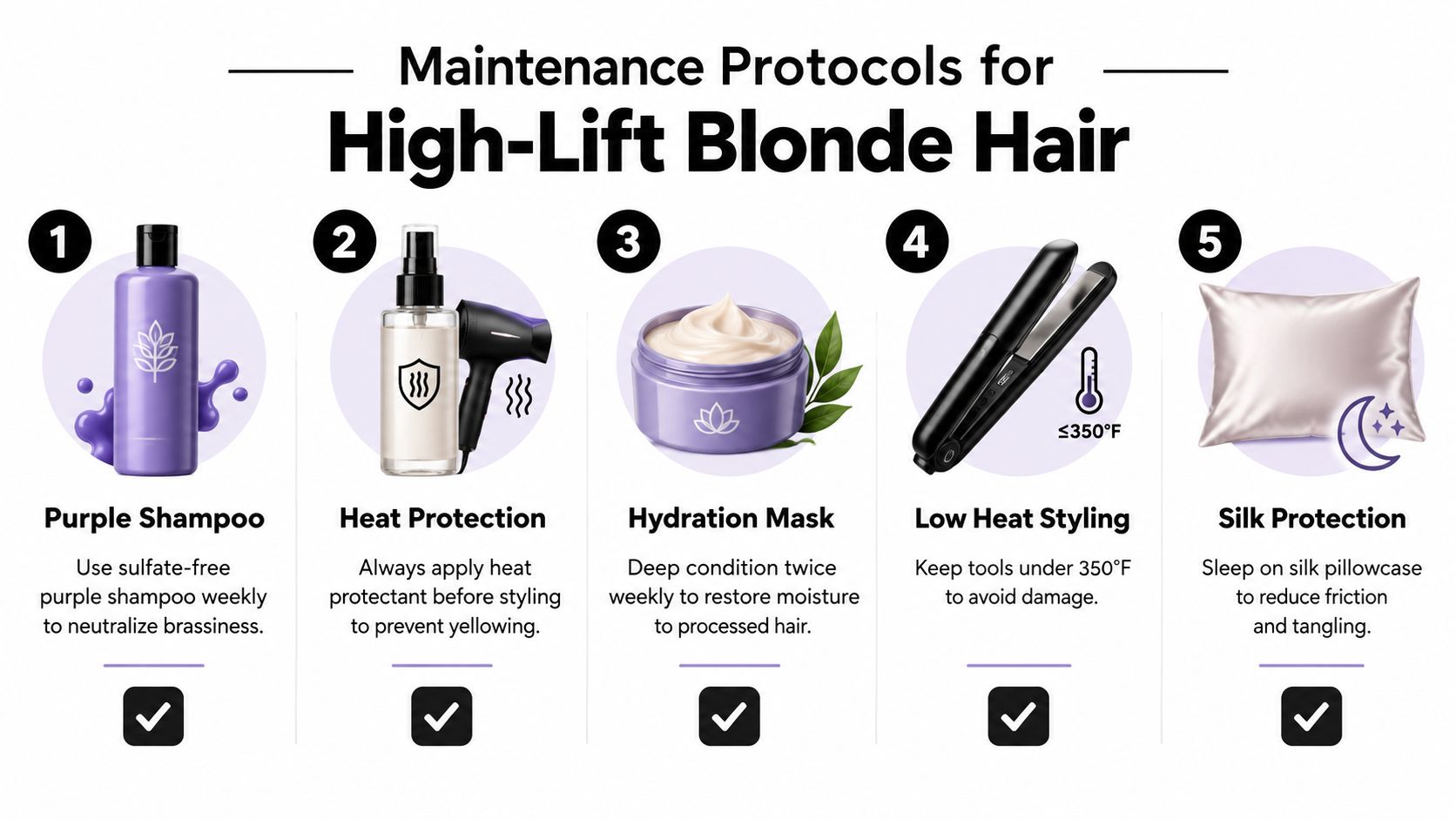
Hard water, ultraviolet exposure, swimming, and regular hot-tool use can alter both the appearance and feel of pale blonde hair. Ask about outdoor work, swimming, styling habits, and cleansing frequency before presenting a 613 install as low maintenance. Clients unwilling to follow a gentle routine may be better suited to a deeper or rooted blend.
Product boundaries need equal clarity. Heavy oils, dark pigments, and strongly colored masks can stain pale lengths or deposit unevenly. The extension care guide can support the instructions delivered during the appointment.
Maintenance protects more than the initial tone. It helps the hair remain easy to comb, keeps the blend believable, and reduces preventable dissatisfaction between salon visits. Performance depends on consistent home care as much as the original installation.
The lightness of 613 makes attachment visibility more demanding. Dark beads, exposed tape, a bulky row, or a poorly placed bond can show more clearly against pale hair than against a deeper shade. Method selection should therefore account for density, parting patterns, attachment camouflage, lifestyle, and the condition of the client's natural hair.
No single method wins every blonde consultation. Tape-based formats can offer a flat profile, but their tabs need careful placement in fine hair. K-Tips provide strand-by-strand distribution and flexible placement, yet the bonds must be hidden and the sectioning must remain clean. Wefts can create efficient fullness, though row placement and thickness need to suit the client's density.
| Extension Method Selection for Blonde Hair | Camouflage Factor | Ideal Client Profile |
|---|---|---|
| Tape-In | Flat profile can support discreet placement, but pale hair requires careful tab positioning and clean sectioning. | Clients needing distributed fullness, a flatter attachment, and a routine compatible with tape maintenance. |
| K-Tip | Individual placement allows controlled distribution around visible areas, provided bonds are concealed. | Clients needing targeted length or volume and a strand-by-strand installation plan. |
| Thin Weft | Reduced visual bulk can help fine-density installs when the row is placed correctly. | Clients who need a lighter weft profile and controlled fullness. |
| Volume Weft | Supplies substantial fullness, but may look heavy if overused on fine hair. | Clients with enough density to support a fuller row and a stylist comfortable with precise fitting. |
| Tape Weft | Offers a weft format with a flat attachment concept, requiring careful sectioning around the head. | Clients suited to weft-based fullness who need a low-profile placement strategy. |
For fine, light-colored hair, a low-profile attachment often matters more than maximum density. A Thin Weft or Tape-In can be considered when the client needs discreet distribution, while a Volume Weft may be more appropriate for stronger density and a fuller result. A K-Tip may suit clients who need customization around partings, temples, or areas where a row would be difficult to conceal.
Conde Professional's relevant professional formats include Volume Weft, Thin Weft, Tape Weft, K-Tip, Tape-In, Clip-In, and Bulk. These are options to evaluate against the installation plan, not substitutes for density assessment.
Clip-Ins may be the wrong choice for a client seeking continuous daily wear or a fully integrated install, even though they can work for temporary styling. Bulk hair may suit custom braiding or other techniques, but it isn't the default answer for a client who needs a concealed extension row.
The stylist should also inspect the attachment area in the client's chosen part and photographs. Platinum installs are unforgiving, so the method that looks acceptable from the back may still fail around the crown, hairline, or side part.
A strong 613 consultation replaces the question “Which blonde matches?” with a more useful assessment: What level is needed, what reflect is present, where should the brightness begin, and which method will hide the attachment? That framework turns a vague wholesale code into a technical color and installation plan.
Inventory should be audited by shade role, not only by product name. A salon needs a pale base such as 613, transition blondes, rooted options, and dimensional families that can reproduce the client's existing pattern. Color rings should be checked in person, and supplier questions should address tone, pre-toning, cuticle alignment, combability, shedding, and wash durability rather than unsupported grade labels.
Grades such as 6A, 7A, 8A, 9A, and 10A shouldn't drive the decision. They're supplier marketing terms without a governing body. Measurable criteria, including cuticle integrity, alignment, shedding, combability, and wash durability, give the stylist more useful information.
Book the next blonde extension consultation around this framework, document the chosen level and undertone, and perform a strand test before customizing the order. Then route professional purchasing through a wholesale supplier account rather than a consumer checkout.
Conde Professional offers licensed professionals multiple extension formats, including Volume Weft, Thin Weft, Tape Weft, K-Tip, Tape-In, Clip-In, and Bulk, so stylists can match the installation format to the client's density and blonde plan. Visit Conde Professional to open a professional account, review the available collections, and build a 613 inventory that supports accurate color matching instead of relying on the number alone.


