Your cart is empty
Tax included and shipping calculated at checkout

Drawer menu
Tax included and shipping calculated at checkout
A professional account gives you stylist pricing, priority support, early access to new releases, and education developed by working stylists.
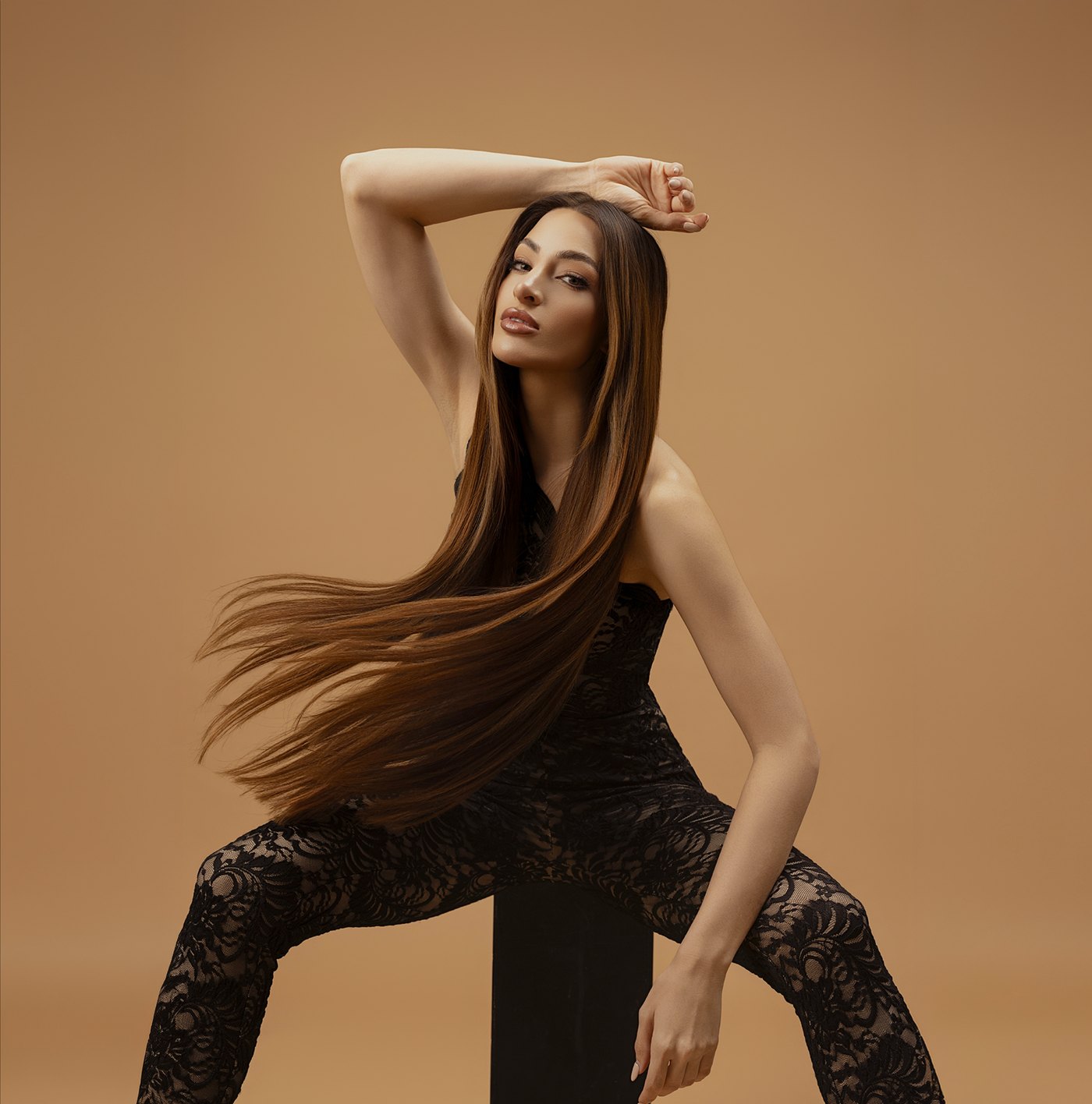

The popular advice that more volume creates more durability is backwards for long hair. A half-up prom style lasts when the crown has controlled lift, the gather has multiple secure anchor points, and the lower lengths don't overload one weak section.
That matters because half up prom hairstyles for long hair combine two opposing demands. The upper section needs structure for polish, while the lower section must stay loose, touchable, and visually substantial. Historical styling supports that balance. Versions of the silhouette appear in summaries of ancient Mesopotamian, Egyptian, and Greek hair traditions, and its formal association resurfaced strongly in mainstream fashion when Vivien Leigh wore a recognizable half-updo as Scarlett O'Hara in 1940, as documented in the evolution of half-up hairstyles. The shape has endured because it adapts to curls, braids, long lengths, and accessories without losing its formal proportion.
Volume is only one part of a durable style, and often the least important part. A high tease can photograph beautifully at the chair, then compress under the weight of long hair, humidity, and repeated movement. The objective is structural integrity, not maximum height.
Long lengths create weight. Every curl hanging below the shoulder pulls against the upper gather, especially when the hair is dense, extensions are present, or the client repeatedly adjusts the style. A single elastic or two crossed pins may hold a light section, but they rarely distribute force well across a full crown.
Heavy lengths pull the gather loose. The longer the cascade, the more carefully the upper section must be divided and anchored. A stylist who gathers too much hair into one central point creates a concentrated load. A stylist who leaves the lower section too dense can make the top look attractive but unstable.
Backcombing alone fails on fine, slippery hair. Teasing creates temporary friction, but it doesn't replace an anchor. If the surface is polished and the root area has no directional support, the teased section compresses and the pins migrate.
Humidity changes the internal geometry. Moisture can swell porous hair, soften a set, and make a smooth surface less cooperative. Heavy finishing spray applied too early can add weight without solving the root problem. Hair structure and fiber behavior deserve attention before styling decisions, and this professional overview of hair structure provides useful background for that assessment.
Practical rule: Build the anchor first, then create the softness around it. A loose finish should be the visible result of a secure construction, not the construction itself.
The most reliable approach treats the appointment like load distribution. The crown, side sections, and occipital area each contribute support. Product layering adds grip and environmental resistance, but it can't rescue poor sectioning. A romantic silhouette may look effortless, yet the stylist should know exactly where the tension is held and where the weight is released.
Preparation starts during consultation, not after the client sits under the dryer. The stylist should assess density, porosity, elasticity, natural movement, and the client's tolerance for pins or tightness. A fine, low-density head needs a different grip strategy from thick, coarse lengths, and a fragile perimeter should never be treated as a primary anchor.
Freshly cleansed hair can be too slippery for a secure half-up gather, while heavily conditioned hair may collapse under product and extension weight. Fine hair benefits from lightweight volumizing spray, root grip, or a dry texturizing product used selectively. Coarse or porous hair may need heat protectant, smoothing control through the mid-lengths, and a flexible humidity-resistant finish rather than more dry texture.
The stylist should also clarify the desired result. A sleek half-up shape needs a clean surface and directional control. Soft curls need enough grip to retain shape without making the ends brittle or matte. If the client wants a large crown, the consultation should distinguish between visual fullness and actual height. The latter requires a stable internal structure.

A useful horizontal part runs from the apex toward the parietal ridge, but it shouldn't be treated as a fixed line for every head shape. Moving the line slightly forward can increase visible crown volume. Moving it back can preserve more softness around the face and reduce the amount of hair carried into the upper section.
The primary upper section should include the crown and the hair intended for the gather. Side panels need enough separation to control face-framing pieces and prevent the central anchor from carrying all the lateral tension. The lower section should be divided according to density and curl pattern, not left as one heavy curtain.
A same-day checklist keeps the foundation consistent:
The order matters. Prep the hair, map the sections, establish the lower texture, and only then build the crown and gather. Curling everything before deciding where the weight will sit often creates unnecessary brushing and weakens the set.
A reliable half-up construction should match the client's density and the weight of the finished cascade. Three methods cover most long-hair prom requests: a twisted anchor for moderate density, an internal braid for heavy lengths, and a pinned cushion for fine hair that needs lift without an aggressive tease.

This suits medium-density hair and a soft romantic finish. Create the upper section, then divide the back portion into two clean sides. Twist each side inward toward the occipital bone, keeping the tension firm at the base but relaxed through the visible length.
Cross the twists at the occipital area and secure them with U-pins inserted diagonally, with the open ends directed into the twist rather than straight down. The pins should enter the anchor, catch a small amount of underlying hair, and return into the twist. That creates a lock without exposing a row of horizontal pin ends.
The stylist shouldn't over-tighten the surface. A small amount of controlled release around the crown and temples keeps the finish soft, while the crossed twists carry the load. This method isn't the best choice for very heavy extensions or extremely long, dense hair because the single central structure can become overloaded.
Very long or heavy hair benefits from weight distribution. Build a narrow braid beneath the upper section, beginning near one side of the occipital bone and finishing near the other. The braid remains concealed, but it gives the pins a textured foundation and spreads tension across multiple points.
The braid should be firm enough to resist compression, not so tight that it creates discomfort or distorts the head shape. Insert U-pins through the upper section and into the braid at opposing angles. Add a second anchor near the side if the client's hair pulls laterally.
This method works well for clients who want substantial curls, a long cascade, or a braided detail above the lower lengths. It can look too structured on fine hair unless the braid is kept narrow and the crown is softened selectively.
Fine hair often needs internal support instead of more teasing. Create a compact cushion from a small section at the crown, backcomb only the roots, and fold the section into a low profile shape. Secure it with short U-pins directed downward and slightly forward, then drape the smooth surface over the cushion.
The pins should pass through the cushion and catch the foundation hair beneath it. If the pins sit only inside the lifted section, they'll slide as the client moves. Keep tension moderate, because fine hair can show a hard ridge when pulled too tightly.
A cushion gives the eye height without requiring a large amount of backcombing. It also leaves the ends soft and touchable, which aligns with current preference for movement over stiff, heavily sprayed silhouettes. A broader selection of formal updo structures can be reviewed through this half-up styling reference for special events.
Extensions should solve a density or length problem without becoming the problem. For half-up prom styling, the attachment area must sit below the crown part line so the upper section can drape over it. This placement principle is specifically noted in professional guidance on half-up extension placement, which also recommends curling the client's hair and extensions together for a blended finish.

Tape Weft or Tape-In can provide lateral fullness through the lower and mid-back zones when the upper section will conceal the attachment area. These methods aren't appropriate if the client needs a completely temporary install, has insufficient hair for safe support, or plans to remove the style immediately after the event without following the correct maintenance process.
Volume Weft suits clients whose issue is overall density rather than a shortfall in length. It should be placed low enough to remain concealed, while preserving enough natural hair above it to create a believable transition into the crown.
Clip-In is practical for a same-day event installation that must come out after the occasion. The clips need a stable base, and they should be positioned below the crown rather than directly inside the visible half-up parting. Stylists who need a dependable source for attachment hardware can find reliable hair clip suppliers while evaluating clip shape, grip, and compatibility with the client's density.
K-Tip, fusion bonds, and other bonded methods can be the wrong choice for a one-night style if the client doesn't need a longer-term install. They also require careful placement so bonds don't sit in the exposed crown, interfere with pin insertion, or create a hard point beneath a soft finish. Method selection should account for the client's existing install, move-up timing, hair condition, and how the style will be removed.
The natural hair and added hair should be curled together in controlled sections, using consistent direction and heat protection. Curling the extensions separately and placing them over a different natural texture often creates a visible seam, especially under flash photography.
Don't use the half-up gather to hide an incorrect blend. The upper section can conceal wefts, but it can't correct mismatched density, inconsistent curl size, or an abrupt color transition at the perimeter. Additional placement guidance for formal styling appears in this extension updo resource.
Hold begins with a diagnosis of porosity, environment, and finish preference. A product that gives fine, low-porosity hair useful grip can make porous, dense lengths feel dry or overloaded. The same formula can behave differently at an outdoor event than in an air-conditioned ballroom.
Low-porosity or slippery hair usually needs lightweight root support. A volumizing spray or dry grip product can be concentrated at the crown and anchor zones, while the lower lengths receive only heat protection and a controlled styling product. Saturating the entire head with texture creates drag during brushing and can leave the finished curls dull.
Porous hair absorbs moisture and can lose smoothness in humidity. It may need a stronger hold product through the working sections, followed by a flexible finish that controls expansion without turning the surface rigid. The stylist should let each layer dry before adding another. Wet-on-wet layering often creates flaking, tackiness, or unnecessary weight.
A June outdoor prom demands more humidity resistance than a December indoor event with dry heating. Outdoor work calls for careful surface sealing and less manipulation after the final spray. Indoor climate control may allow a lighter finish, but dry air can increase static and make fine flyaways more visible.
The finish should match the client's movement. Matte, touchable texture is useful for a soft curl or braid. A polished finish needs controlled smoothing and shine, but too much serum near the crown can weaken grip. Flexible spray supports movement, while maximum-freeze spray belongs only on areas that must remain fixed, such as a small anchor or accessory base.

The client should know not to brush through the crown, repeatedly lift the gather, or apply oil near the anchor. A small emergency kit can include a few matching pins, a compact brush for the lower lengths, and a clip for temporary control during travel. If the client needs an accessory for changing clothes or managing the hair before photos, a selection of For Love Lemons claw clip options can serve as a practical temporary holding tool, but it shouldn't replace the final structural anchors.
Product decisions should be documented in the client record, especially for repeat formal clients. Note the hair's response to prep, the areas that slipped, and the finish that retained movement. The next appointment can then start with evidence rather than guesswork. Further product-layering considerations are available in this professional guide to products for hair extensions.
Most failures are recoverable if the stylist diagnoses the anchor instead of just adding more spray. The fastest correction usually changes the foundation, not the surface.
Freshly washed hair may lack the friction needed for a secure elastic or pin. Don't tease the entire section aggressively. Dry the root area fully, apply a controlled grip product, and rebuild the anchor with a smaller section. If necessary, create a narrow hidden braid or twist beneath the visible gather, then pin into that foundation.
A collapsed crown usually means the lifted section is carrying too much weight. Release part of the lower hair from the gather, reinforce the internal anchor, and redistribute the upper section across the occipital area. A lower, softer crown often survives better than an exaggerated height supported by one point.
For very long hair, the internal braid method is usually more reliable than stacking additional pins in the same central location. Pins should enter at opposing angles and catch the underlying support, not float inside the surface section.
Visible wefts, clips, or bonds indicate incorrect placement or insufficient coverage. Don't disguise the area with random teasing. Reopen the upper section, move the attachment below the crown line, and preserve enough natural hair above it to create a clean drape.
Uneven curl drop usually comes from different section sizes, inconsistent heat exposure, or styling the two textures separately. Re-curl a matched section containing both natural hair and extension hair, allow it to cool without disturbance, and brush only after the shape has set. If the added hair is heavier, reduce the curl size slightly in the lower lengths rather than overloading the crown with spray.
If the client wants more height after construction, don't pull harder on the existing surface. Backcomb a small interior slice, add a discreet cushion if the density allows, and soften the top layer over the new support. If the client wants less volume, remove internal support gradually instead of flattening the entire crown with a brush.
Head shape can also make a centered anchor look uneven. Shift the pin placement toward the side with less natural support, and use diagonal entries that follow the skull rather than forcing a symmetrical pattern. The final silhouette should look balanced from the front, profile, and photo angle, even if the internal construction isn't perfectly mirrored.
Conde Professional supplies licensed professionals with Volume Weft, Thin Weft, Tape Weft, K-Tip, Tape-In, Clip-In, and Bulk options for structured formal styling and extension integration. Visit Conde Professional to open a professional account, review method options, and get product or shade guidance for the next long-hair prom appointment.


