Your cart is empty
Tax included and shipping calculated at checkout

Drawer menu
Tax included and shipping calculated at checkout
A professional account gives you stylist pricing, priority support, early access to new releases, and education developed by working stylists.
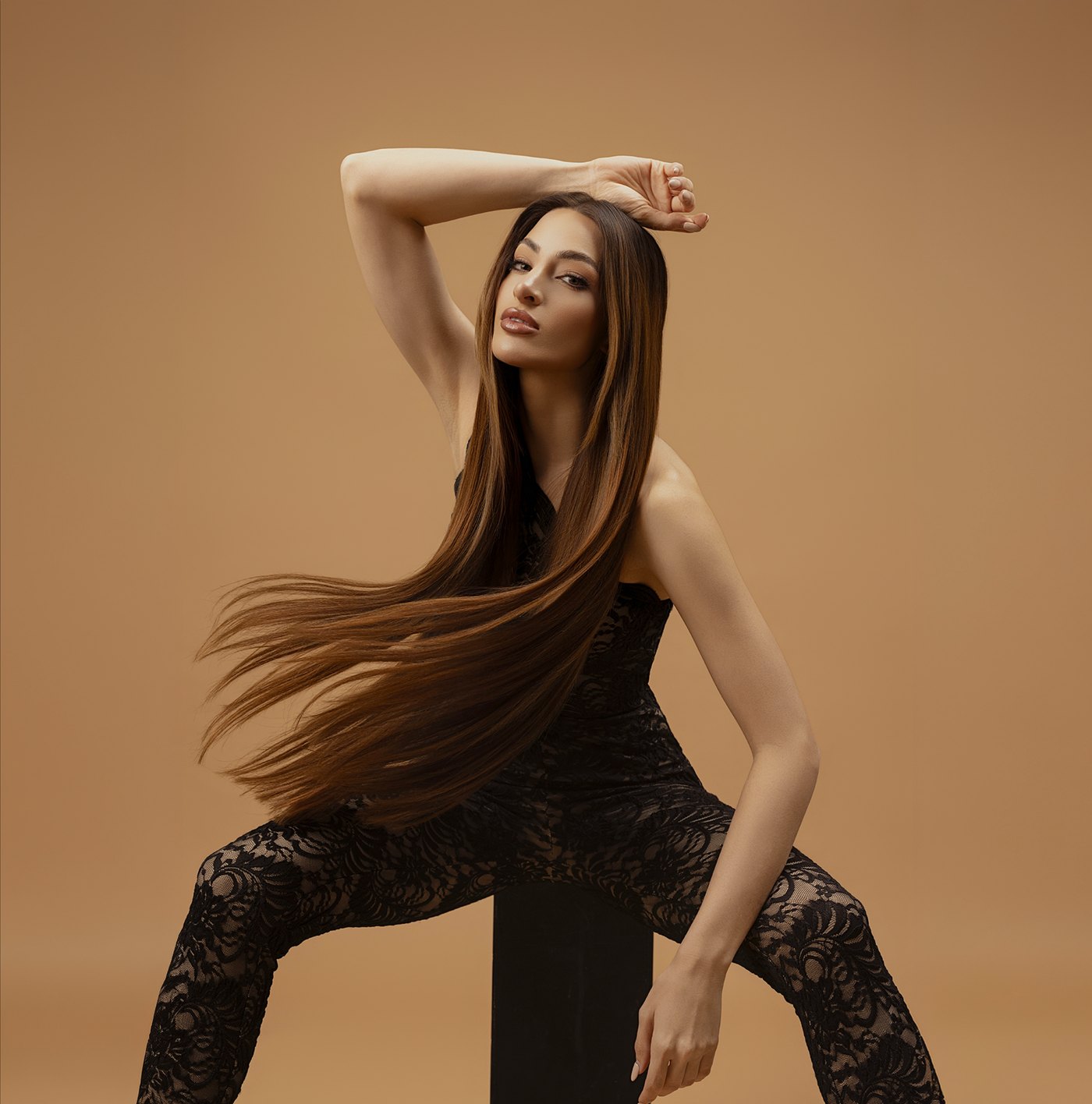

Is there really one “Latina hair color” profile to match? No. A successful consultation starts by separating cultural assumptions from the client's actual natural level, undertone, porosity, regrowth pattern, and color history, then matching the extension fiber to the most visible area of the finished look.
What should a stylist match when “Latina hair color” covers several natural levels and pigment patterns? Treat the label as consultation context, not a formula. A large YouGov hair-color survey found that Hispanic respondents reported 28% blond, 27% brown, 19% black, 5% red, and 2% gray hair. In the same survey, the Black respondent group reported 58% black and 16% brown hair. This range means a Latina client may need a black-brown blend, a neutral brunette, a light brown, or a blonde-adjacent match.
Childhood color can mislead the consultation. The survey reported that, at about age one, 27% of Hispanic respondents had blond hair, 32% brown, and 18% black. Lighter childhood hair may darken with time, so a photograph from that period does not establish the client's current level. Match the present root and visible regrowth first. A childhood reference can otherwise lead to a shade that reads too light, too golden, or disconnected from the finished color.

Genetic research across admixed Latin American populations found that 75% to 84% of participants fell into brown or black hair categories. 2% to 3% were blond, and about 1% were red or reddish. Country-level results also showed dark-hair concentrations, including 95% brown or black in Peru, 86% in Mexico, 87% in Chile, 85% in Colombia, and 65% in Brazil under one classification scheme. A related Mexican Mestizo study in Monterrey recorded 75% black hair and no observed blond or red hair in the sampled photographs. (Genetic study of hair-color variation in Latin American populations)
These findings do not justify assigning dark hair to every Latina client. They do support a practical expectation: extension work frequently centers on dark brown, black, nuanced brunette, and warm residual pigment. Confirm the individual level, reflectance, and exposed undertone before choosing a shade.
Before selecting a weft or tape, document the natural root, midshaft, ends, and target extension area under neutral lighting. Review the structure of hair because a cuticle-intact extension can reflect light differently from porous, color-treated mids and ends, even when the swatch appears correct in the ring. Porosity can change how the finished match reads, especially through the midlengths and ends.
Skin tone helps establish direction, but it shouldn't determine the formula by itself. A Latina client with deep skin can carry cool, warm, or neutral undertones, and a client with lighter skin may show the same range. The working diagnosis should combine the skin's visual cast with the client's natural hair, eye color, regrowth, previous color, and tolerance for visible warmth.

Veins provide a starting signal, not a verdict. Veins that appear green often point toward a warm undertone, while blue or purple can suggest cool. A mix usually indicates neutral, but artificial lighting, surface redness, and olive skin can distort the reading. Compare the inside of the wrist with the neck and jaw instead of relying on one small area.
Jewelry reveals contrast preference. Gold often harmonizes with warmth, silver with coolness, and both can work on neutral skin. This test is useful because it shows how the client responds to reflected color, but the stylist should ask what the client wears and likes. A technically harmonious tone still fails if the client dislikes the visual effect.
Sun response gives context. A client who tans readily may lean warm or olive, while a client who burns easily may read cooler. This is not a color diagnosis on its own. It becomes useful alongside the vein and jewelry observations, particularly when the skin appears neutral in the salon.
Undertone describes the skin's visual cast. Underlying pigment describes what appears as the hair is lifted. Those are different variables. A client with a cool facial undertone can still expose strong orange from a dark natural base, and a warm-looking client can have a more balanced underlying canvas after previous lightening.
Human hair color is driven primarily by the relative amounts of eumelanin and pheomelanin. Dark brown-to-black bases are generally more eumelanin-dominant, while lifting exposes warmer visual reflections. (Modern Salon technical discussion of Hispanic hair color)
Record the client's natural level and the dominant exposed warmth before choosing an extension. Then hold the extension against the root, the most porous ends, and the intended parting area. A match that works at the root may look too flat beside faded mids, while one chosen for the ends may create an obvious regrowth mismatch.
The hair-extension color-matching guide should support the visual process, not replace it. Color rings, daylight checks, and a clear plan for toning the natural hair reduce the risk of matching a temporary shampooed finish instead of the client's installed result.
Which shade family can deliver the client's desired change without creating a fragile maintenance cycle? For Latinx hair, the answer depends on natural depth, melanin distribution, previous chemical history, and how the mids and ends will hold tone after lightening.
Warm brown, caramel, copper, and lived-in blonde remain practical families because they create dimension without requiring an all-over pale result. Current trend coverage favors warmth, softness, dimension, and lower-contrast finishes, including rooted brunettes, brondes, soft copper, and wearable blondes. (2026 hair-color trend coverage)
Use the trend as a direction, not as a formula. Match the family to the client's natural level, melanin response, porosity, and willingness to return for glossing or regrowth work.

| Shade family | Where it works | Main trade-off |
|---|---|---|
| Warm brown | Dense dark bases, rooted brunettes, and clients seeking a natural-looking result | Can read flat if the formula lacks tonal variation |
| Caramel | Face-framing ribbons, balayage, and brunette extensions that need reflected warmth | Can turn overly golden against porous or previously lightened ends |
| Copper | Clients wanting red-orange dimension or a visible tonal change without icy blonde | Requires close control of residual warmth and ongoing tone management |
| Lived-in blonde | Clients wanting brightness with a darker root and softer grow-out | Still requires a clean lift and careful placement around the part and hairline |
Depositing and lifting address different problems. A deposit formula adds or adjusts tone on the existing canvas. It will not make a dark natural base lighter. High-lift color or lightener creates the canvas, while also exposing the orange, gold, or yellow melanin that must be managed afterward.
Porosity changes the final read. Color-treated mids may absorb a brown or copper formula quickly, while porous ends can grab excess gold and appear darker, duller, or more saturated than the root. Test the formula where the client's hair is most compromised, then account for that difference when selecting extension hair.
For a dark Latinx base, pale yellow is not always the safest or most convincing target. A controlled lift to orange can support rich copper, caramel brunette, or dimensional bronde. The service succeeds when the exposed warmth is incorporated into the tonal plan, then neutralized or re-pigmented where needed.
Professional guidance on Hispanic hair color supports lifting only as light as the hair can safely tolerate, then correcting the exposed warmth instead of forcing an overly ambitious single-step blonde. (Modern Salon guidance on lifting and toning Hispanic hair)
Ask younger clients how much brightness they will maintain, rather than assuming a natural brunette or a high-lift blonde meets the brief. Balayage suits clients who accept tonal variation and softer grow-out. Bronde works when the client wants a visible shift while keeping the root believable. Solid color fits gray blending, a uniform reset, or dependable regrowth maintenance.
Use the hair-extension color collection to compare available families against the completed formula. Check the extension beside the root, porous mids, ends, and parting area. The match must follow the installed result, not the freshest gloss.
A close root match can still fail mechanically and visually if the extension is too opaque beside porous ends. Choose a family that supports the client's melanin reality and the uneven way color-treated hair reflects and retains tone.
The extension method should follow density, texture, placement, and color contrast. A thin, porous end section may need a lighter visual perimeter, while the root zone needs a controlled blend that doesn't expose the attachment. Conde Professional offers Volume Weft, Thin Weft, Tape Weft, K-Tip, Tape-In, Clip-In, and Bulk formats for professional selection, but no method is universally correct.
Straight hair exposes line breaks, tonal shifts, and attachment points quickly. A Thin Weft or Tape-In can create a cleaner visual transition when the natural hair is fine and the placement is controlled. Wavy or textured hair can disguise small tonal transitions, but the extension should still be selected in a compatible texture. A straight extension blended into a defined wave pattern may create a shape mismatch even when the color is accurate.
Tape Weft can work for a flatter row where the client needs a soft, continuous addition, while Volume Weft is more appropriate when fullness is the primary objective. K-Tip placement gives the stylist control around highlights, but individual bonds can become visually busy if the client wants a smooth, low-maintenance result. Clip-In is better reserved for temporary styling or event work, not for a client expecting an installed, long-term system.
Only color extensions after confirming the fiber's condition and the supplier's processing guidance. The guide to dyeing hair extensions should be consulted before altering a shade. Overprocessing an already porous extension can produce uneven absorption and a poor match beside newly toned natural hair.
For color-treated clients, a controlled root shadow or low-contrast transition usually blends more convincingly than a hard extension line. Place the brightest pieces where the natural hair already carries brightness, then use darker pieces through the interior to preserve depth. The final check should happen after styling in the client's normal texture, because a smooth blowout can hide separation that appears once the hair returns to wave or curl.
Color and extensions fail for different reasons, but the comeback often looks the same: fading, tangling, dryness, slippage, or a visible line. The stylist needs to explain which issue belongs to the color service and which belongs to home handling. A dark brunette may lose tonal richness through repeated cleansing, while a lightened end may show porosity long before the attachment itself becomes unstable.

Ask how often the client cleanses, how frequently heat is used, whether the hair is worn wet, and how the client detangles. Ask about swimming, frequent sweating, and home toning products. These answers determine whether a high-maintenance copper or pale blonde is realistic, regardless of how well it suits the client visually.
Recommend sulfate-free cleansing, bond-safe products, and controlled heat. The client should keep conditioner and masks away from attachment points where appropriate, detangle from the ends upward, and dry the root and bond areas thoroughly. Cool water can help reduce the immediate opening and swelling associated with hot washing, but it can't compensate for harsh cleansing or aggressive brushing.
Warm shades often fade into a less balanced version of themselves, while porous mids and ends can grab pigment unevenly. A stylist may need to refresh the natural hair and extension tone separately, using the least aggressive service that restores the intended reflect. The extensions shouldn't be treated like a fresh virgin canvas after installation.
Professional move-ups are essential for assessing row tension, bond position, shedding, matting, and the condition of the natural hair. The exact schedule depends on the method, growth, density, and service plan, so the stylist should provide a method-specific appointment window rather than promise a universal timeline.
The extension aftercare guide can reinforce the salon's written instructions. Clients should leave with a clear washing sequence, drying requirements, brushing technique, sleep routine, and explanation of which products can compromise the color or attachment.
Client-setting point: A low-maintenance shade still needs maintenance. “Lived-in” describes the grow-out design, not the absence of professional care.
Document the installed shade, the formulas used on the natural hair, the extension method, and the client's home routine. That record makes the next refresh more predictable and helps distinguish fading from mechanical wear.
Are you matching the extension to the hair's healthiest zone instead of the color-treated mids and ends? Porosity changes how Latinx hair accepts lightener and tone, so the cleanest section may not represent the installed blend. Check the crown, sides, mid-lengths, ends, and nape. Dense nape hair can read deeper, while porous ends may absorb or release tone unevenly. Assess the match after styling the hair in its usual texture.
Over-lifting creates another avoidable problem. Dark bases can expose uneven orange, especially where porosity or product saturation differs. Stop at the level the hair can safely support. Then neutralize or re-pigment with a tonal family that can work with the exposed warmth. More lightener is not a correction for compromised fiber.
Remy isn't a grade. The term refers to intact cuticles arranged in root-to-tip alignment. Those conditions do not define a brand tier or guarantee identical performance. Confirm the fiber's construction and behavior before installation.
Supplier grades aren't governed standards. Labels such as 6A, 7A, 8A, 9A, and 10A are supplier-created marketing systems. Check cuticle integrity, alignment, shedding, combability, and wash durability instead of choosing by grade alone.
Test the fiber before installation. A strand that glides root-to-tip but feels rough when handled in reverse may show directional consistency. A room-temperature water test can offer another practical indication. A Remy-like strand should sink slowly and uniformly, while heavily coated or mixed hair may float longer.
Full-cuticle terminology also needs precision. Hair can remain aligned after further processing, while greater cuticle retention generally supports luster and reduces tangling.

For sewn-in Volume and Hand-Tied Weft work, Nylon Hair Extension Thread is described as thin and flexible, with a design intended to reduce tangling during application. It is available in 8 variants with matching bead colors. The catalog snapshot states that nylon does not swell or retain water when wet, and each roll contains 1500 yards. Treat those details as selection factors, then judge the finished install by sectioning, tension, and client comfort.
Before the next appointment, record the natural level, exposed warmth, porosity map, target placement, and method. Review color-support materials at Conde Professional, then choose the weft, tape, tip, clip-in, or bulk format that suits the install.


