Your cart is empty
Tax included and shipping calculated at checkout

Drawer menu
Tax included and shipping calculated at checkout
A professional account gives you stylist pricing, priority support, early access to new releases, and education developed by working stylists.


Yes, the human-hair weft can usually be reused 2 to 4 times, but the adhesive tape cannot. At every move-up, the old adhesive must be fully removed and fresh tabs applied before the extensions are reinstalled.
That distinction changes the salon decision. Reuse isn't an automatic benefit because the hair still exists. The set must remain clean, smooth, structurally intact, visually consistent, and capable of holding a reliable bond. A physically reusable weft may still be unsuitable for a professional install if the ends are splitting, the hair is shedding, or the bond area has been compromised.
Professional guidance commonly places tape-in refits at 4 to 8 weeks, with the same mid-range human-hair set translating to roughly 12 to 24 weeks of total wear and higher-quality hair lasting about 6 to 12 months with proper care. Those ranges are context, not a replacement for inspection. Professional guidance on tape-in reuse and wear cycles supports the practical rule that the stylist should assess the hair at every removal rather than promise a fixed number of future appointments.
The working question is therefore not only, “Can you reuse tape in hair extensions?” It's also, “Is this set still salon-worthy after removal?” That requires control over the bond, the cleaning process, the retaping workflow, and the client's maintenance habits. The method overview in what tape-in extensions are provides useful terminology for discussing the service, while Is Irresistible Me worth the price offers a separate consumer-facing perspective that can help stylists understand the questions clients may bring into consultation.
The answer is yes for the hair weft, no for the used tape. Tape-in systems rely on a reusable-hair model: the stylist removes the installed weft, clears away the previous adhesive, washes and dries the hair thoroughly, then applies fresh adhesive tabs before the next install. Manufacturer and salon guidance commonly treats the tape itself as single-use, even when the human hair remains suitable for reapplication. Neutral salon guidance on removing tape-in extensions confirms that fresh adhesive tabs are required at each maintenance appointment.
That isn't a minor technicality. Old tape carries oils, product residue, solvent exposure, and mechanical wear from the previous bond. Leaving it in place gives the new installation an inconsistent surface, which can weaken retention and increase slippage. A clean weft with a fresh tab creates a controlled bond. A weft with old adhesive underneath creates a variable one.
A retape service should answer three questions:
A set that passes all three checks may be reused. A set that fails one significant check should be replaced, even if the client expects another move-up from the same hair.
Practical rule: Reuse the hair only when the hair and the bond area both pass inspection. Fresh tape cannot restore damaged lengths or depleted ends.
The stylist also has to account for chair time and client comfort. A difficult removal, heavy residue, inconsistent density, or repeated slippage can turn an apparently economical retape into a correction appointment. The professional call protects the finished service, not merely the inventory.
Tape-in adhesive is designed to create a pressure-sensitive bond. During installation, controlled pressure brings the adhesive surface into close contact with the extension weft and the natural hair. The bond depends on a clean surface, suitable pressure, accurate placement, and enough time in service without contamination from oils or residue.
Removal changes that surface permanently. Once the tabs have been peeled apart, the adhesive has collected material from the hair, scalp environment, styling products, and the opposing tape surface. It may still feel tacky, but tackiness alone doesn't indicate dependable retention. A used tab can feel sticky on the finger and still fail under movement, brushing, moisture, and normal tension.
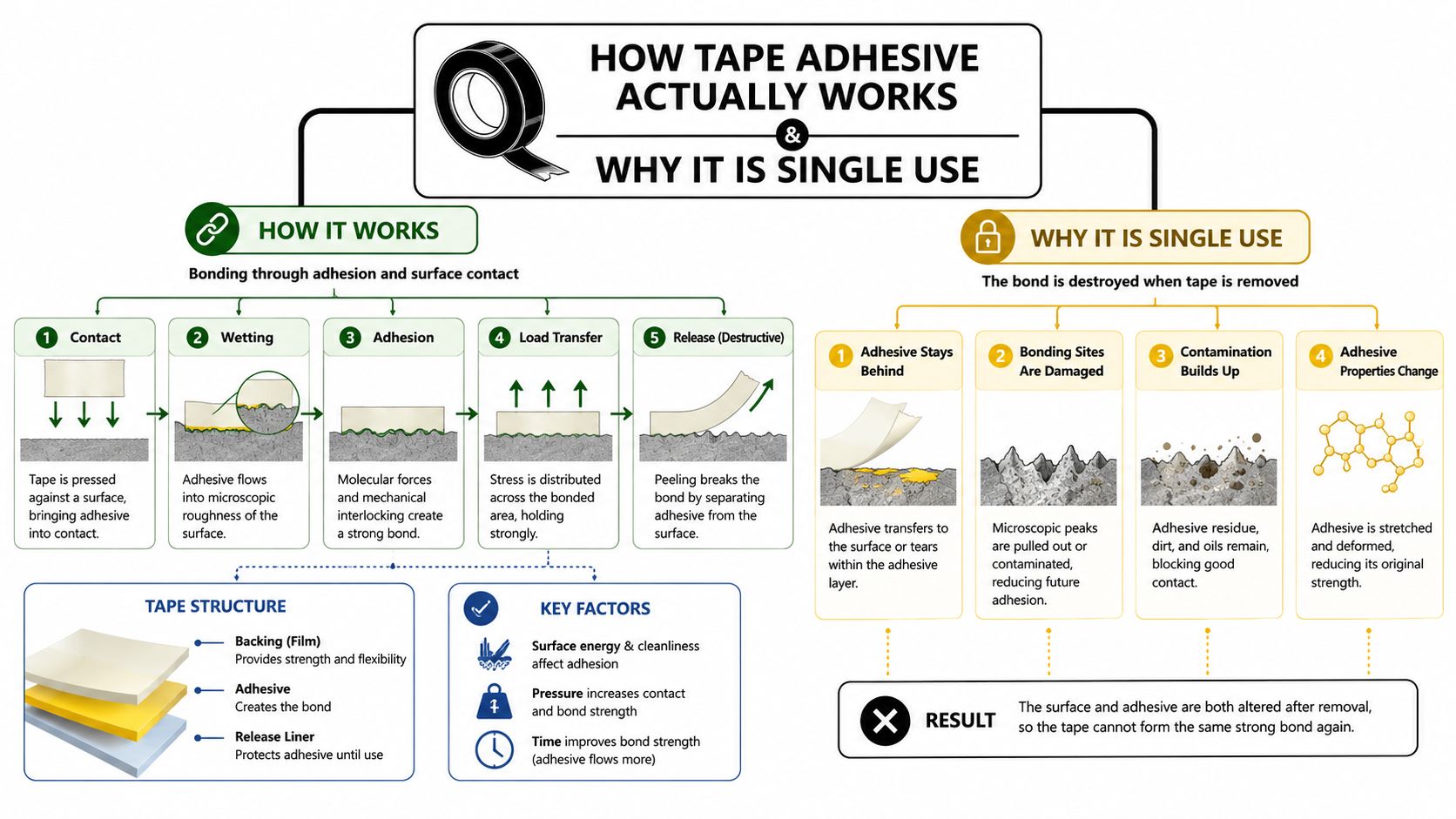
Oily products near the attachment area interfere with contact between adhesive and hair. Product residue can create a film, while incomplete removal leaves uneven patches under the replacement tab. Repeated exposure to solvent can also reduce the reliability of the bond area, particularly if the weft is handled aggressively during residue removal.
This is why adhesive degradation is associated with oils, residue, and repeated solvent exposure. A professional removal guide explains that these factors can reduce bond strength and increase slippage risk when old tape remains behind. The practical implication is straightforward: a fresh tab needs a clean, dry, stable surface.
A useful analogy is a disposable liner on a reusable tool. The tool can be cleaned and used again, but the liner has already been compressed, contaminated, and removed from its original surface. Reapplying that same liner doesn't restore its original performance. Tape-in hair follows the same logic. The weft is the reusable component, while the adhesive tab is the consumable attachment surface.
Late maintenance gives oil, product, shed hair, and friction more time to affect the attachment area. It can also allow the extension to hang farther from the scalp, increasing tension on the natural hair and making removal more complicated. The solution isn't to reuse the old adhesive for convenience. The solution is a controlled removal, complete cleanup, and fresh retape.
The seamless tape hair extensions guide is useful for reinforcing the flat-bond principle behind the method. A flat, clean, correctly positioned bond distributes contact more consistently than a bulky attachment with residue or overhanging tape.
The adhesive is therefore single use for a performance reason, not just a packaging convention. Fresh tabs provide a known starting point. Used tape does not.
Most professional sources place reuse somewhere between 2 and 4 reapplications, with some guidance allowing 3 to 4 uses and other guidance describing 2 to 3 reinstallations when the hair has been properly cleaned, dried, and retaped. A detailed reuse and removal guide places the emphasis on condition and adhesive performance rather than treating the count as an entitlement.
The 4 to 8 week refit cycle is also a planning reference, not a guarantee that every set should remain in rotation for the same period. A client using oily products near the bonds, delaying maintenance, or experiencing difficult removal may shorten the useful life of the hair. Another client with careful aftercare may present a cleaner, more consistent set at the next appointment.
| Criterion | Retap and Reinstall | Replace the Set |
|---|---|---|
| Hair surface | Smooth, manageable, and reasonably aligned | Rough, matted, brittle, or persistently tangled |
| Ends | Dense enough for the intended finish, without notable splitting | Split, visibly worn, thin, or uneven |
| Shedding | Limited and consistent with normal handling | Excessive shedding or obvious loss of density |
| Combability | Detangles with controlled professional handling | Snags repeatedly or won't remain smooth |
| Bond area | Completely free of old adhesive and residue | Residue is embedded, the weft is damaged, or cleaning affects the base |
| Retention history | Held securely through the service cycle | Slipped early or repeatedly despite correct placement and care |
| Appearance standard | Still blends with the desired density and finish | Looks tired, inconsistent, or no longer matches the service plan |
| Client lifestyle | Maintenance and aftercare support the method | Product use, schedule, or styling demands undermine retention |
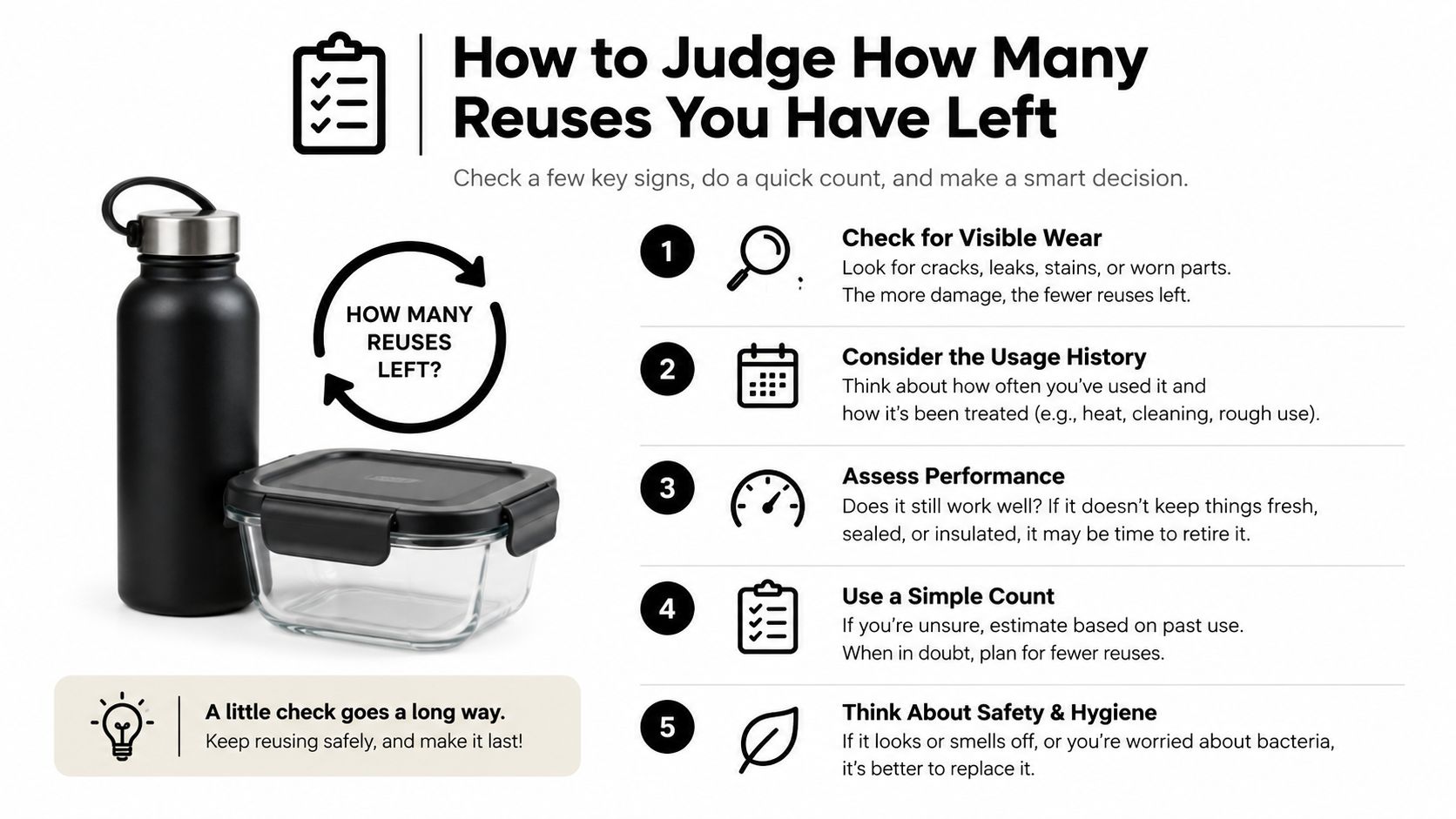
The reuse count is useful for inventory notes, but observable condition carries more weight. A set that has been installed fewer times can be a poor retape candidate if removal was rough or the client repeatedly delayed maintenance. A set with more service history can still be considered if it remains smooth, intact, cleanable, and visually appropriate.
A retape should preserve the service result, not extend the life of hair that has already stopped performing.
Replacement is the better call when visible wear, split ends, degraded hair, or inconsistent density makes the finished result look compromised. Retaping a tired set may save product in the short term, but it can cost the salon through slippage, blending problems, extra styling time, and an unhappy correction appointment.
The retaping workflow starts before the first weft is peeled away. The stylist should document the client's maintenance history, note areas of slippage or matting, and identify whether the attachment has been affected by oil, residue, or late removal. That information helps determine whether the set is a straightforward retape or a replacement candidate.
Oily products near the bond area are a frequent problem because they interfere with adhesive contact. Late maintenance can leave the attachment stretched away from the scalp and harder to separate cleanly. Incomplete residue removal produces the same practical failure in another form, since the new tab isn't bonding to a properly prepared surface.
Repeated solvent exposure also deserves restraint. Solvent is necessary for controlled removal, but excessive saturation, prolonged handling, or aggressive scraping can affect the condition of the weft and make the next bond less predictable. The goal is not to make the hair feel chemically stripped. The goal is to remove the old adhesive completely while preserving the hair's structure.
Tape-in extensions are not permanently disposable after a single install. The reusable-hair model depends on removing old adhesive, washing and drying the weft, and applying fresh tape tabs. The hair can be reinstalled again only if it remains clean, smooth, and structurally intact, as described in this professional guide to reusing tape-in hair extensions.
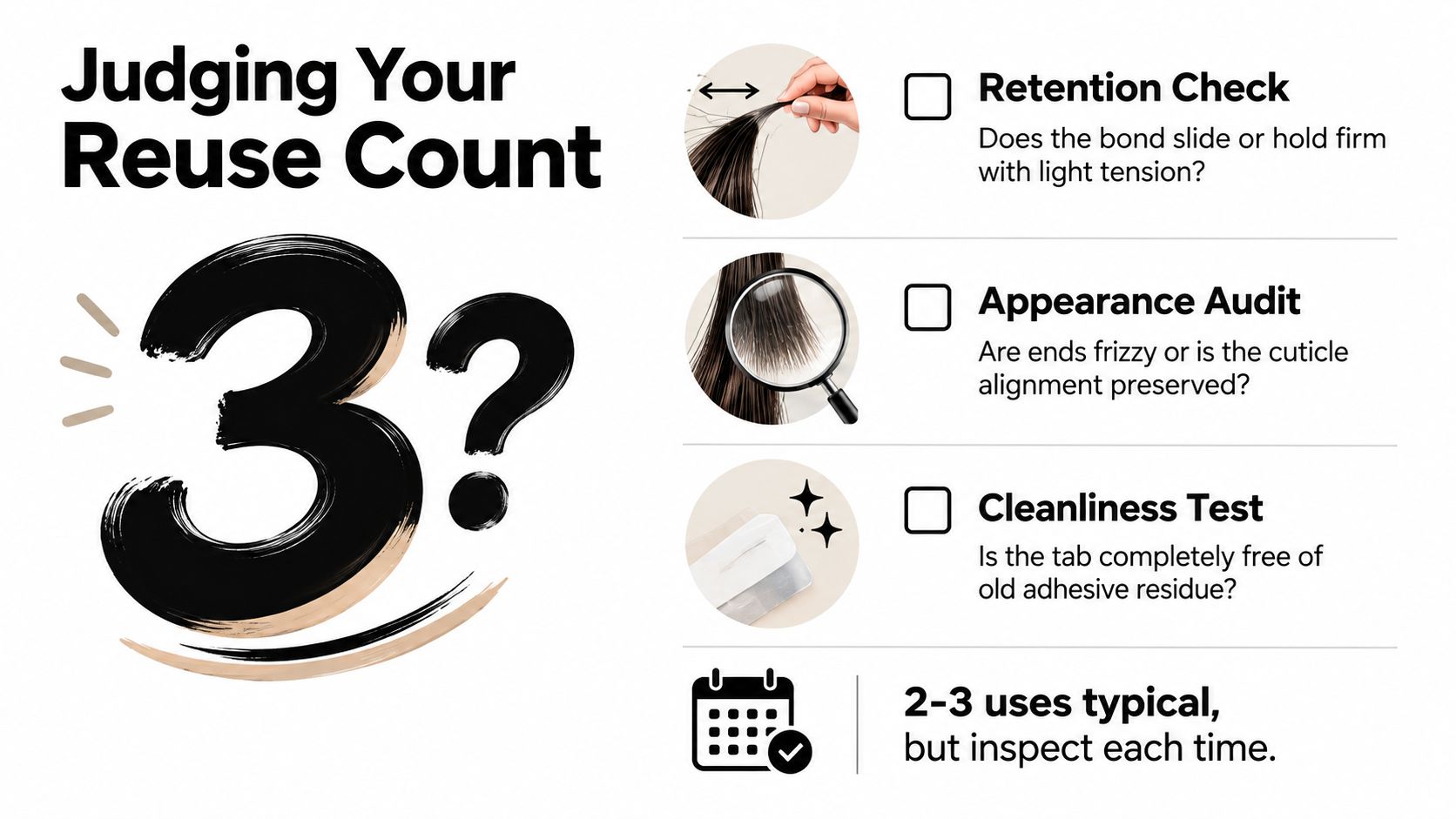
A reuse count becomes useful only when paired with inspection. The commonly cited range of 2 to 4 reapplications should prompt a closer assessment, not an automatic promise to the client. Guidance on tape-in reuse identifies the same risk-management issue that affects professional judgment: hair may remain physically reusable while no longer meeting the required standard for hold, appearance, or consistency.
Start with the lengths and ends. Frizz, split ends, persistent tangling, and a visibly reduced density indicate that the extension has lost service value. A clean weft that no longer blends into the client's cut or color plan isn't a successful reuse candidate.
Next, assess combability. The hair should separate with controlled brushing rather than catching at repeated points. A small amount of normal handling wear is different from a pattern of snags, matting, or short broken fibers throughout the panel.
Then evaluate the bond history. Early slippage, inconsistent hold across panels, or a bond that repeatedly fails despite correct preparation suggests that the set or the client's routine isn't suited to another retape. The stylist should also inspect the attachment edge for residue, distortion, and damage created during removal.
A set with smooth lengths, intact ends, and clean attachment areas can usually be considered for another retape, provided the installation plan remains appropriate. The stylist should record the decision and explain that future reuse depends on the next inspection.
A set that still feels thick but has increasing tangling and visible end wear is a marginal case. Retaping may be physically possible, but replacement is more professional if the client expects a polished finish with consistent density.
A set removed at home or left beyond the recommended wear cycle deserves extra scrutiny. Recent independent salon education guidance notes that damage is more likely in those circumstances, particularly when removal isn't controlled. A set with split ends or visibly degraded hair should be replaced rather than merely retaped, because fresh adhesive cannot reverse deterioration in the lengths.
Client counseling affects the next inspection. The stylist should specify where products belong, how the client should detangle, and why timely maintenance matters. Clear aftercare protects retention and gives the next removal a better chance of being clean and controlled.
A same-day assessment should happen at three points: supplier selection, stock inspection, and client consultation. The goal is to replace vague quality language with criteria that can be observed or verified.
Ask how the hair performs across the criteria that affect reuse:
Marketing grades such as 6A, 7A, 8A, 9A, and 10A aren't governed industry standards. They're supplier marketing labels. Measurable criteria, including cuticle integrity, alignment, shedding, combability, and wash durability, provide a more useful basis for purchasing decisions.
Tape Weft and Tape-In methods suit clients who need a flat, lightweight attachment and can maintain the required care routine. They may be the wrong choice for a client who regularly applies oily products at the bond area, delays maintenance, or needs a grow-out pattern better served by another method.
Volume Weft or Thin Weft may fit a different density plan. K-Tip, Bulk, and beaded row methods can offer more suitable options when the client's styling habits, scalp sensitivity, placement needs, or desired grow-out don't align with tape.
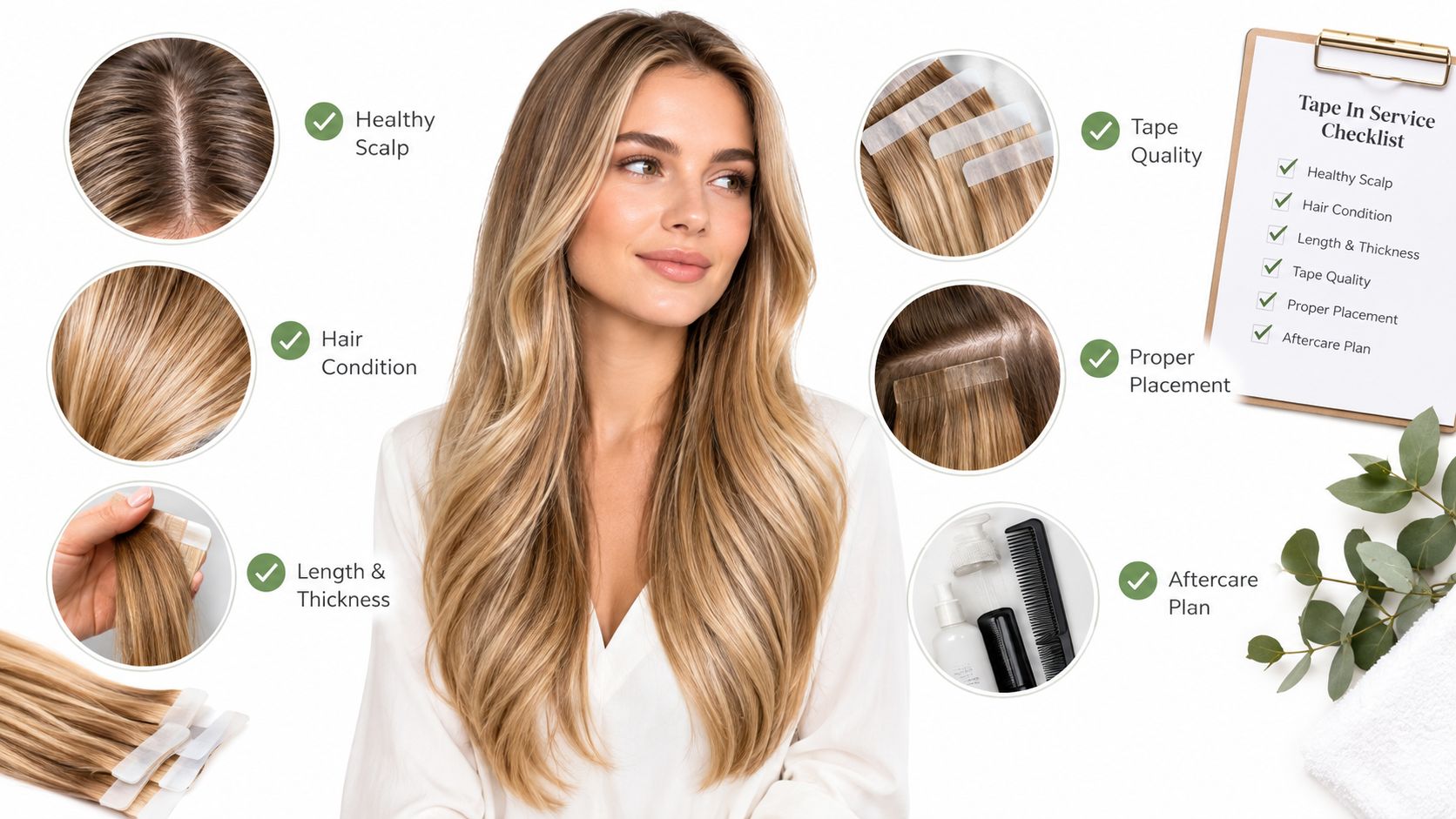
Before installation, inspect every panel for clean edges, intact hair, even density, and smooth combability. Confirm the client understands the maintenance schedule and the difference between reusing hair and reusing tape. The professional tape-in installation guide can support a consistent sectioning and placement protocol.
Conde Professional supplies professional extension collections and installation accessories for licensed stylists, including extension tapes and beads. Business purchasing should go through a professional account rather than consumer checkout.
Standardize the retaping decision before the next appointment. Add a short inspection record to the salon's extension notes with space for hair condition, end quality, shedding, combability, residue, previous retention, and the final decision to retape or replace.
Stock fresh adhesive tabs as a required service supply, not an optional add-on. Replacement tape for hair extensions belongs in the same operational category as sectioning tools and removal products, because no tape-in move-up should rely on used adhesive.
For salon owners and independent specialists, opening a professional account creates a direct route for method and shade planning across Tape-In, Tape Weft, Volume Weft, Thin Weft, K-Tip, Clip-In, and Bulk collections. The account should support a documented purchasing process, not a promise that every hair set will qualify for the same number of future reuses.
Conde Professional offers licensed professionals human-hair extension methods, replacement tapes, beads, color-matching support, and education for consistent salon installations. Review the professional collections and open a trade account through Conde Professional before the next tape-in service.


