Your cart is empty
Tax included and shipping calculated at checkout

Drawer menu
Tax included and shipping calculated at checkout
A professional account gives you stylist pricing, priority support, early access to new releases, and education developed by working stylists.
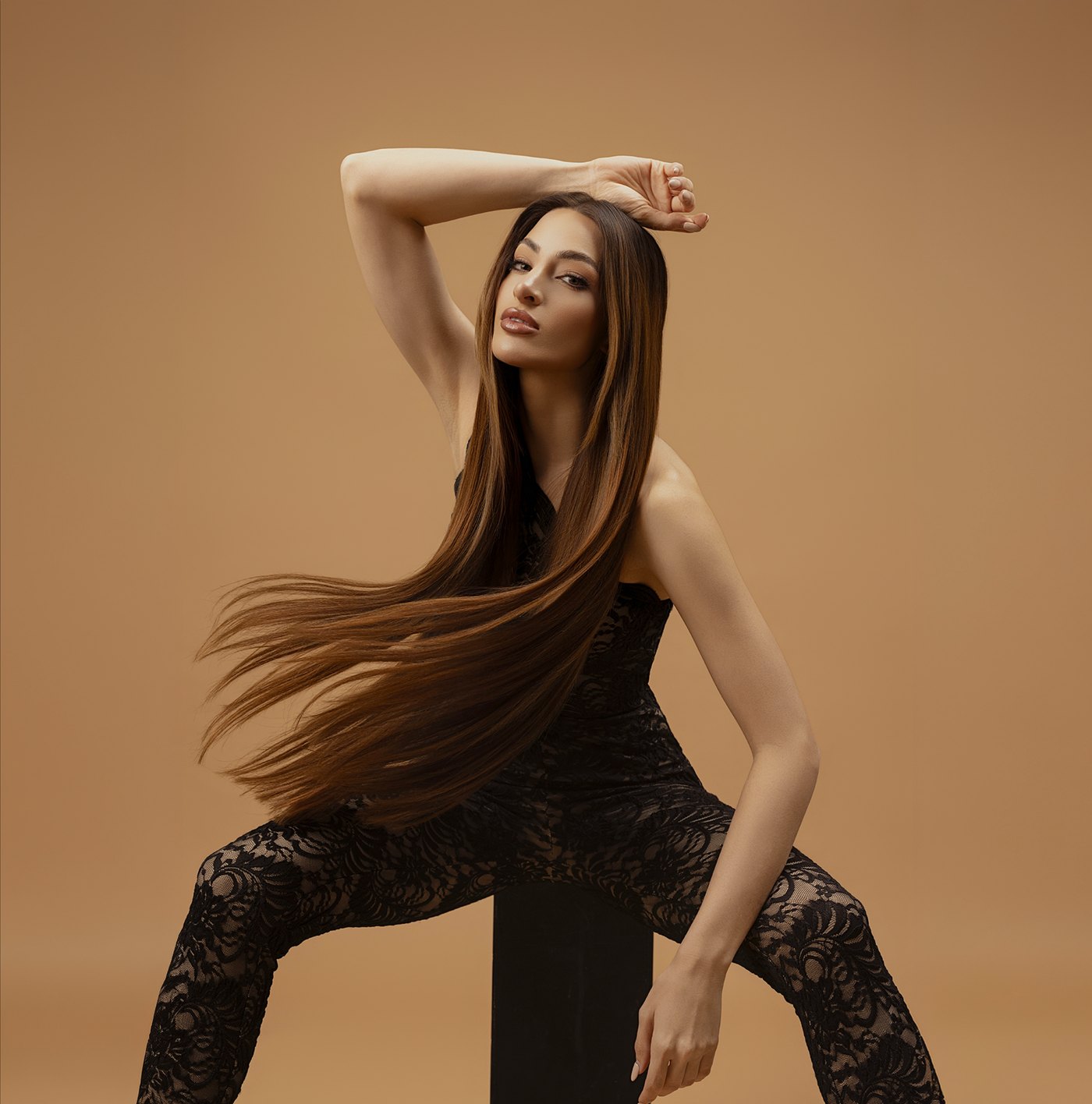

A client is in the chair asking for “the most natural” extensions, but the brief is more complicated. She may want heat styling, a color change, a single event look, or a style that can survive a packed schedule without another appointment. The practical answer in the human hair vs synthetic decision is to choose the fiber only after identifying what the installation must do over its intended wear cycle.
Human hair is the stronger fit for heat styling, repeated color service, natural movement, and longer-term wear. Synthetic is often the better operational choice for a short-term, budget-controlled look built around one finished style. That decision becomes clearer when the stylist evaluates the method, client behavior, maintenance capacity, and replacement plan together, rather than treating a premium fiber as automatically superior.
If the client expects to curl, straighten, tone, or recolor the extensions, human hair gives the chair more control. Its keratin structure responds more like biological hair, although the result still depends on previous processing and condition. Synthetic fiber holds a preset shape and can be highly effective for a finished look, but heat exposure and later chemical services can compromise it.
The global category still treats human hair as the premium benchmark. One 2025 market estimate placed human hair at 73.18% of market share, while another placed the segment at 65.6%. The broader hair wigs and extensions market is projected to grow from USD 11.83 billion in 2025 to USD 21.22 billion by 2030, so synthetic development is expanding alongside continued demand for human hair, not replacing it. These figures come from the 2025 hair wigs and extensions market outlook.
Practical rule: The fastest correct answer comes from asking what the client needs the hair to do in month three, not what looks best at install.
Fiber is only one filter. A Tape-In on an oily scalp behaves differently from a Clip-In used for occasional styling. A dense Volume Weft may be inappropriate for fragile natural hair even if the human hair itself is excellent. A synthetic piece may be the right choice for a pre-shaped fantasy color that will be worn once and removed without a long-term maintenance plan.
The decision filter should run in this order:
For method education and broader selection context, stylists can review what hair extensions are the best. The product shelf should confirm a chair-side decision, not create one.
The client's routine and installation method should decide the fiber before the product shelf does. Human hair offers wider service options, while synthetic hair brings style memory and a more predictable finish. Both still require checks on attachment, density, friction, scalp response, and maintenance.
| Variable | Human Hair | Synthetic |
|---|---|---|
| Heat | Can be heat-styled within the limits of its condition and processing history | Thermoplastic fibers can melt, deform, or lose integrity unless specifically engineered for heat |
| Color service | Can accept professional color work, with results affected by prior processing | Usually depends on the manufactured shade and is not a routine coloring substrate |
| Movement | Drapes, separates, and responds to gravity like natural hair | Modern fibers can mimic swing and density, but engineered ends may reveal themselves under strong light |
| Style retention | Requires styling and protection to preserve the finish | Preset style and humidity resistance can reduce daily restyling |
| Wear behavior | Can remain serviceable through extended use with disciplined care | Friction, oils, and heat gradually degrade the fiber |
| Scalp profile | Often more comfortable for long wear, depending on the attachment and product chemistry | Contact, coatings, adhesives, or weft construction may bother reactive clients |
Human hair retains natural protein-based properties, supporting thermal styling and professional color work. Salon guidance describes human hair lasting up to 18 months with proper care, while synthetic hair typically lasts around three months before degradation. That creates an approximate 6:1 practical lifespan ratio in the cited guidance, not a promise for every client or installation. The comparison appears in human versus synthetic extension guidance.
Synthetic hair earns its place through consistency. It can hold a defined curl, wave, or silhouette through humidity, which suits production work where the finish must remain repeatable. A neutral dataset study generated 1,064 synthetic hair dermoscopic images from parameterized hair masks. The result shows that engineered fibers can reproduce visual texture, density, and variation closely enough for computer-vision benchmarking, although that does not make them biologically identical. See the peer-reviewed synthetic hair imaging study.
Choose human hair for a client who changes partings, uses thermal tools, or books regular color services. Match the attachment and density to the client's natural hair, because a premium fiber can still fail when the method places too much tension or weight on the section.
Choose synthetic hair for a fixed look used in a campaign, performance, or short event, particularly when humidity resistance and repeatable shape matter more than recoloring or frequent restyling. Confirm heat limits before styling, and explain that oils, friction, and unsuitable tools shorten fiber performance.
For a technical refresher on strand behavior and structure, review the structure of hair guide. Use that knowledge to assess the finished service, not just the fiber label.
A client arrives wanting soft movement, regular heat styling, and color changes. Start with the installation plan and expected wear, then judge whether the hair can support that service. A grade stamp alone cannot answer it. Labels such as 6A, 7A, 8A, 9A, and 10A are supplier-specific marketing terms without a governing standards body, so the same label may describe materially different hair. Use cuticle integrity, alignment, shedding, combability, wash durability, density, and processing history as the working checks. See the hair extension grading guide for the grading issue.
Cuticle direction affects friction between neighboring strands. Remy hair has cuticles running in the same direction from root to tip. For a practical explanation of aligned cuticles, see our Remy human hair guide. Stroke a small piece from tip toward root. Intact cuticles may create slight resistance. Stripped or misaligned hair can feel uniformly smooth, then tangle more readily after washing. The directional test is also described in hair extension inspection guidance.
Check the sample before you commit it to a client:
A controlled wash sample reveals more than packaging. The piece should release minimal color during the first cool rinse and air-dry into a believable wave or texture, rather than developing persistent frizz. The test cannot predict every client result, but it can expose unstable dye, coating, severe tangling, or inconsistent texture before installation.
Double-drawn hair keeps the lengths more uniform, giving fuller ends after blending. Single-drawn hair retains more variation and can create a softer, tapered finish. Neither choice is automatically superior. The difference changes density planning, perimeter blending, and the amount of hair needed for the intended shape.
The package can claim a grade. The wash bowl shows the behavior.
The method should be selected before the fiber because each attachment distributes weight, tension, and maintenance differently. Human hair generally gives the stylist more freedom across long-wear methods, but synthetic can be efficient when the style is fixed and the service has a defined endpoint.
| Method | Best fiber fit | Wins for | Watch for |
|---|---|---|---|
| Volume Weft | Human hair for natural movement, synthetic for defined short-wear looks | Sew-in volume and row-based fullness | Foundation stability, weight distribution, and row tension |
| Thin Weft | Human hair for discreet blending | Lower-profile row work and controlled density | Overloading a fine foundation |
| Tape Weft | Human hair for flexible blending and repeated styling | Flat row placement and broad coverage | Oil control, sectioning, and attachment alignment |
| Tape-In | Aligned human hair | Flat, reversible-looking volume and color placement | Oil, product migration, and poor section discipline |
| K-Tip | Heat-safe human hair | Individualized movement and long-wear customization | Bond temperature, strand isolation, and maintenance capacity |
| Clip-In | Either fiber | Fast changes and temporary volume | Attachment softness and repeated placement |
| Bulk | Human hair when custom work is required | Custom bonds, braids, and wigs | Density, direction, and the skill of the final construction |
The Volume Weft, Thin Weft, and Tape Weft each serve different density and profile needs. Volume Weft can create substantial fullness, but it isn't the right answer for every delicate foundation. Thin Weft supports a lighter visual result, while Tape Weft suits stylists who need a flat row profile and disciplined adhesive management.
Premium human hair earns its place in long-wear rows because it moves with the client's own hair and can be restyled. High-quality synthetic can work for a defined color, a short production, or a style that must remain preset, but it loses value if the client expects repeated toning or thermal changes.
Tape-In demands flat, light fibers and clean sectioning. Human hair is usually the dependable professional fit because it blends through parting and can be restyled around the attachment. K-Tip uses heat to form the bond, so the fiber and bonding process must tolerate the installation temperature. Human hair remains easier to blend and revisit, but the method fails if the client won't maintain the sections or return for service.
Clip-In works for rapid transformations and occasional wear. Human hair makes sense for frequent use, while synthetic is practical for a single finished effect. Bulk gives the stylist maximum control for custom bonds, braids, and wigs, but it also transfers more responsibility to the construction process.
The full method comparison is available in types of hair extension methods. Fit, attachment weight, and home-care capacity should outrank fiber prestige.
A bridal client usually needs hair that behaves naturally beside the existing color and texture under heat, movement, and close photography. Human hair is the safer service choice for a bride who wants curls, a polished upstyle, or a shade that must sit naturally beside her own hair. It also gives the stylist room to adjust the finish during the appointment rather than accepting a factory-set result.
Premium synthetic still has a place in bridal work. If the budget is tightly controlled and the look is already finished, synthetic can deliver a clean event style. It also suits an unconventional color that doesn't need toning or adaptation, provided the client understands the finite wear plan and the stylist avoids unsuitable heat.
An editorial model with frequent shoots presents a different problem. Human hair wins if the production team can cleanse, condition, detangle, and reset the hair between jobs. Repeated changes in parting, curl pattern, and finish require a fiber that can be reshaped and blended rather than one that only performs in its original silhouette.
High-performance synthetic can outperform human hair operationally if the brief demands an exact pre-shaped form, graphic color, or repeated identical units. The style memory reduces reset labor, and the manufactured shade may stay more uniform across multiple pieces. The stylist still needs to protect the fiber from excessive heat and friction during transport and removal.
For a campaign, trade show, festival style, or themed event, synthetic is often the cleaner call. Lower purchase cost, immediate style, and no obligation to preserve a long-term installation can matter more than broad styling flexibility. Synthetic color can be especially useful for neon or fantasy work because the finished shade is uniform and doesn't require repeated toning.
Production rule: If the style is completed before install and removed after a defined short wear period, human hair may add flexibility the brief never uses.
The consultation should record:
The fiber supports the method. It shouldn't override the production plan.
Shelf price is only the opening line. A professional quote should account for installation, removal, products, appointment time, maintenance, and replacement assumptions across the expected wear cycle.
Human hair generally demands more active care. The client needs regular cleansing, conditioning, end-first detangling, careful drying, and heat protection. Sulfate-conscious products may be appropriate depending on the system and professional guidance, but the stylist should set product instructions around the attachment rather than hand over a generic retail routine.
Move-up or reinstallation timing depends on the method, natural hair growth, attachment condition, and maintenance discipline. A replaceable system may remain usable beyond one installation, while the attachment itself still requires service. The practical education resource on how to take care of extensions can support the home-care conversation, alongside broader tips for healthy hair and maintenance guidance.
Synthetic usually needs less restyling and can retain its preset finish through humidity. It can also hold oils, show friction at the ends, and lose integrity under excessive heat. Low maintenance doesn't mean no maintenance, and service frequency still follows the attachment rather than the fiber label alone.
Use this formula for the consultation:
Purchase price ÷ expected usable wears = hair cost per wear.
Then add installation, removal, products, appointment time, and any planned maintenance. A premium human hair system may justify its higher initial cost for a client who wears it weekly across many months. A synthetic piece can create better value for one event or a limited campaign, especially when the alternative would require repeated styling labor.
Replacement assumptions must be stated as estimates, not promises. Actual lifespan varies with method, aftercare, color processing, heat exposure, friction, and maintenance discipline.
Synthetic fiber is the stronger operational choice when the brief prioritizes color precision, immediate volume, short wear, low maintenance, or a dramatic editorial finish. The old assumption that synthetic only means compromise misses how engineered fibers can solve production problems that human hair doesn't solve as efficiently.

Synthetic performs particularly well for photo shoots, stage work, festival styling, and one-night transformations. The best conditions are clear: the style is finished before installation, the hair won't face unsuitable heat, and the client accepts a finite wear life. It can also outperform human hair in neon and fantasy shades because manufactured pigment offers consistency without repeated toning.
A ready-made synthetic shade can be effective when the client wants immediate matching rather than a color-service project. Modern engineered fibers can mimic texture, density, and natural variability, although strong light may still reveal differences at the ends or through excessive shine.
Human hair is the stronger fit for natural movement, long-term styling, heat versatility, and custom coloring. It becomes the wrong fit when the client wants long-term wear but has little maintenance availability, expects unlimited heat styling, or won't return for repositioning and conditioning. It also makes poor financial sense for a tightly constrained event budget if the hair will only be worn once.
A simple decision test keeps the premium purchase from becoming the lower-value service:
The safest fiber decision also requires product chemistry awareness. A 2026 study of 43 hair-extension products found hazardous chemicals in all but two samples, including synthetic and untreated raw human hair. Nearly 10% contained organotin compounds, and at least 12 of 169 detected chemicals appeared on California's Proposition 65 list. The coverage is available from Scientific American's reporting on extension-product chemical exposure. Sourcing, coatings, adhesives, post-production treatments, and batch-level disclosure may matter more than the human-versus-synthetic label for clients concerned about sensitivity or chemical exposure.
The consultation should start with the client's real wear pattern, not the fiber label. Record the intended uses, appointment duration, heat exposure, color accuracy, movement needs, scalp sensitivity, and budget before recommending a method.

Before ordering, inspect cuticle direction, alignment, weft construction, attachment condition, shade consistency, and factory-finished color. Confirm whether heat styling is required, and separate a root-compatible shade from a pre-matched color. The consultation should end with installation, move-up, cleansing, conditioning, and replacement intervals, not just a product recommendation.
A professional library should include method and fiber options for common chair scenarios. Stylists can also compare collections such as Conde Professional's Volume Weft, Thin Weft, Tape Weft, K-Tip, Tape-In, Clip-In, and Bulk offerings, then verify current application guidance and shade support before placing an order.
The concrete next move is to open a professional account with Conde Professional, review the current collections and professional support, and build a method-and-fiber shortlist before the next consultation. That turns human hair vs synthetic from a shelf comparison into a repeatable salon decision.


