Your cart is empty
Tax included and shipping calculated at checkout

Drawer menu
Tax included and shipping calculated at checkout
A professional account gives you stylist pricing, priority support, early access to new releases, and education developed by working stylists.
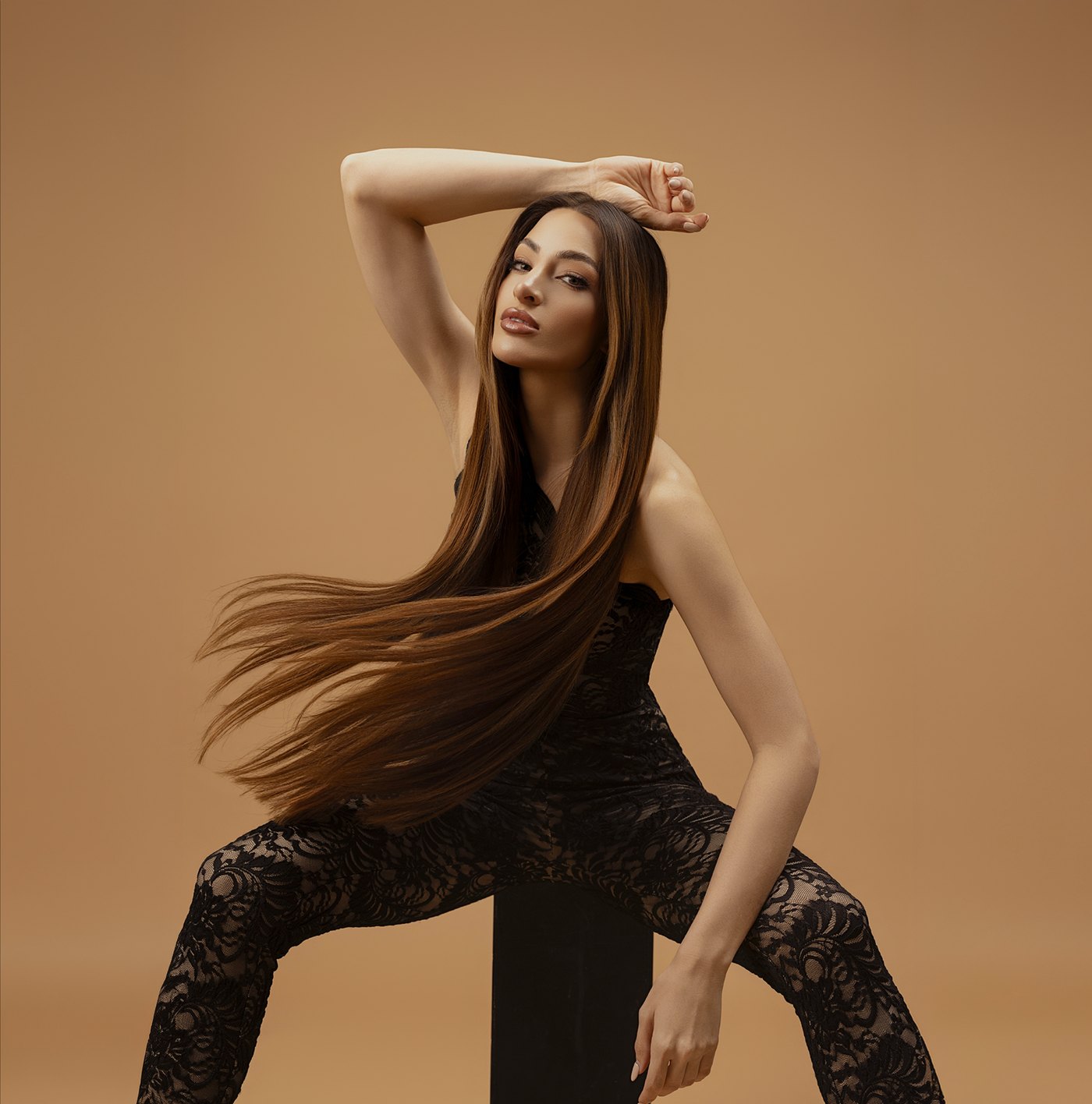

Honey blonde extensions do not work because the shade name sounds right, they work when the undertone, root depth, and lighting all line up. The most common mistake is matching only the lightness level, then wondering why the install looks strong in the chair and wrong in daylight.
Professional results start with a tonal family, not a label. Honey blonde sits in a warm blonde range, so the client's natural reflect, extension architecture, and maintenance plan matter as much as the color ring choice.
Honey blonde is not a single shade, and stylists who treat it like one usually miss the blend. It sits in a warm range between light brown and platinum blonde, commonly around level 7 to level 8, with amber, gold, caramel, or soft brown undertones rather than ash or icy reflect, which is why it behaves more like a tonal family than a fixed color name.
That matters at the consultation chair. If the client asks for honey blonde and the response is only “a light blonde,” the result can drift too pale, too beige, or too brassy once the hair leaves salon lighting and enters daylight.
Honey blonde is not ash blonde, and it isn't platinum either. Ash leans cool and mute, platinum reads very light and high reflect, while honey blonde carries visible warmth that helps it sit naturally beside brunette or dark blonde roots.
Practical rule: if the desired finish needs to disappear into a warm lived-in blend, the extension should preserve warmth instead of over-neutralizing it.
A useful way to frame the shade is as warm reflect plus controlled depth. That is why a honey blonde weft can look dimensional instead of flat, especially when the formula includes multiple warm placements rather than one uniform tone. One technical product description for a honey-blonde weft shows a mix of roughly 65% level-10 warm highlights, 20% level-8 warm root depth, and 15% level-8 warm lowlights, which explains the layered look stylistically and visually.
The best mental model is simple. Honey blonde is a warm blonde spectrum that can sit closer to beige, caramel, or golden depending on the client, but it still has to read as honey blonde under salon LEDs, window light, and camera flash.
That is also why color charts matter. A strong internal chart helps the stylist decide whether the client needs a rooted finish, a balayage family, or a brighter highlight placement, instead of forcing every warm blonde into the same bucket. A matching reference like the extensions color chart is useful because it pushes the eye toward undertone, depth, and dimension, not just brightness.
The practical takeaway is to stop asking, “Is this honey blonde?” and start asking, “Which honey blonde family is this client wearing, and how warm can it stay without reading orange?” That single shift prevents most mismatches before the install even starts.
Color matching honey blonde starts with the client's hair, not the extension. The stylist needs to diagnose undertone, root depth, and end color in more than one light source, because a shade that looks perfect under salon lighting can look flat or too warm once the client steps outside.

A warm blonde family is usually matched best when the extension tracks the client's dominant undertone rather than only the lightness level. One honey-blonde system is described as a warm level-8 to level-10 blonde family, and the same product description shows the value of depth variation, not one flat tone.
The first pass is the natural base. If the client's roots lean dark blonde or light brunette, and the mids and ends carry warmth from prior color work, a solid pale blonde extension usually looks disconnected. A rooted or balayage pattern often reads cleaner because it gives the eye a transition zone to land on.
The second pass is lighting. Honey blonde can move warmer in indoor light and slightly softer in daylight, so the stylist should compare the hair in both environments before matching. That matters because a shade that looks correct in the chair can expose a mismatch at home, in car mirrors, or on camera.
A strong consultation sequence looks like this:
A weft can match the level and still fail visually if the undertone is wrong. The eye reads harmony before it reads brightness.
A color ring is not a sales prop. It's a diagnostic instrument. A professional ring helps the stylist separate warm beige from golden honey, and it gives the client a more accurate comparison than lifting a loose bundle beside the hair for a second in bad light.
The matching conversation should also include how the client wants the result to behave. Some clients need the shade to disappear into a soft blend. Others want the honey tone to frame the face with a brighter pop. Those are not the same prescription, and the extension choice should reflect that difference.
For a more systematic consultation workflow, the how to color match hair extensions guide supports the same principle, the canvas has to be read before the shade is chosen. That mindset is what keeps honey blonde looking deliberate instead of accidental.
Method choice should follow density, lifestyle, and finish, not habit. Honey blonde exposes poor method selection fast because a beautiful color still looks off when the attachment pattern creates bulk, seams, or motion that doesn't suit the client's hairline and daily wear.
For pros working with Conde Professional, the right answer depends on the result. Volume Weft, Thin Weft, Tape Weft, Tape-In, K-Tip, Clip-In, and Bulk each solve a different structural problem, and each has a matching collection page on the professional site.
If the client wants visible density with a strong salon finish, Volume Weft is the natural choice. It supports fuller looks because the architecture is built for more coverage, which suits clients who need a complete transformation rather than subtle thickening.
If the client's hair is finer and the concern is root bulk, Thin Weft usually makes more sense. Thinner top construction lowers visible demarcation and helps the install sit closer to the scalp, which is important when the color is already dimensional and shouldn't be interrupted by an obvious seam.
If speed and flexibility matter, Tape Weft and Tape-In are practical options. They can work well for clients who need a faster service cycle, but they're less forgiving on oily scalps, heavy heat use, or routines that require frequent updos.
If the client wants movement and a flatter footprint around the head, K-Tip is the better discussion. That method often suits clients who wear ponytails or want the least visible connection point, though it asks for a stricter lifestyle fit and more careful section planning.
What fails most often: choosing a method by habit, then trying to force the color blend to cover for structural problems.
The mass distribution has to match the finish. Under-specifying weight or section count is a common cause of visible seams and weak blending, while thinner top construction helps reduce root bulk and keep the hairline cleaner. That principle applies to all methods, not just clip-ins.
For a Honey blonde install, the decision tree is straightforward. Fine hair that needs softness points toward a thinner construction. Thick hair that needs a dramatic finish points toward denser coverage. A client who wants quick placement may prefer tape systems. A client who wants maximum movement and minimal visibility may need K-Tips.
Here is a concise method selection guide for the chair:
| Method | Best For | Key Benefit | Consideration |
|---|---|---|---|
| Volume Weft | Fuller density and dramatic installs | Strong coverage and salon-level transformation | Can be too much for fine hair if density isn't mapped correctly |
| Thin Weft | Fine to medium hair | Lower root bulk and cleaner concealment | Not ideal for clients wanting a very heavy finish |
| Tape Weft | Fast services and structured placement | Efficient application with flexible placement | Requires disciplined wear habits |
| Tape-In | Quick installs and move-ups | Useful for fast salon turnover | Needs careful maintenance and lifestyle compliance |
| K-Tip | Movement and low-visibility attachment | Good for natural motion | Demands precise sectioning and a suitable maintenance routine |
| Clip-In | Temporary wear and event styling | Easy on/off flexibility | Not a permanent salon solution |
| Bulk | Custom application work | Versatile for advanced methods | Depends heavily on stylist technique |
For a method overview that sits alongside a professional consultation, the types of hair extension methods resource is a useful technical companion. The core rule stays the same, though. Pick the attachment method that respects the client's density first, then make the color blend finish the story.
Blending honey blonde extensions is about controlling where the eye lands. The extensions should not just match the client, they should create a believable visual path from root to end, especially because honey blonde carries enough warmth to expose poor placement fast.

Face-framing placement is where many installs either look expensive or obviously staged. Slightly lighter pieces near the face can create a softer frame, while deeper pieces near the interior help the finish keep its shape. That mix is especially useful for honey blonde because the tonal family already carries enough warmth to read dimensional without aggressive toning.
Alternating shades also works better than forcing one uniform tone across the whole head. A multidimensional blend gives the extensions a more believable relationship to natural hair, especially when the client has lived-in highlights, balayage, or soft brunette depth through the root area.
The cut matters just as much as the placement. Point cutting, slide cutting, and controlled texturizing help erase the line where the natural hair ends and the extension begins. The goal is not to thin the hair for its own sake, it's to remove the visual shelf that reveals where the system starts.
Honey blonde rarely needs heavy correction if the match is right. Over-toning can flatten the warmth that makes the shade look believable, and overly cool formulas can push the result away from the honey family entirely.
The safest correction is the smallest one that fixes the mismatch.
That means the stylist should use tone as a refinement tool, not a rescue plan. If the extension already carries warmth in the proper range, a light gloss or minimal adjustment is usually enough. If the color is too bright at the face and too flat at the ends, the fix should come from placement and cutting first, then targeted tone if needed.
The internal haircut and texture strategy can also be matched to the client's undertone. A warmer honey finish benefits from soft movement, while a heavily sculpted shape can make the color read harsher than it should. That's why the best blends usually feel quieter, not louder.
For clients with darker blonde or light brunette starting points, the hair extensions for dirty blonde hair reference is a useful reminder that the transition zone matters. Honey blonde succeeds when the client's base, the extension's reflect, and the cut all agree with each other.
A simple rule helps in the chair. If the extension blend still looks like separate pieces after the first blow-dry, the problem is usually placement or weight distribution before it's tone. Fix that first, then fine-tune color.
Honey blonde extensions stay believable only if the tone is managed after installation. Heat, water quality, UV exposure, and repeated styling all push warm blondes toward drift, so the maintenance plan has to be part of the service, not an afterthought.

Broader hair-color guidance places honey-blonde refreshes around 4 to 6 weeks for toner or gloss upkeep and 8 to 12 weeks for larger color touch-ups, depending on fade rate and regrowth. For extensions, that gives the stylist a realistic move-up and shade-refresh framework without pretending the tone will stay fixed indefinitely.
The client also needs a clear script for home care. Sulfate-heavy cleansing can strip softness and push the blonde toward faster fade, so a gentle routine matters. A useful client-facing resource is this guide to sulfate-free shampoos, which fits the maintenance conversation without turning it into a product pitch.
A clean chair-side script can sound like this:
The stylist owns the tonal refresh and the integrity check. The client owns the daily care. If those roles get blurred, the install ages badly and the consultation becomes a blame session instead of a maintenance plan.
For move-ups, the professional should assess whether the honey tone still reads warm, whether the ends have gone too yellow, and whether the blend needs a soft gloss or a deeper re-balance. For the client, the job is to avoid compounding the fade with rough washing, skipped heat protection, or careless styling.
Honey blonde doesn't usually fail all at once. It drifts, and then it starts to read uneven.
The internal care reference how to take care of extensions is worth pairing with that service cycle because it keeps the conversation anchored in wear, not wishful thinking. When the stylist sets the tone plan upfront, the install looks better for longer and the client knows exactly when to return.
Conde Professional gives licensed stylists a professional extension line built for method-specific installs, shade matching, and salon education. For honey blonde work, that means access to method collections, color support, and tools that help keep the tonal family and the attachment method working together. Visit Conde Professional and open a professional account if this shade category needs to become a more reliable part of the salon menu.


