Your cart is empty
Tax included and shipping calculated at checkout

Drawer menu
Tax included and shipping calculated at checkout
A professional account gives you stylist pricing, priority support, early access to new releases, and education developed by working stylists.
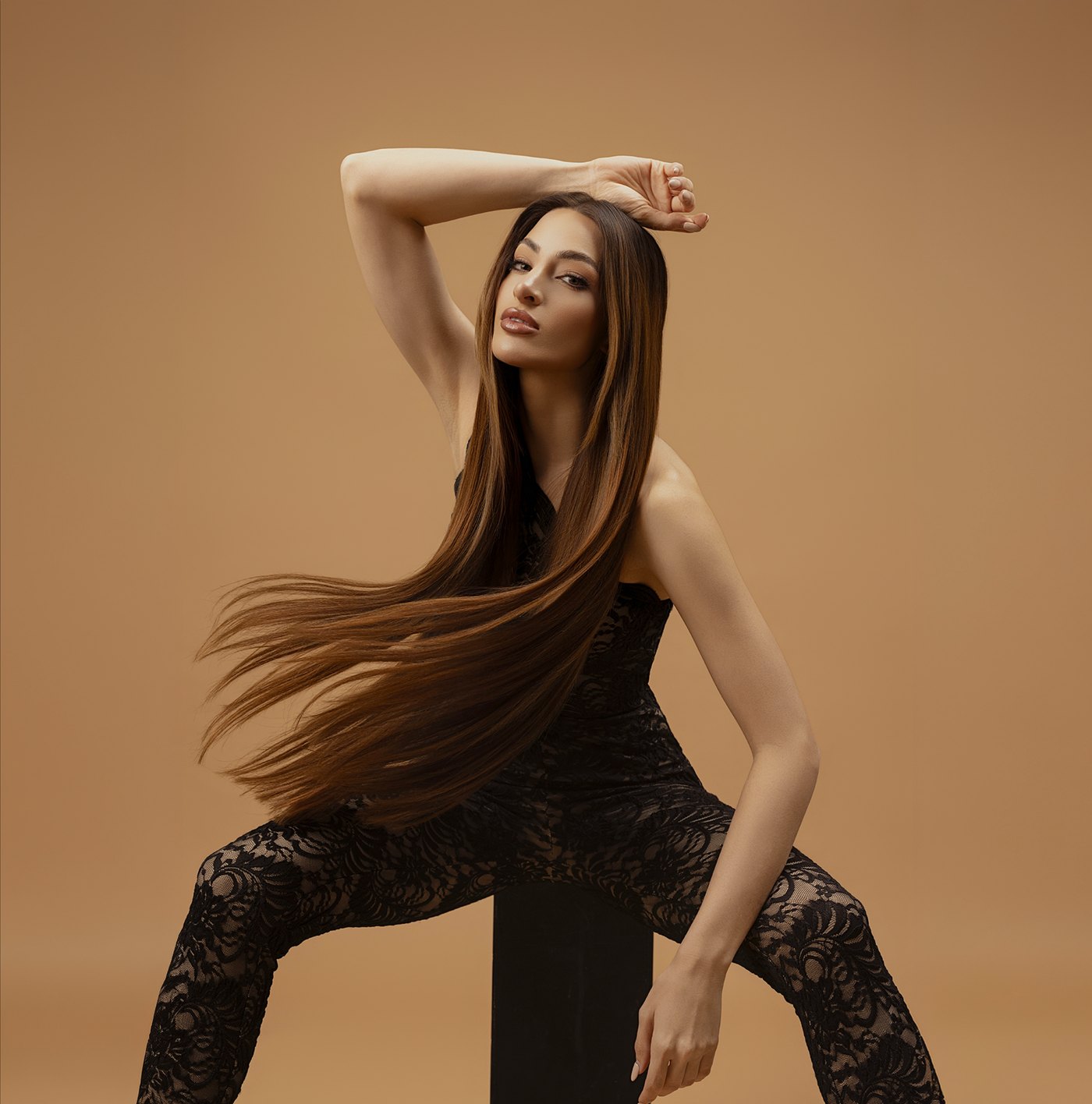

A client sits down, runs a hand through grown-out balayage, and says, “It’s dirty blonde.” That sounds simple until the cape is on and the color ring comes out. One client means level 7 beige with a soft root. Another means level 9 with ash ribboning through warm mids. Another has a natural base that reads neutral indoors and gold in daylight. “Dirty blonde” isn’t one shade. It’s a category, and that’s exactly why it separates casual extension work from real technical work.
For stylists building a reputation with hair extensions for dirty blonde hair, this is one of the most profitable and most failure-prone color families in the room. The install can be flawless, the method can be clean, and the result can still feel off if the undertone is wrong by even a small margin. That’s why the workflow has to be tighter here than it is with more obvious brunettes or high-contrast blondes.

A client sits down asking for dirty blonde extensions, then turns her head under the salon lights and shows three different stories at once. The root is cooler and deeper. The mids still hold warmth from old glossing. The ends are lighter, porous, and a little hollow. If the stylist reaches for one swatch and calls it a match, the install will separate as soon as the hair moves.
Dirty blonde demands a technical workflow. It is one of the easiest color families to oversimplify because it lives between categories. It is not a flat blonde service, and it is not a brunette service with a few light pieces added. The work starts by reading the head in zones, then building an extension plan that respects density, porosity, and visible tonal shifts.
I start many consultations by showing the client a professional dirty blonde extension shade collection. That changes the conversation fast. Clients stop asking for “something natural” and start reacting to specific differences in beige, neutral, soft gold, and cool depth. That is where better decisions begin.
In the salon, dirty blonde misses usually come from three technical errors:
A simple rule helps. If the natural hair shifts from root to mids to ends, the extension plan has to shift too. Shade selection, placement, and sometimes even the ratio of colors inside the install should follow those zones.
This category exposes weak consultation habits fast. A bright blonde client often tolerates a small tonal error because high lift reflects light evenly. A brunette client can hide minor variation with depth. Dirty blonde gives you neither advantage. If the blend is off by a level, too warm at the root, or too flat through the interior, the eye catches it immediately.
That is why dirty blonde work separates trained extensionists from stylists who only color match by surface appearance. The finished result has to look believable from the crown, the hairline, the nape, and in motion. The client should see depth, softness, and continuity. She should not be able to point to where her hair ends and the added hair begins.

A client sits in the chair and says, “I’m just dirty blonde.” That label is too broad to build an install. Dirty blonde only matches well when the stylist breaks it into three reads: depth, undertone, and dimension. Miss one, and the result usually turns flat, warm in the wrong place, or visibly disconnected from the natural hair.
Depth sets the framework. Start at the interior body of the hair, where the client's hair presents daily, not at the brightest face frame or the faded ends. Dirty blonde often sits between dark blonde and light brown, but that range is still too wide for extension planning. A level 7 with cool mids behaves very differently from a level 8 with beige ribbons and porous ends.
Check each zone separately. Root. Mid-length. Ends.
If those zones shift, the formula has to shift with them. A single-color extension pack rarely carries the whole job cleanly.
Undertone reading is where technical dirty blonde work either holds together or falls apart. I look at undertone in neutral light first, then confirm by compressing a section between my fingers to reduce surface shine. That quick check helps expose the pigment underneath the gloss, toner residue, or salon lighting distortion.
Three undertone patterns show up repeatedly in dirty blonde extension work:
Fine dirty blonde hair also exposes tonal mistakes faster because the fiber reflects light inconsistently from root to end, especially after previous lightening. That is one reason I keep multi-tone options within reach. The Conde Superblend extension shades for multi-tone dirty blonde matching give more control in that neutral-to-soft-ash range where single-note blonde usually looks manufactured.
Dimension is the placement pattern of light and depth already living in the hair. That pattern tells you how many shade notes the install needs and where they belong.
Use a fast chairside map:
The dominant shade should carry most of the install. Accent shades should support movement and disappear into the natural pattern.
Dirty blonde consultations improve fast when the stylist names what is present. “Dirty blonde” is a client label. “Level 7 neutral-beige with cooler mids and brighter perimeter” is a working plan.
That wording also helps with expectation setting. A client who wants “brighter” may only need more visible lightness around the face. Another may need added depth through the interior so the blonde reads cleaner overall. Those are different correction paths, and they should never be sold as the same service.
Precision here saves time later. It also keeps the color match believable from the crown, through the interior, and at the ends, where dirty blonde work usually reveals every shortcut.
Color match gets most of the attention, but the method decides whether the result stays believable after wash day, gym routines, and natural regrowth. Dirty blonde clients often have finer strands, visible scalp, and softer density patterns, so the wrong attachment can expose even a good shade match.
The cleanest approach is to choose method by density, lifestyle, and movement goal, not by what the client originally asks for. If she says she wants “something natural,” that still has to be translated into a technical recommendation.
Here’s a practical selection grid for salon use.
| Conde Method | Ideal Client Profile (Dirty Blonde) | Primary Use Case | Behind the Chair Tip |
|---|---|---|---|
| Volume Weft | Medium to fuller density dirty blonde client who wants fullness and length | Maximum density with a strong perimeter blend | Keep the row low-profile and leave enough coverage at the crown so dimensional blonde doesn’t expose stitching |
| Thin Weft | Fine-haired dirty blonde client with visible scalp or soft density | Added length without a bulky seam | Best when the goal is believable density, not oversized transformation |
| Tape Weft | Client who wants weft-like coverage with a flatter finish | Fast build-out through mids and ends | Excellent when the blend needs horizontal continuity but less weight than a dense row build |
| Tape-In | Fine to medium density client who wants flexible, discreet panels | Fast install and clean distribution through the head | Bricklay placement and avoid overloading the sides where dirty blonde usually has the least density |
| K-Tip | Client wanting 360-degree movement and highly detailed placement | Bond-by-bond customization around face, crown, and split density zones | Strong option when the client wears updos and any visible attachment would break the illusion |
| Clip-In | Session styling, bridal work, event changes | Temporary volume and color support | Useful for previewing placement and shape before committing to a longer-wear method |
| Bulk | Editorial customization or hand-built work | Tailored blending or specialty applications | Best reserved for stylists who want full control over weight distribution and placement pattern |
Some patterns repeat enough to call them rules.
A stylist choosing between method families can use this guide comparing tape-ins, K-tips, and wefts to pressure-test the recommendation before ordering hair.
Method choice also affects maintenance flow in the business. K-Tips demand precision and time, but they solve placement problems that broad methods can’t. Tape-Ins move quickly and photograph beautifully, but they punish sloppy panel spacing. Wefts create impact, but only when the haircut removes the visual line they naturally want to create.
The strongest dirty blonde work usually comes from refusing to universalize the install. A client with airy temple density and brighter front panels shouldn’t receive the same plan as a client with compact density and a rooted, neutral body color.

A client sits down with what looks like a simple dirty blonde. Under the salon lights, it reads beige. At the window, the mids flash gold and the underside drops half a level darker. That is why experienced extensionists match dirty blonde with a fixed workflow instead of a quick visual guess.
Dirty blonde fails fast when the sequence is loose. The usual problem is not level. It is undertone drift between the surface, interior, and ends, especially on hair with old balayage, porous front panels, or a softly rooted grow-out.
Start with clean visual conditions. Mixed lighting shifts dirty blonde harder than almost any other blonde family, so check the hair in daylight or neutral natural light whenever possible.
Use the professional color ring for extension shade matching at the mid-lengths and ends first. That is where the extension hair has to disappear. The root still matters, but mostly for planning depth, lowlight support, or a rooted blend.
I also keep the swatches moving. Hold them flat, then turn them slightly and compress them against the section. A shade that looks right at one angle can throw too much ash or gold once the hair rotates.
Pull a thin slice from the densest visible area, usually where the client wears the hair most often. Avoid spreading a wide curtain of hair over the ring. You need the dominant tone, not every tone at once.
First ask, "What depth am I seeing through the mids?" Then ask, "Is the reflect neutral, beige, soft gold, or muted ash?" Stylists who answer both questions at the same time often choose a shade that is technically close but visually off.
Dirty blonde usually lives between categories. Pull two or three adjacent Conde shades and compare them one after another against the same subsection. The right candidate tends to disappear at the body first, even if another looks prettier at the ends.
Press the swatch against the root shift, then against the lower third. If one shade wins near the top and another wins through the bottom, do not force a single-color solution. Record it as a blend formula.
Twist the natural hair together with the selected swatches and let the section relax. Then check it loose. Then check it again with a slight bend. Dirty blonde exposes mismatch during movement long before it looks wrong on a flat panel.
A swatch can look accurate in a static comparison and still separate once the client adds texture.
This is the part newer stylists skip. They hunt for the exact shade too early.
Dirty blonde matching gets easier once you place the client into a family first. Clean neutral blondes suit clients with even lightness through the body. Beige or softly warm families suit hair that reflects more warmth in natural light. Rooted options help when the client carries visible depth at the scalp and a brighter perimeter. Mixed-family formulas work well when the haircut has natural fluctuation and the extension result needs that same internal variation.
Conde education teaches this well. Match the family first, then decide whether the install needs one shade, two shades, or a controlled rooted combination. That approach protects you from overcorrecting a tiny warm shift with an overly cool extension color.
The payoff is consistency. A repeatable color-matching workflow gives cleaner photos, fewer post-install tone adjustments, and consultations that sound confident because the recommendation is tied to what the hair is doing.

A client sits under bright salon lighting looking like a clean match, then steps into daylight and the install turns flat. Dirty blonde does that fast. It rewards internal variation and exposes lazy blending.
The fix is controlled shade distribution, not random mixing. I build dirty blonde formulas to create micro-shift through the head so the extensions reflect like the client’s natural color pattern. Conde Professional training supports that approach, especially when the target is polished dimension rather than obvious highlight contrast.
Every shade in the formula needs a role.
That structure works across methods, but the execution changes. Wefts rely on row planning and section control. Tape-Ins depend on panel sequencing and clean spacing. K-Tips give the most precision because each bond can be placed for movement instead of stripe. For strand-by-strand placement logic, Conde breaks down the method well in this guide to K-tip hair extensions and placement strategy.
K-Tips are useful when the client’s color has soft fluctuation rather than obvious ribbons. A uniform bond size gives cleaner distribution and keeps one zone from looking overloaded. On finer dirty blonde hair, inconsistency shows immediately at the front corners and parietal ridge.
I use a simple rule in these placements. Brightness gets tighter spacing where the natural hair already catches light. Depth stays underneath or slightly back from the hairline. Base connects everything so the blend reads expensive instead of streaky.
A practical pattern looks like this:
Even spacing is the mistake. Natural dirty blonde rarely highlights itself on a perfect grid.
Lowlighting should put back the shadow that many dirty blondes already have, especially after lightening services have pushed the perimeter brighter than the interior. The goal is shape. The goal is not contrast for its own sake.
The cleanest lowlight work usually happens in narrow pockets under the crown, through the interior nape, or just behind a bright front section. Those placements help the lighter pieces read cleaner because the eye sees a realistic background of depth. Conde shades make this easier when you stay inside the same tonal family and drop only enough depth to create separation.
Too much lowlight creates bars. Too little leaves the result washed out.
A reliable professional check is to step back, turn the client 45 degrees, and assess whether the deeper pieces disappear into the haircut or sit on top of it. If they sit on top, the section is too thick, too dark, or too regularly spaced. Adjust before installation is complete, not after the client has worn it for a week.

A dirty blonde install can look correct on the stand and exposed on the client within minutes. The usual failure point is not shade selection. It is placement, weight distribution, and the finish line you leave under reflective hair.
Dirty blonde punishes heavy-handed installation. Fine density, mixed undertones, and light-reflective mids make every attachment choice more visible, especially at the corners, crown, and behind the ear. The goal is an invisible result in motion, not just a good mirror check at the chair.
Weft work needs enough leave-out to break up the return line and enough perimeter hair to protect the attachment during wear. If the perimeter is too thin, the client will expose the row the first time she tucks one side back or lifts the crown with dry shampoo. I keep the line lower and softer than many stylists expect, then build fullness through layering instead of chasing coverage with aggressive placement.
Corner exposure usually starts with placement, not product.
For strand methods, discipline matters more than speed. Keep bond size consistent, respect the natural growth pattern, and leave the temple area lighter in density than the client thinks she wants. Dirty blonde clients often ask for fullness around the face, but overloaded front corners read artificial fast because the natural hair there rarely has the density to camouflage large or tightly packed attachments.
For teams refining strand placement, this K-tip extension method article gives a useful technical reference on bond behavior, section size, and attachment discipline.
Extensions rarely disappear on placement alone. Dirty blonde needs a controlled finish so the natural ends and extension ends move together under both flat light and directional light.
Key finishing steps:
Blunt extension edges under dirty blonde natural hair tend to flash, especially through the lower front.
Slide cutting or channel cutting works well through bulky lower lengths, but only where the density builds. Fine dirty blonde ends collapse quickly if you hollow them out everywhere.
Dry hair tells the truth about bulk, attachment visibility, and perimeter shape.
Add a bend or soft wave and reassess. A result that looks clean straight can split open visually once texture separates the hair.
If I can still spot the handoff between natural hair and extensions before styling, I know the client will find it at home.
Conde Professional education helps here because repeatable sectioning, predictable weight control, and controlled finishing matter as much as color work. That is the difference between an install that photographs well for ten minutes and one that wears well for six to eight weeks.
A dirty blonde consultation can go off track in the first two minutes. The client says she wants “natural,” then shows a photo with a bright hairline, a shadowed root, and more fullness through the front corners than length through the back. If that translation does not happen in the chair, it turns into a color dispute after installation.
The consultation sets the technical plan. For dirty blonde work, that means defining three things before any hair is ordered. Target level, visible undertone, and where dimension needs to sit once the client parts, tucks, waves, or wears the hair up. Conde Professional color tools help keep that conversation specific because the client can see the difference between beige, neutral, golden, and muted ash instead of describing everything as “blonde.”
Dirty blonde is rarely a single-shade match. It usually reads best as a controlled blend with depth at the root area, a soft transition through the mids, and selective brightness near the face or perimeter. Clients do not always have language for that. The stylist has to show it, section by section.
The common mistake is approving color from one sample held at the crown or over the brightest piece near the hairline. That method misses the way dirty blonde shifts across the head. I prefer to assess at least four zones: front hairline, top surface, interior mids, and nape. If one extension shade only matches one of those zones, it is not a match. It is one ingredient.
Ask questions that reveal habits and tolerance, not just preference:
Those answers shape the formula and the method choice. A client who asks for “more length” may need density through the side panels and a brighter money piece effect built into the blend. Another may need the opposite. More depth, less contrast, and a lower-visibility grow-out pattern.
Good consultation language narrows the target and protects the result.
Useful phrasing:
“Dirty blonde reads as a blend, not one flat swatch. I’m matching the full pattern I see in your hair.”
“I’m not choosing the brightest piece as the reference. I’m choosing shades that let the whole head read naturally in daylight.”
“If we copy the photo exactly but ignore your natural undertone, the extensions will show. I’d rather build a result that holds up at week six, not just on install day.”
The stylist’s restraint matters here. Dirty blonde clients often respond to the lightest sample first, even when it is wrong for their natural base. Showing two or three Conde Professional shades together gives a truer preview than presenting one strand in isolation.
Maintenance needs to be stated in plain terms. Fine dirty blonde hair exposes attachment placement errors fast, and tone drift changes the blend even when the installation itself is solid. Clients need to know what home care affects color reading, what appointment timing keeps the result clean, and what cannot be corrected with purple shampoo alone.
Be direct about trade-offs. More brightness around the face usually means more visible tone change between appointments. A softer, more muted blend grows out with less contrast but may look darker than the inspiration photo under salon lighting. Clients usually accept those trade-offs once they understand them.
Conde Professional education supports this part of the service well because the system ties consultation, shade selection, and method planning together. That makes approval clearer for the client and execution more consistent for the stylist.
Stylists looking for a tighter workflow with hair extensions for dirty blonde hair can review method guides, shade options, color tools, and education through Conde Professional.


