Your cart is empty
Tax included and shipping calculated at checkout

Drawer menu
Tax included and shipping calculated at checkout
A professional account gives you stylist pricing, priority support, early access to new releases, and education developed by working stylists.


The popular advice to remove every keratin bond at the three-month mark is too blunt for professional work. A careful stylist should assess each bond, decide whether the install needs a full takedown or targeted correction, then use solvent and controlled mechanical pressure so the natural hair never becomes the force that breaks the bond.
Keratin bonds removal is a chemical and mechanical service, not a matter of pulling extensions until they slide free. The solvent changes the bond's structure, the pliers fracture it, and the stylist protects the root throughout the process. That distinction affects service time, reusable hair, client comfort, and the quality of the next install.
A maintenance appointment doesn't automatically require a complete removal. If the bonds remain secure, clean, and visually balanced, removing every strand can create unnecessary handling. The better question is whether the current wear pattern has created a problem that correction can solve.
Keratin bonds typically enter a maintenance cycle after three to four months, according to Great Lengths' account of keratin extension history. That interval gives a useful commercial and technical reference, but it isn't a command to dismantle every install at the same appointment. Growth, styling habits, density, bond placement, and exposure to product all affect how individual attachments present.
A full takedown makes sense when the bond pattern has become broadly displaced, the root area is difficult to separate, or residue and interlocking hair prevent clean isolation. It also suits a client changing length, shade, density, or method. A partial service is more appropriate when most bonds remain seated and only selected attachments have shifted, loosened, accumulated debris, or begun to compromise separation.
The chemistry supports this selective approach. Hair keratin contains covalent sulfur-sulfur links, and controlled treatment with ammonium thioglycollate has been shown to break a substantial portion of those disulfide bonds within a short processing window, as described in this Royal Society of Chemistry educational resource on keratin chemistry. That evidence concerns hair chemistry rather than a salon remover formula, but it explains the operating principle: chemical exposure can alter sulfur-linked structure quickly, so controlled timing matters.
Practical rule: A bond that is still clean, stable, and easy to isolate doesn't need to be removed simply because the calendar says maintenance.
A salon guide notes that K-Tip bonds can be selectively maintained at around three months, with shifted bonds removed for correction while stable bonds remain in place. The approach can preserve a natural appearance and reduce unnecessary handling, but it demands disciplined assessment rather than a rushed pass through the row. Review the care conversation with the client using this extension maintenance guide, then document which bonds were corrected and why.
The trade-off is clear. Full removal offers a complete reset and a clean opportunity to inspect the natural hair and extension tips. Partial maintenance preserves continuity and can shorten the appointment, but it leaves less room for a major redesign. A stylist should choose the service that matches the wear pattern, not the service that is easiest to describe on a booking menu.
Oil is not a substitute for a keratin-specific removal protocol. It can make the hair feel slippery and may help with surface residue, but slipperiness doesn't mean the polymer has been chemically weakened enough to fracture cleanly. Heat creates a different risk, since softened keratin can become more adhesive rather than easier to separate.
The useful chemical action comes from a solvent that changes the physical behavior of the bond. High-percentage isopropyl alcohol or ethyl acetate can weaken the polymer structure by lowering its glass-transition temperature, making the bond brittle enough to fracture cleanly, as explained in this technical overview of keratin extension remover chemistry.
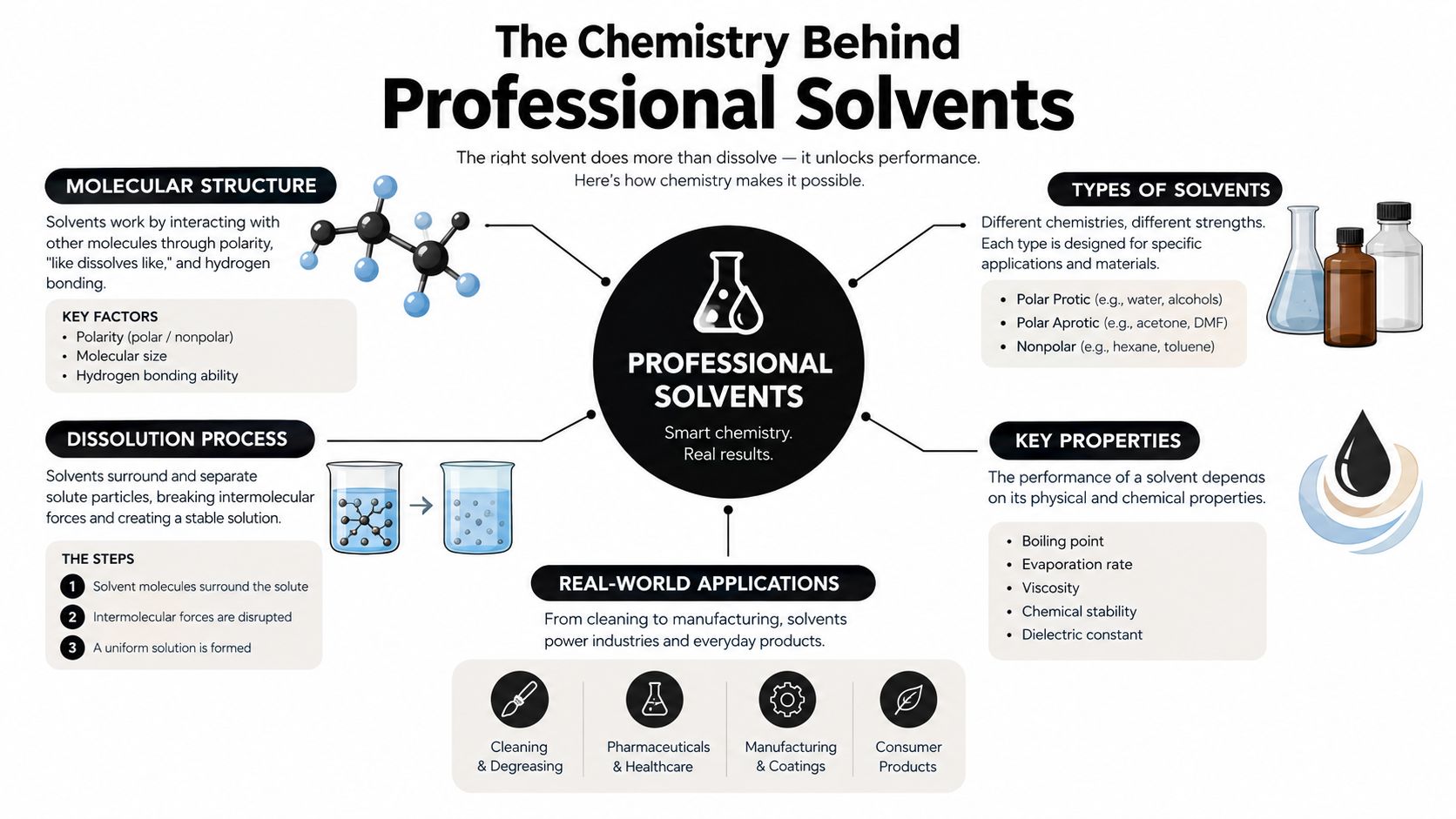
A remover needs to contact the keratin bond directly. It doesn't need to saturate the surrounding hair, and wider application only increases cleanup and exposure. The bond should become easier to compress, not wet enough to spread through the section.
The chemistry of disulfide cleavage also explains why extended exposure is a poor substitute for precision. Chemical-hair literature establishes that disulfide cleavage can alter hair structure within minutes, so a stylist should follow the selected product's directions and observe the bond rather than improvising a long dwell time. A bond that remains resistant after the first application needs reassessment, clean isolation, and possibly a second targeted application, not aggressive plier pressure.
This is also why generic DIY advice creates inconsistent results. Oils may lubricate, but they don't provide the same documented polymer-softening mechanism. Heat can soften the material in the wrong direction. A salon remover, used only on the bond, gives the pliers a smaller mechanical task and keeps the natural hair out of the fracture line.
Clients often judge a remover by smell, speed, or how easily a strand comes out. The professional explanation is more useful: the product is there to reduce the force needed to break the attachment. The stylist isn't trying to dissolve the natural hair or strip the entire section. The target is the keratin matrix surrounding the extension tip.
A compatible finishing product can be considered after residue has been removed and the hair has been cleansed. Conde Professional's care guidance can support that conversation, but it shouldn't replace the removal chemistry or the clarifying stage.
The safe sequence is simple, but every part matters: isolate the bond, shield the scalp and clothing, apply remover to the attachment, fracture the softened keratin, then slide the extension out while supporting the natural hair. Removal pliers should never become a substitute for inadequate solvent contact.
Start with dry hair and clean separation. Work from a manageable lower section, clip the remaining hair away, and expose one bond at a time. A paper towel placed beneath the working section can help prevent fluid from travelling toward the scalp, a precaution included in professional bond removal guidance.
Protect the client's clothing and use gloves or other PPE required by the product and salon protocol. Keep the work surface clean, place the pliers and tail comb within reach, and avoid allowing remover-coated strands to mix with untouched hair. Long takedowns become harder when sections collapse into one another.
The removal sequence is:
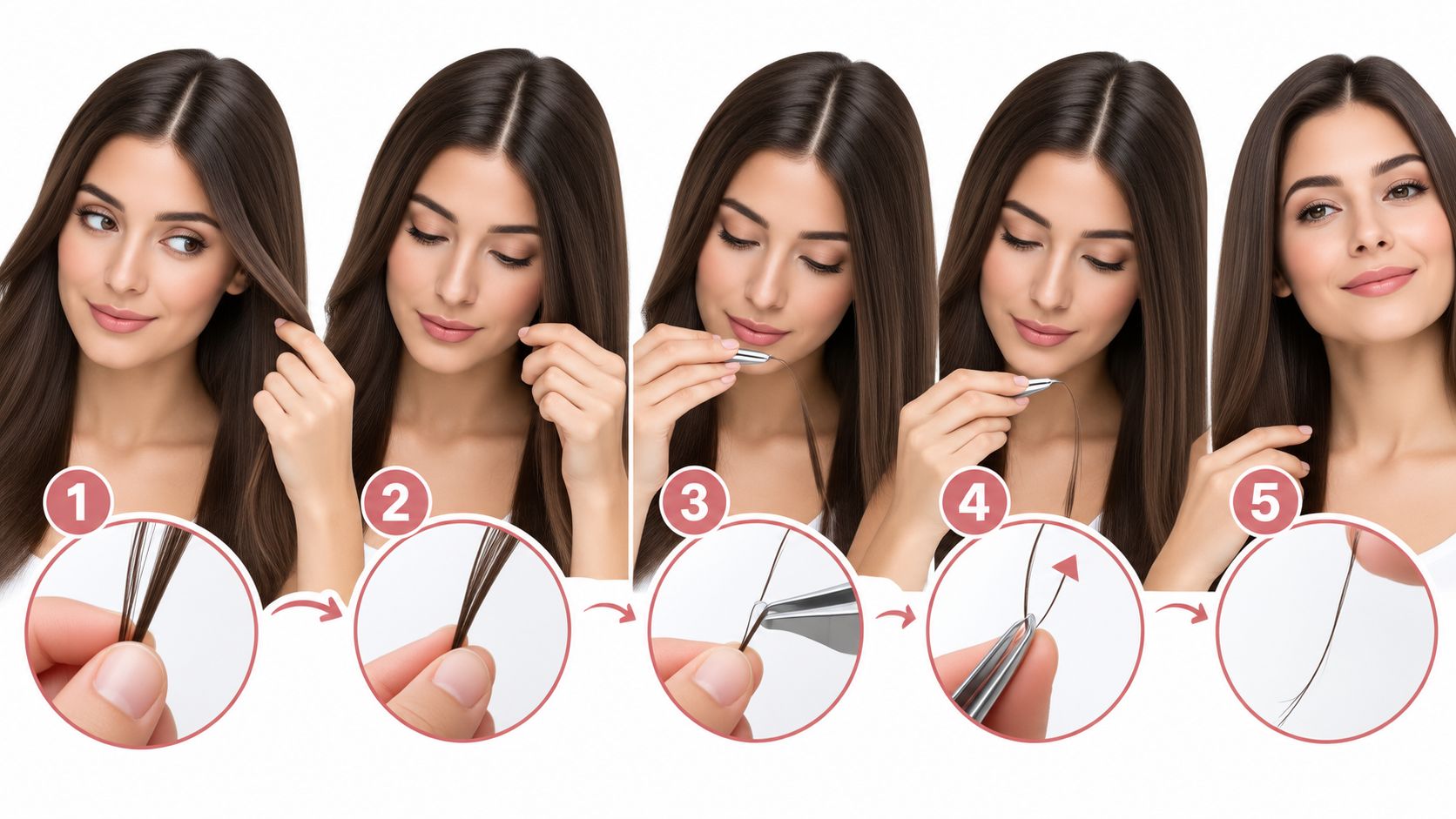
The main ergonomic error is rushing after the first few strands. The stylist's grip becomes stronger, the section becomes less clean, and pliers start contacting hair that should have been protected. This K-Tip removal guide reinforces the essential boundary: remover belongs on the bond, and mechanical pressure belongs on the softened attachment.
Set removed strands aside in an orderly way if the hair may be evaluated for reuse or re-tipping. Remove loose keratin fragments from the section before moving on, because fragments can catch adjacent hair and create false matting. If the client reports burning, sharp discomfort, or unusual pulling, pause the service, remove the product from the immediate area according to salon safety procedure, and reassess before continuing.
Partial maintenance is a technical decision, not a shortcut. It works when the install has a mixed wear pattern, with some bonds still clean and secure while others have migrated, twisted, or begun to collect hair at the root. Full removal remains the right choice when the entire layout needs inspection, redesign, or replacement.
| Condition observed at the appointment | More suitable service |
|---|---|
| Most bonds remain stable, separated, and visually discreet | Selective correction |
| A small group has shifted or is difficult to isolate | Remove and replace those bonds |
| Root separation is broadly compromised | Full takedown |
| The client wants a substantial change in length, shade, or density | Full takedown |
| The extension hair is being assessed for a new install | Full takedown and inspection |
| A few attachments are causing local tangling while the rest remain orderly | Targeted removal |
A selectively maintained install still needs a deliberate map. Mark or record the bonds removed, the reason for removal, and any areas that need observation at the next appointment. That record helps the salon identify recurring placement or care issues without treating every maintenance visit as a blank slate.
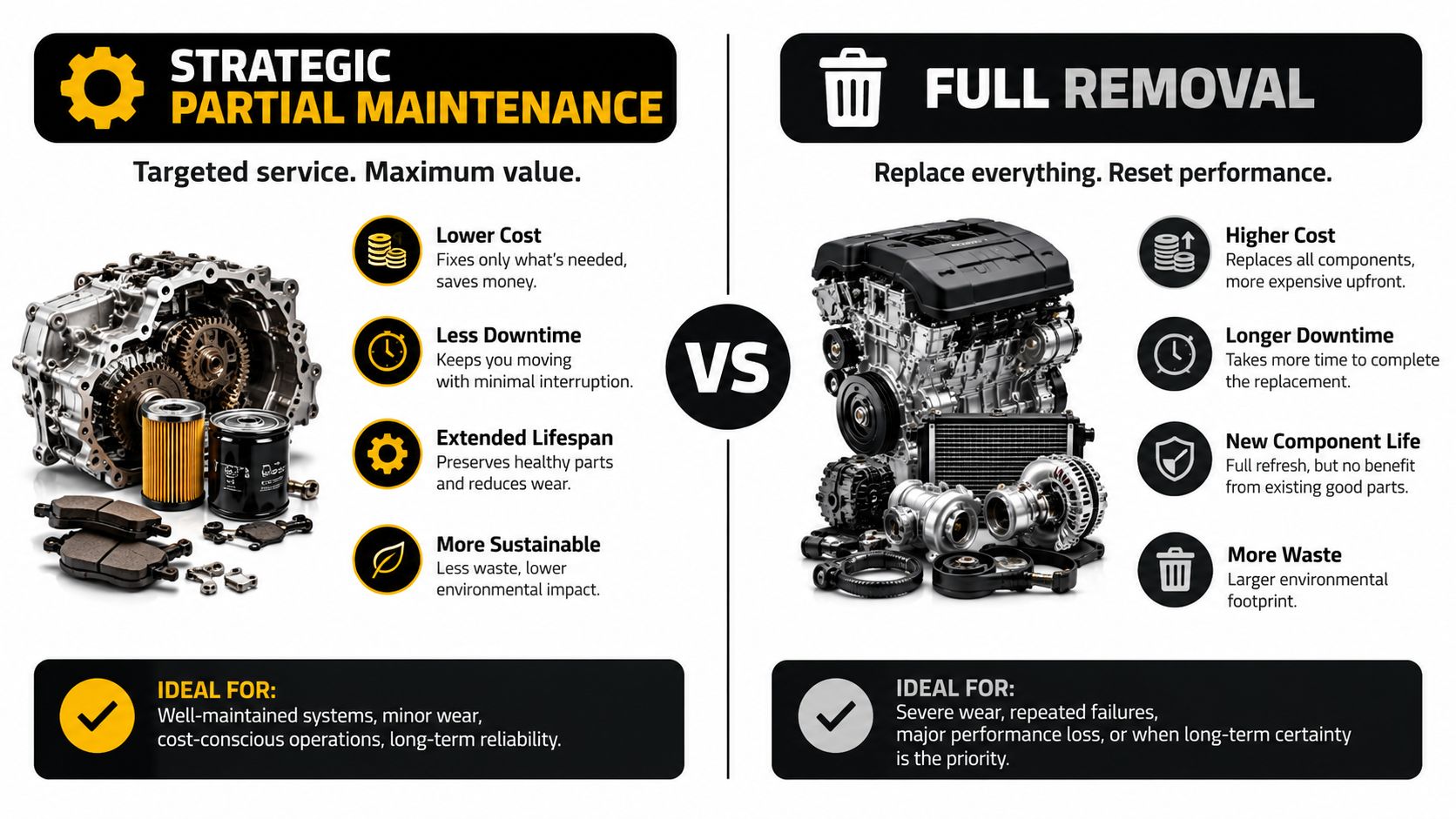
Full removal provides maximum visibility. The stylist can cleanse the hair, inspect the natural sections, evaluate the extension tips, and redesign the install. It also takes more strand-by-strand handling and may remove bonds that were still performing well.
Partial maintenance preserves the existing visual blend and avoids disturbing stable attachments. It can be a strong choice for a client who wants continuity rather than a new transformation. The limitation is that the stylist must work around retained bonds, and the service won't solve a broadly degraded or poorly positioned install.
Service standard: Partial maintenance should leave the client with a cleaner, more controllable installation than the one presented at the start. If it can't, a full takedown is the more honest recommendation.
The method itself also matters. Individual K-Tips can suit precise correction because the stylist can address attachments separately. A Volume Weft or Thin Weft may be more efficient for a client whose priority is broad fullness, while a Tape Weft or Tape-In can suit a different maintenance pattern. Clip-In is appropriate for temporary styling rather than a bonded maintenance cycle. Bulk hair serves a different application purpose entirely. No method should be selected merely because removal appears easier.
For professionals assessing reusable hair, the extension's condition matters as much as bond stability. A clean, cuticle-aligned, combable piece may justify careful preservation. Hair with severe tangling, compromised ends, or extensive residue may not justify the additional labor. The stylist should explain that partial maintenance preserves a current install, but it doesn't guarantee that every retained strand will remain suitable for a later reinstallation.
Removal isn't finished when the last extension slides out. Solvent residue, broken keratin fragments, and shed hair can remain around the attachment area, so the natural hair needs a controlled reset before a new install or chemical service. A clean shaft gives the next attachment a more reliable surface and makes the final assessment easier.
The standard process ends with clarifying shampoo after the softened bond has been mechanically fractured, as outlined in this three-stage keratin removal process. That final cleanse is not an invitation to scrub aggressively. Saturate thoroughly, work the cleanser through the former attachment zones, rinse completely, and repeat only if residue remains.
After clarification, separate the hair gently and inspect the areas that carried the bonds. Look for residual flakes, compacted shed hair, tangling, unusual roughness, and sections that resist combing. The hair should be detangled from the ends upward, with the root supported rather than dragged.
A conditioning treatment can follow once the residue is gone. Focus product through the lengths and ends, then rinse according to the product directions. The purpose is to improve manageability after cleansing, not to coat the attachment area with a film before a new bond or tape is installed.
A stylist should delay reinstallation if the hair cannot be cleanly separated, if the section shows excessive breakage, or if the client reports discomfort that hasn't resolved. A rest period should be based on the observed condition of the hair and the planned method, not imposed as a universal timetable. The next install might be a K-Tip, Tape Weft, or another method, but each requires a clean, controlled foundation.
For salons, the clarification stage belongs on the service checklist and consultation record. This clarification guidance can help frame the product discussion, while the stylist remains responsible for checking whether the hair is ready for another attachment.
A stubborn bond is usually a preparation problem before it's a strength problem. Stop pulling, isolate the attachment again, and apply remover only where the keratin is present. Independent removal guidance also specifies that pressure should be applied to the bond, not the hair, as shown in this professional extension removal guide.
The same standard applies to the salon owner reviewing a difficult appointment: clean sections, controlled product use, and patient fracture protect both the client and the service result.
Conde Professional supplies professional extension options including Volume Weft, Thin Weft, Tape Weft, Tape-In, K-Tip, Clip-In, and Bulk hair, along with removal and installation accessories for licensed professionals. Stylists and salon owners can review the collection and visit Conde Professional to open a professional account and choose a method that matches the client's wear pattern and maintenance plan.


