Your cart is empty
Tax included and shipping calculated at checkout

Drawer menu
Tax included and shipping calculated at checkout
A professional account gives you stylist pricing, priority support, early access to new releases, and education developed by working stylists.
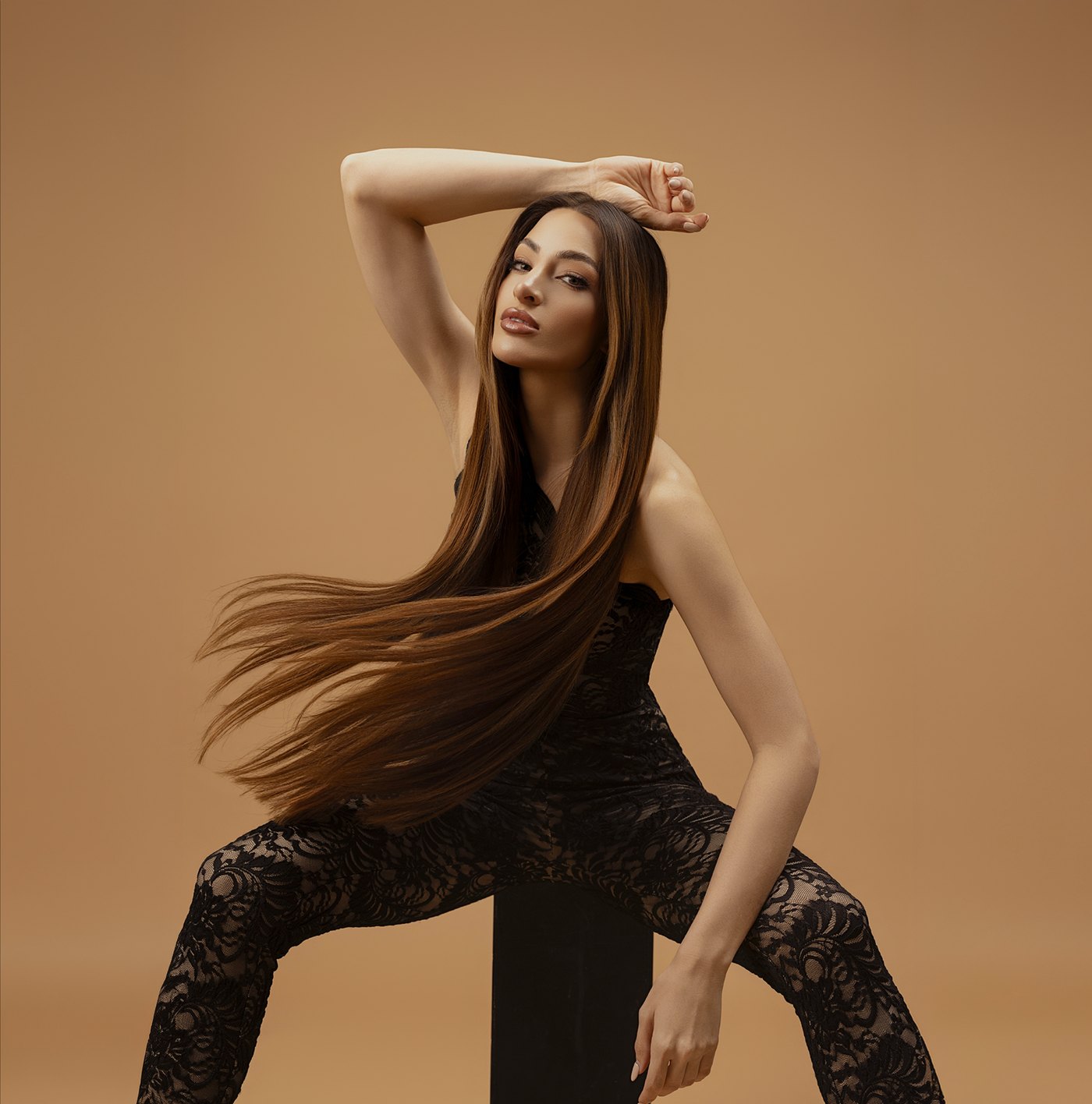

Most advice treats synthetic hair as a cheap stand-in for human hair, and that framing sends stylists down the wrong path. These are different materials with different fiber behavior, different service limits, and different jobs behind the chair.
| Material | Structural behavior | Heat tolerance | Chemical flexibility | Wear profile | Best salon use |
|---|---|---|---|---|---|
| Human hair | Cuticle-bearing, moves and reflects light more like natural hair | Generally supports salon heat styling in the 160 to 230°C range, depending on condition and protectant use (hibiscushair.com) | Can be washed, toned, colored darker, and restyled like natural hair | Longer wear life with proper care, often over a year in premium use cases (HKEX filing summary) | Installations that need repeat styling, move-ups, or color work |
| Synthetic hair | Polymer fiber with uniform surface and strong style memory | Usually limited to about 82 to 180°C, with many fibers deforming around 120 to 160°C (hibiscushair.com) | Usually not suitable for oxidative color or frequent thermal reshaping | Shorter wear life, often around 3 to 6 months with proper care (Fortune Business Insights) | Temporary volume, preset style work, or clients who want low commitment |
Human hair and synthetic fiber aren't quality tiers. They're different tools, and the right one depends on how much heat, shaping, washing, and maintenance the service really needs.
The most common mistake is treating synthetic as a bargain version of human hair. That sounds simple, but it ignores the issue, which is whether the fiber can survive the service the stylist plans to perform.
Human hair is actual donor hair, while synthetic is manufactured from polymers such as polyester, acrylic, or modacrylic and extruded into uniform strands. That difference changes everything at the chair, from how the hair moves to how it responds after shampooing, ironing, or color services.
A client who wants a soft, repeat-styled install with regular heat use is asking for a different material than a client who wants a set style with minimal manipulation. Human hair can be treated more like the client's own hair, while synthetic fiber behaves more like a shaped product that should stay close to its original form.
Practical rule: If the install depends on restyling after every wash, the fiber has to tolerate that reality. If the style is meant to hold its shape and stay low-touch, synthetic can make sense.
That's why “better” is the wrong word here. Human hair often wins on flexibility and durability, but synthetic wins on preset shape and low-maintenance wear. A stylist who frames the consultation around client behavior, not product hierarchy, usually lands on the right material faster and with fewer follow-up complaints.
The market data backs up that split. In a major industry filing summarizing Frost & Sullivan data, the global human hair goods market grew from US$1,443.2 million in 2011 to US$3,101.0 million in 2016, while the synthetic hair goods market rose from US$643.1 million to US$1,452.0 million over the same period (HKEX filing summary). That doesn't mean one material “wins.” It means each one keeps serving a different salon use case.

Under magnification, the difference is obvious. Human hair shows overlapping cuticle scales, while synthetic fiber is extruded as a smooth, uniform cylinder with no natural cuticle variation.
Cuticle structure is what gives human hair its more natural movement and softer light reflection. It also explains why the hair can be detangled, reformed, and styled again after washing, rather than snapping back into one fixed shape.
Synthetic fiber behaves differently because the structure is engineered, not grown. That creates a uniform sheen and strong style memory, but it also means the fiber is less forgiving when the install needs repeated curling, brushing, or reshaping.
Moisture behavior matters too. Human hair is more breathable and generally needs more washing, detangling, and re-forming after cleansing. Synthetic hair is usually lighter in maintenance because the style is built in, but that advantage disappears if the client wants movement, softness, and flexibility under daily styling.
A practical example is a tape-in service where the client expects the hair to lie flat, blend with natural density, and survive regular styling. Human hair is the safer material because it behaves more like the surrounding hair. For a preset fringe, fantasy color, or temporary volume piece, synthetic can be the more rational choice because the shape is the point.
A useful product example is Tape-In Light Golden Brown #5.3 Solid. It is a 100% human hair tape-in format in a warm level 5 gold tone, which matters because a single-tone human hair piece can be installed for a flatter, more natural blend when the service calls for adhesive-backed panels and a refined shade match.
For a deeper internal reference on hair structure, the cuticle-focused overview at structure of hair is worth keeping on hand for staff training. It reinforces what stylists already see at the chair, the material that has overlapping cuticle scales behaves differently from a smooth extruded fiber.
Human hair earns its place when the service depends on movement, touchability, and repeat manipulation. Synthetic earns its place when the style should stay fixed and the client doesn't want a lot of daily work.

Heat is where the practical line gets sharp. Standard synthetic fibers are typically limited to about 82 to 180°C (180 to 350°F), with many fibers deforming or melting around 120 to 160°C, while human hair can generally be heat-styled in the 160 to 230°C range depending on condition and protectant use (hibiscushair.com).
Human hair supports repeat blow-drying, curling, straightening, and reshaping after shampooing. Synthetic hair usually doesn't, unless it's specifically made for low-heat restyling, and even then the margin for error is narrow.
That difference matters during consultation because it shapes what the stylist can promise. A client who wants to wear the hair up, change the part, blow it out, or add heat-based finish work needs human hair. A client who wants a ready-made shape with minimal intervention is usually a better fit for synthetic.
Chemical processing follows the same pattern. Human hair can be toned, glossed, and dyed darker to blend with natural hair, while synthetic fiber cannot accept oxidative color. That means human hair can be adjusted to the salon plan, but synthetic hair has to be chosen correctly up front.
The internal guide on dye hair extensions is a practical reminder of that boundary. In professional use, the question isn't whether a fiber can be “made to work” after the fact, it's whether the chosen material can safely tolerate the service path planned from day one.
For stylists who need proof points from the chair, video examples can help train the eye on which fibers withstand routine manipulation and which don't. A useful collection of video testimonials for 100 Celsius can serve as a reference point for understanding how human-hair-focused services are often evaluated in real client language, especially around wear, styling, and repeat service expectations.
Bottom line: human hair is the flexible platform. Synthetic is the fixed-form platform. Mixing up those roles is how stylists end up overpromising heat and color services.
Human hair fits the full range of professional installation methods because the fiber can be cut, moved, styled, and refreshed without collapsing the service. That makes it compatible with hand-tied wefts, machine wefts, tape-ins, K-tips, microlinks, and bulk applications when the application plan calls for restyling or move-up maintenance.
Synthetic hair is far more selective. It shines in clip-ins, some pre-bonded pieces, and wig applications where style memory is a benefit and the client isn't asking for repeated thermal or chemical manipulation.
| Installation Method | Human Hair | Synthetic Hair | Key Consideration |
|---|---|---|---|
| Volume Weft | Yes | Usually not the first choice | Best when the install needs movement and move-ups |
| Thin Weft | Yes | Usually not the first choice | Better for fine hair and softer blending |
| Tape Weft | Yes | Limited | Adhesive services work best when the fiber can be reworked after wear |
| Tape-In | Yes | Limited | Needs flat, natural movement and reliable reblending |
| K-Tip | Yes | Usually no | Fusion-style work depends on restylability and wear compatibility |
| Clip-In | Yes | Yes | Temporary wear makes synthetic viable |
| Bulk | Yes | Rare | Custom work depends on fiber control and finish |
Beaded rows and fusion bonds need hair that can tolerate move-ups, brushing, heat finishing, and client lifestyle friction. Human hair handles those demands better because it can be reformed without fighting the fiber itself.
Conde Professional's method range reflects that reality. Volume Weft, Thin Weft, Tape Weft, Tape-In, K-Tip, Clip-In, and Bulk are all professional options built around human hair performance, which is exactly what method-driven salon work requires.
The internal method guide at types of hair extension methods is useful for mapping service to attachment style before the consultation starts. The bigger operational lesson is simple, if the method depends on repeated styling or move-up maintenance, human hair is usually the safer category.
Synthetic has a real place, but it's narrower. Temporary volume, preset shape, and special-use styling are all valid reasons to choose it. The failure happens when a stylist installs synthetic into a service model that assumes human-hair behavior.
Human hair usually costs more up front, but the business question is how long the service can stay in rotation and how many salon touches it supports. In premium use cases, human hair can last over a year with proper care (HKEX filing summary), while broader market guidance places the common lifespan at 12 to 18 months or longer for properly cared-for human hair extensions (Fortune Business Insights).
Synthetic hair has a shorter wear window, often about 3 to 6 months with proper care (Fortune Business Insights). That means the client may replace it more often, but the salon usually gets fewer move-up, color, and restyling opportunities from the same install.
The financial picture shifts once the service calendar is included. Human hair supports maintenance appointments, tone adjustments, and finish work that can extend the life of the install. Synthetic hair often becomes a full replacement sooner, which changes the conversation from service retention to repeat re-entry.
That's why the market consistently values human hair more highly in the professional segment. A 2024 to 2033 market guide reports that human hair holds about 65% market share by value, which reflects premium salon and B2B demand rather than casual retail preference (Fortune Business Insights).
The same industry filing also shows the category split clearly in pricing behavior. Average global human hair prices fell from US$127.4 per kilogram in 2011 to US$50.1 per kilogram in 2016, while synthetic fibre prices fell from US$1,880 per ton to US$940 per ton over the same period (HKEX filing summary). That doesn't erase the premium nature of human hair, it just shows how the category still sits above synthetic in value and wear expectations.
Cost rule for salon owners: the cheaper fiber isn't always the cheaper service. Replacement frequency and lost upsell opportunities matter.
The internal guide on how long do extensions last is worth pairing with pricing conversations. It helps the stylist separate purchase cost from total service cost, which is the only way to have a clean discussion with a client who cares about budget and retention.
The cleanest consultation starts with behavior, not budget. Ask how often the client uses heat tools, whether color changes are likely, how much styling time they'll tolerate, and whether the install has to survive frequent swimming, travel, or rushed mornings.
A stylist should also be blunt about maintenance. Human hair usually needs more active care because it behaves like hair, while synthetic is lighter on daily effort only if the client accepts its styling limits. A client who already heat-styles every day may have an easier time maintaining human hair, because the routine matches the material.
Shade matching matters too. Human hair gives more room to refine tone families, especially in salon work where blended neutrals, rooted looks, or dimensional shades matter. Synthetic hair can look convincing, but only if the client's expectations stay close to the manufactured color.
For busy salons creating consultation content or short-form education, a workflow tool like ShortGenius AI ad generator can help staff turn these talking points into client-facing videos without changing the technical message. The value is in keeping the consultation language consistent, not in overselling the result.
The strongest consultation closes the gap between what the client wants to do with the hair and what the fiber can actually survive.
Labels like 6A, 7A, 8A, 9A, and 10A are supplier marketing terms, not a governed standard. Stylists should ignore the letter count and inspect the hair for measurable traits that affect install quality.
The internal resource on Remy human hair extensions fits here because Remy alignment is one of the few practical descriptors that can help a stylist judge how the hair will perform. Even then, the label should support inspection, not replace it.
A basic burn test or slide test can help verify whether the material acts like hair or like polymer fiber, but only when the salon is trained to use those checks responsibly. The goal is not to chase a grade, it's to verify structure, alignment, and wear behavior before the install ever reaches a client.
For salons that want a cleaner buying process, the next step is to open a professional account with a supplier that publishes inspection-minded product details instead of leaning on grade letters. That keeps the conversation anchored in fiber behavior, which is what protects the service.
Conde Professional supplies professional human hair extensions across method categories like Volume Weft, Thin Weft, Tape Weft, Tape-In, K-Tip, Clip-In, and Bulk, with shade families and education built for working stylists. If the next install needs human-hair performance, method support, and a wholesale relationship that matches salon workflow, visit Conde Professional and open a professional account.


