Your cart is empty
Tax included and shipping calculated at checkout

Drawer menu
Tax included and shipping calculated at checkout
A professional account gives you stylist pricing, priority support, early access to new releases, and education developed by working stylists.


The usual advice, “buy the best hair and the install takes care of itself,” fails on the chair. Best tape ins are the panels and tabs that match one client's load, rebook, climate, and total cost of ownership, not the softest sample in the bag.
Method comes first, because it sets mechanical load and the service rhythm. Hair quality is the second decision. A cuticle-intact, double-drawn panel still slips in humidity, still pulls on chemically treated hair, and still costs more across a year if the move-up cycle is wrong. Salon methods in play are Volume Weft, Thin Weft, Tape Weft, Tape-In, K-Tip, Bulk, and Clip-In. Pick the architecture that the natural base can carry, then pick the hold.
The right tape-in depends on the client's upkeep plan, not just the hair in the sample. Use this table to narrow the choice, then check the client's scalp, density, and tolerance before committing to a full install.
| Client situation | Start with | Why it fits | Trade-off to plan for |
|---|---|---|---|
| Standard repeat-service client on a 4-10 week rebook | Gentle Hold Double Sided Tape Tab | A hold option for a regular reposition schedule | Keep the install zone free of oil and conditioner |
| Client who slips or lifts on standard tape | Power Hold Double Sided Tape Tab | A stronger-hold option when standard tape lifts | Plan for adhesive removal at the take-down |
| Client who needs precise shade blending | Tape-In in a Rooted or Solid shade | These shade families support different blending needs | Confirm shade availability by method before ordering |
| Client who cannot take adhesive at the scalp | Clip-In | No adhesive at the attachment point | Different maintenance rhythm; not a repeat-service tape method |
| Client with high density or chemically treated hair | Lowest-load method that still achieves the result | Keeps the method aligned with the natural base's tolerance | The finished silhouette may need to change to reduce load |
For a client on a regular 4-to-10-week rebook, start with the Gentle Hold Double Sided Tape Tab. Keep the install zone free of oil and conditioner. Serum or scalp oil at the bond can interfere with adhesion, so check the sectioning and product placement before installation.
If standard tape lifts, consider the Power Hold Double Sided Tape Tab. Its stronger hold addresses that specific issue, but removal still needs to be planned. Include extension remover and residue-removing shampoo in the take-down plan.
For shade work, start with a Rooted or Solid Tape-In, then confirm that the selected shade is available in that method. Solid shades are single-tone colors from Level 1 to Level 12. Check availability before ordering so the consultation and appointment plan match the product.
If a client cannot take adhesive at the scalp, choose Clip-In. It avoids an adhesive bond and follows a different wear routine: the client can remove it for sleep and shampooing rather than book a tape move-up.
For high-density or chemically treated hair, choose the lowest-load method that achieves the result. That may mean fewer tape panels or less length, or a different method altogether. The desired silhouette does not override what the natural base can tolerate.
Use a hair extensions consultation guide to structure the discussion before ordering. Test one section for comfort and placement, then decide whether the full-head plan is appropriate.
Every attachment method spends the same three currencies: how it bonds, how often it needs the chair, and what removal costs the natural hair.
| Method | Attachment mechanics | Maintenance rhythm | Best fit | Main limit |
|---|---|---|---|---|
| Tape-In | Adhesive tape bonds hair panels near the natural base | Reposition about every 4-10 weeks; 12 weeks is the outer limit | Semi-permanent result on a repeat-service plan | Oil, conditioner residue and humidity loosen the bond |
| Tape Weft | Hair weft applied on adhesive tape | Same rebook window as Tape-In | Clients who want a weft-based tape installation | Same adhesive sensitivity; shade range differs per line |
| Sew-in or braided weft | Stitched or braided attachment to the natural hair | Requires consistent maintenance to avoid scalp tension | Clients with a dense natural base who tolerate sewing | Sustained scalp tension if not maintained |
| Fusion bond or microlink | Individual bonds placed row by row | Labor-intensive move-up and removal | Clients who want a bonded result without tape | Longer chair time at every service |
| Clip-In | Removable clips with no adhesive at the scalp | The client applies and removes each weft daily | Occasional wear and clients who cannot take adhesive | Hold depends on the wearer's own sectioning and clip placement |
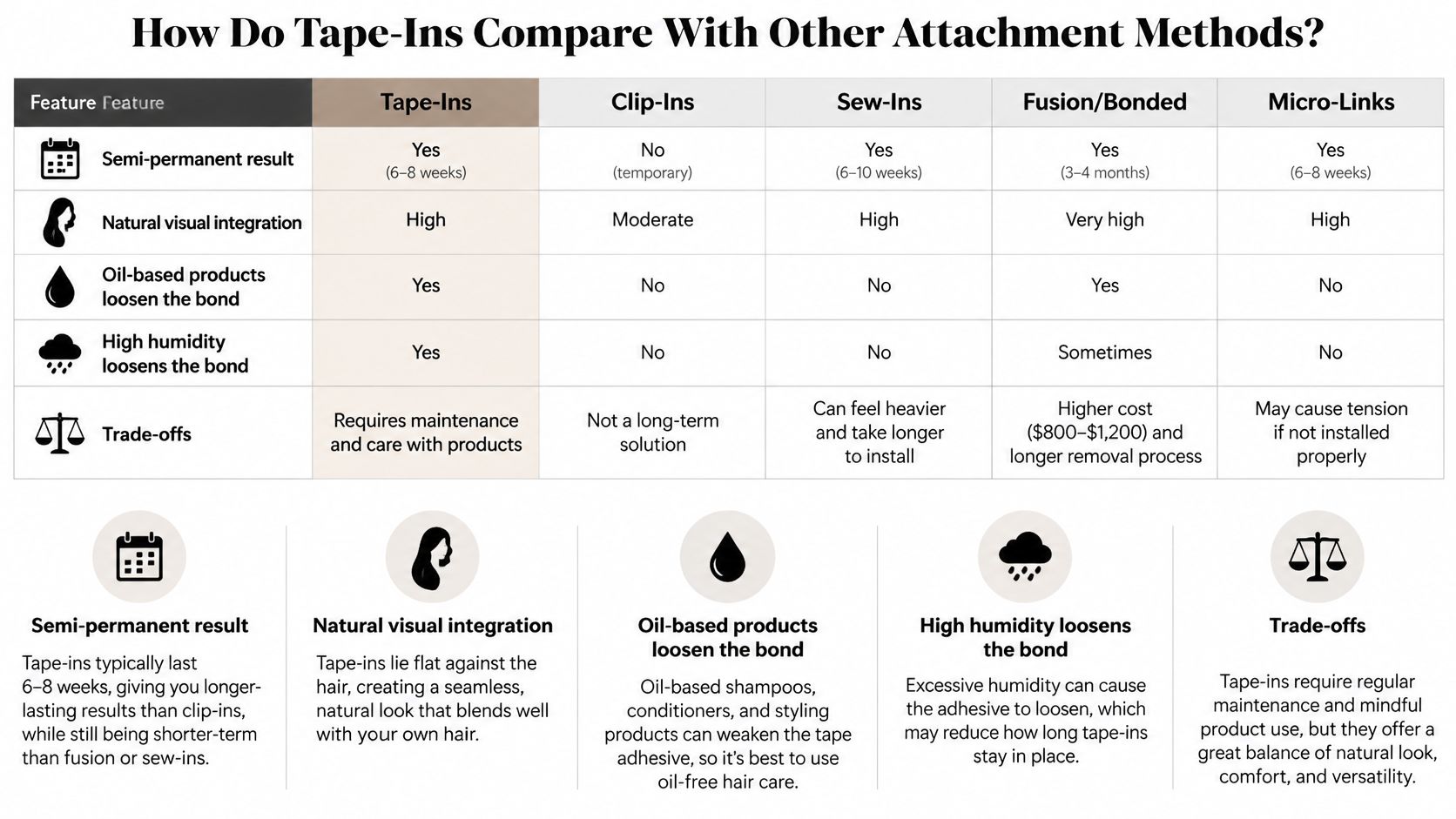
A multidisciplinary review of extension methods in Skin Health and Disease reports that Tape-In systems use adhesive tape to attach hair wefts and can give a semi-permanent result with natural visual integration. The same review names the failure modes: oil-based products and high humidity loosen the attachment, and removal can cause breakage or tangling. Those are the trade-offs. Panel placement alone doesn't protect the bond. Control the bonding surface, keep oils and conditioner residue off the adhesive, write product limits into aftercare, and release panels with as little force on the natural hair as the remover allows.
Tape Weft runs the same adhesive system on a weft rather than on paired tabs. What it buys is coverage across a section with fewer attachment points and faster placement. Oil and humidity govern it the same way, so a client who fights oil breakthrough on Tape-In panels should expect it here too.
Sew-in and braided wefts shift the risk from adhesive to tension. Braiding and stitching can load the scalp hard when maintenance slips, and the cost shows up as sustained scalp tension. A dense base that tolerates sewing can wear this well. An unkept row cannot. The maintenance plan matters more than how clean the install looked on day one.
Fusion bonds and microlinks replace tape with row-by-row labor. Every move-up and every removal is chair time, and the total cost of the method is measured in hours. Book that time into the ticket, or the service gets rushed and the natural hair pays for it.
Clip-ins take adhesive off the scalp entirely. They suit occasional wear and clients who can't carry repeat adhesive loading. Because the client places and removes each weft, hold lives in their hands once they leave your chair, and the method earns its keep as event work or a retail add-on.
Tape-in is the wrong choice when the scalp is adhesive-sensitive, the natural base is already compromised, or the client won't keep the rebook. If the tape plan fails the load test, move that client to Volume Weft, Thin Weft, K-Tip, or Bulk and rebuild the service around that attachment. A side-by-side of types of hair extension methods frames the consult around mechanics, maintenance, and removal load.
Grade stickers don't predict the install. Labels from 6A through 10A are supplier marketing. No governing body sets them. What you can test is what decides the service: cuticle integrity and alignment, load and tension, and the client's usable natural base.
Cuticle integrity and alignment. Intact cuticles running one way from root to tip let fibers slide. Mixed or stripped cuticles tangle, matt, and fight you after washing. On tape, that tangle sits against the natural hair, where it's hard to hide and risky to rip out.
Load and tension. The American Academy of Dermatology ties extensions and other high-tension styles to traction alopecia. Risk rises when hair is chemically treated, when added length or volume is excessive, or when the style stays in for a long stretch. Weight plus one-direction pull at the attachment is the metric that matters, not which bag felt softest dry.
Usable natural base. Baseline density, previous chemical processing, existing tenderness, and scalp sensitivity set the ceiling. A full silhouette on a thin, relaxed base is a load error, even with excellent hair.
Working rule: use the lightest panel weight that still achieves the target, spread panels across healthy sections, and never attach directly on the scalp.
Pain, headache, tightness, tenderness, or breakage is a failed install. Adjust before the client leaves. Waiting for the move-up turns a placement problem into a shedding problem.
Three questions close the choice.
Remy human hair extensions earn their place when cuticle direction is consistent and the hair still behaves after washing. They don't earn a pass on tension. Suitability sits in the client's tensile reserve and the install's total mechanical load. A lighter Tape-In map beats a heavier one that only looks better in the mirror on day one.
Your sample log is the benchmark because independent lifespan comparisons across tape-in lines are limited. Test representative pieces from the exact shade, texture and length run you plan to install, and judge the same sample dry, damp and after washing before you commit cash or book the client. A tape-in earns the order when its pass signals match the client's maintenance plan: wash frequency, oil exposure, booked spacing, and the rooted shade by method.
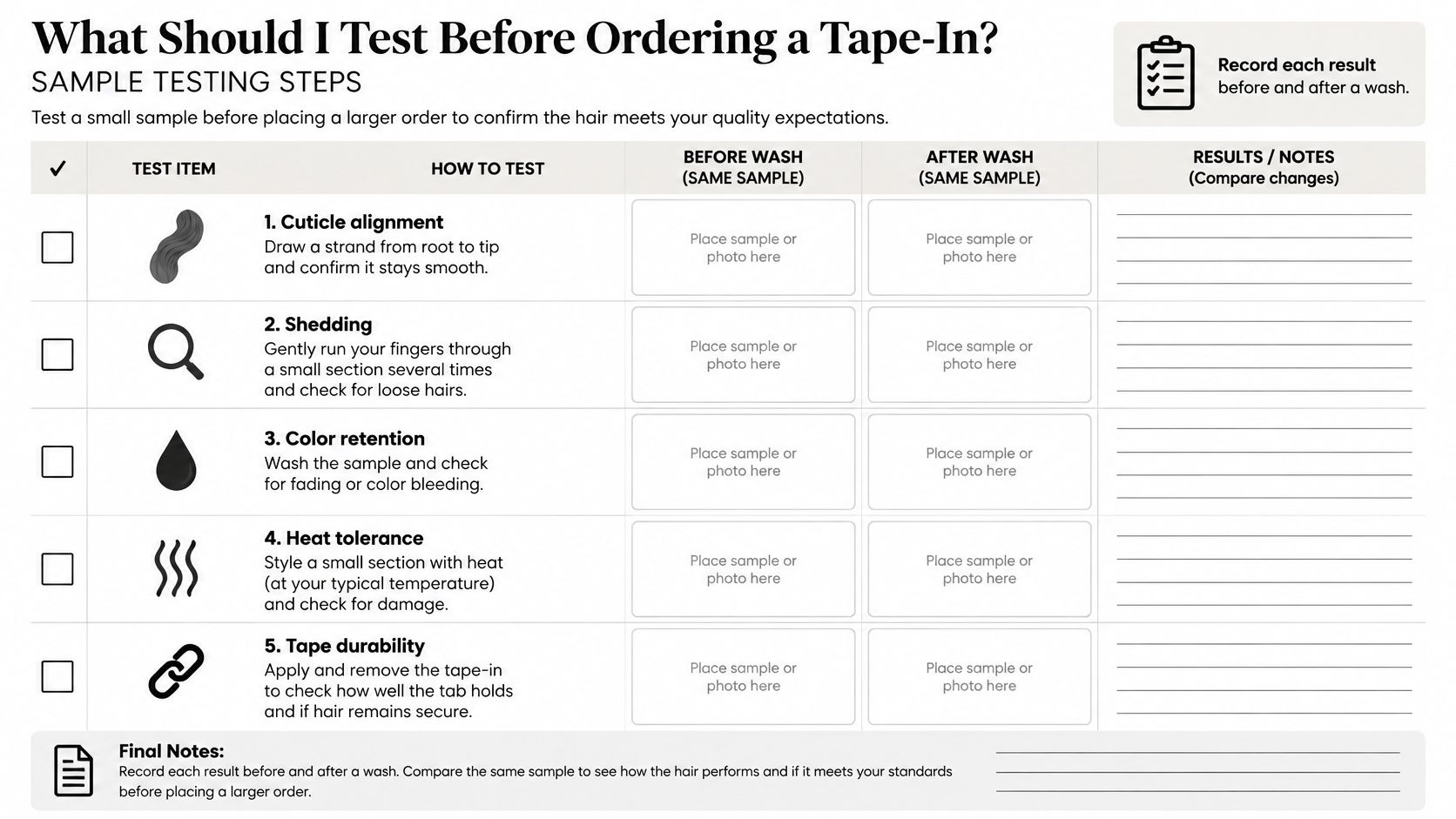
Cuticle alignment is quality control, not a label claim. Draw a strand from root to tip: intact cuticles oriented one way let neighboring fibers slide, which lowers friction, tangling and matting. Rough or mixed direction raises combing force near the tab at every service, and that extra labor belongs in the ownership cost before the first install.
Textures on the shelf are Straight and Wavy. Run the wet comb on both, because a wavy sample can look full in the hand and still grab once water removes the styling slip.
Confirm the method first, then the rooted shade. Availability changes across weft, tip and bulk lines, so a rooted request can force a method change before pricing.
| Rooted shade | Tape-In, K-Tip, Bulk | Tape Weft | Thin Weft | Volume Weft |
|---|---|---|---|---|
| White Blonde #4/12 | Yes | Not listed | Not listed | Not listed |
| Dark Blonde Melt #6/11 | Yes | Not listed | Not listed | Not listed |
| Espresso to Platinum #6/11.1 | Yes | Not listed | Not listed | Yes |
| Golden Brown #7/10 | Yes | Not listed | Not listed | Not listed |
| Iced Beige #7.1/10.13 | Yes | Yes | Yes | Yes |
| Platinum Glow #8.1/12.01 | Yes | Yes | Yes | Yes |
Tape-In Dark Blonde Melt #6/11 Rooted sits in the Tape-In rooted column. A tape-in panel uses two adhesive-backed wefts around a thin natural section, so quote it as a Tape-In service and check the table before promising the same rooted look in a weft method.
Ask for strand direction, cuticle-alignment detail, shade by method, and the conditions the hold product is rated for. A wholesale extension buying checklist should record wash count, shed count, tab hold and rooted availability before volume pricing enters the conversation; softness on day one is the cheapest data point on the sheet.
Allure puts reposition or reinstallation at about four to ten weeks, with 12 weeks as the maximum, and notes that frequent exercise, swimming, or a humid climate can pull the cycle down to roughly three to four weeks. The rebook follows the client's week, not a default card in the software.
Clients are also stretching wear and spending more selectively, which shifts your revenue toward maintenance and aftercare rather than fresh installs. If a client extends the gap between visits, your margin has to live in a plan you can defend, priced around services per year instead of a single ticket.
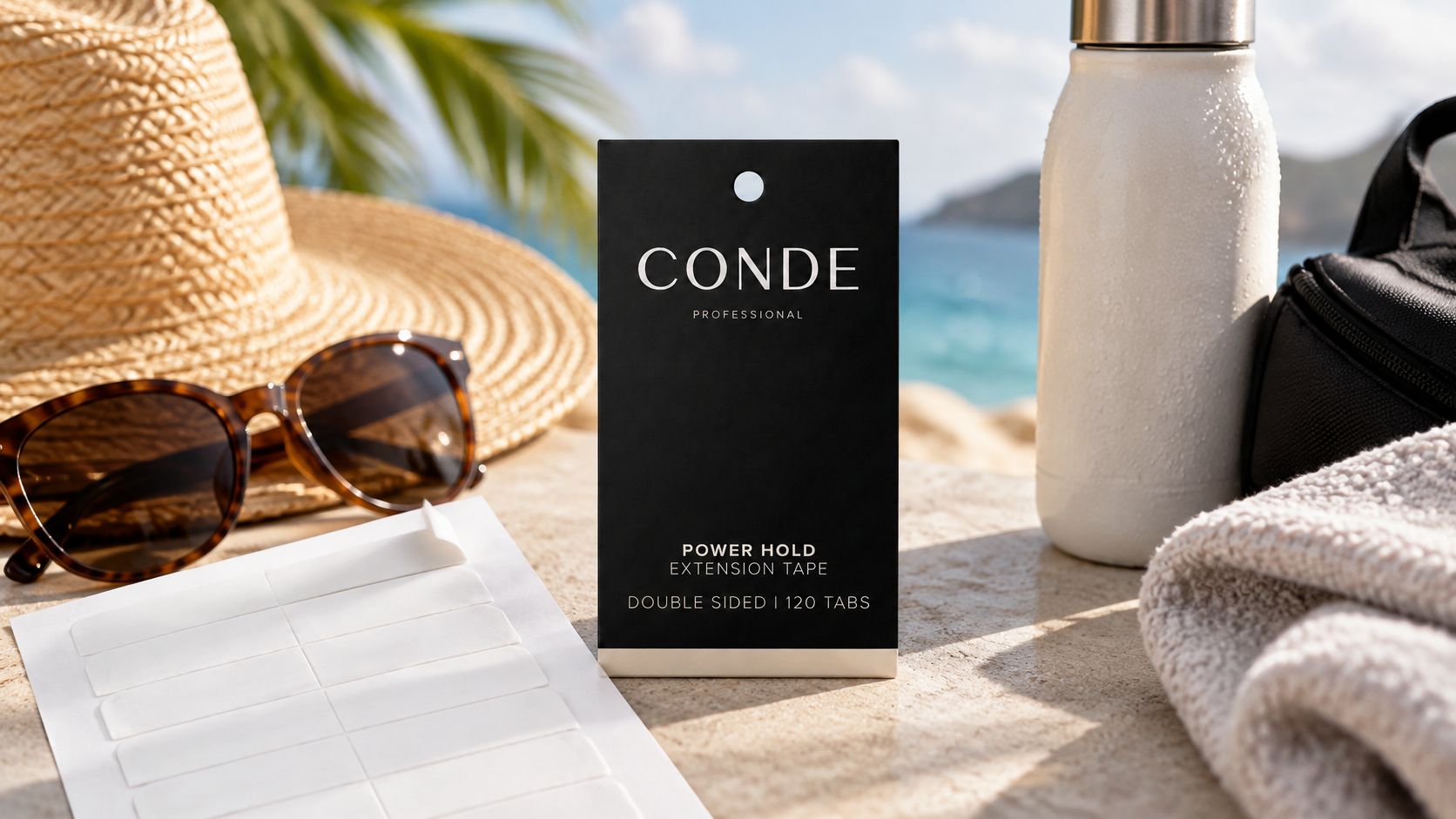
A stronger tab doesn't cancel climate or training. It changes residue and removal. The calendar still comes from sweat, water, humidity, and how often the hair is washed.
Rank the plan on hair cost, tape replacement, move-up labor, reinstallation time, shedding or slippage, and how many uses you expect. Upfront price hides a client who needs eight services instead of five.
Build a simple worksheet. Count services per year from the interval you just set, then multiply by chair minutes per install, tape used, and expected hair replacement when slippage or shedding ends a set early. Run two schedules on the same client, the standard window against a three-to-four week athletic cycle. The annual number usually moves more from the interval than from the difference between two hair prices, and that is the ownership cost the consult should show.
A 2023 clinical study of 223 women, published in Skin Health and Disease, reported traction alopecia in 77 participants, a prevalence of 34.5% (95% confidence interval 28.3%–40.7%). The same study reported regular extension use by 95.1% of participants, with mild traction alopecia in 14.3% of the sample and moderate cases in 13.5%. Repeated or prolonged tension damages follicles, and installation weight, excessive tightness, poor placement, and skipped maintenance all push that risk higher. A good tape install is defined by the service standard behind it: the load you set, the spacing you keep, and the rebook interval the client's routine can sustain.
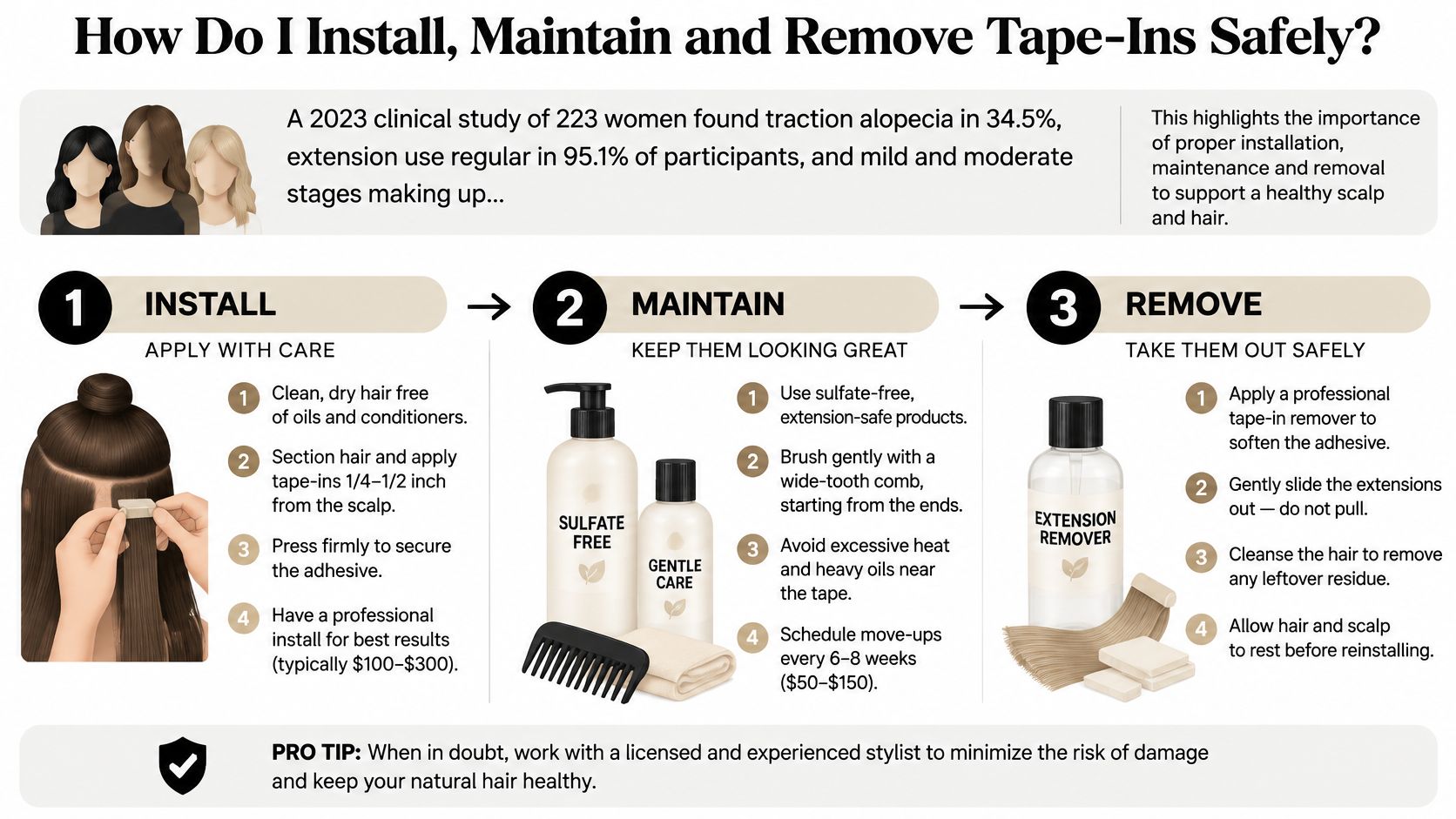
Pain or headache means lighten the load now, not at the next visit. Slippage points to oil, residue, sweat, or humidity, so fix the bond environment before you add more tabs. Tenderness or breakage at removal means stop and rebuild the plan with the client. A lighter map, a different method, or a break from adhesive can be the professional call, and what repeated tension does to the follicle over time is laid out in this look at whether tape extensions damage hair.
The safest tape-in is rarely the strongest one on the shelf. It is the one whose weight, placement, and reposition interval the client can sustain between visits. A lighter set maintained on schedule beats a heavy set left in place because the hair still looked fine in photos.
Pick one client already on the book who matches a row in the starting table. Choose the tape-in, or the exit from tape, on three criteria: the load the natural hair can carry, the shade family that blends with the base, and the rebook date the client's routine supports.
Run the wet comb-through and a residue check on a sample section before you book the install. Keep those notes in the client file so the next consult can justify the same choice, or change it, without starting from zero.
Reach Conde Professional by text, phone, or email for product selection and shade guidance before you place the order. Ask for Rooted or Solid direction matched to that client's base color and the method column in the shade table. Then confirm current pricing, since prices, discounts, and promotions can change without notice.
Conde's professional courses cover install technique and the business side, including how stylists set prices and build the service. If the gap in your plan is chair time and ticket structure, that material addresses it.
Record the install date and the first reposition date in the file the day you book, and price the service to cover the full cycle: tabs, remover, and the reposition visit. The next appointment should land inside the window the client's routine can realistically keep. A plan the client can afford and attend is what makes the method work over time.
Conde Professional carries Tape-In, Tape Weft, and the other salon methods, including Volume Weft, Thin Weft, K-Tip, Bulk, and Clip-Ins, plus tape tabs in different hold strengths. Shade guidance and method selection are available by text, phone, or email, so the install you book is the one the base can carry. Start with the client on your book this week at Conde Professional.


